Home › Best Supplements › Which iron supplement is best for a teenage girl?
RankingsWhich iron supplement is best for a teenage girl?
We may earn a commission when you buy through links on this page. No brand pays to be ranked. How we rank products

Your teenage daughter’s blood work came back and her iron is low. Maybe she has been dragging through school, sleeping longer than usual, or looking paler than you remember. Iron deficiency is the most common nutritional shortfall among adolescent girls, driven by the double demand of rapid growth and monthly menstrual losses. Choosing the right supplement means finding something she will actually take, at a dose that matches her needs without overdoing it.
We compared six iron supplements suited to teenage girls, scored each one on dose, absorption, tolerance and buyer feedback, and ranked them for the 14-to-18 age group. This guide covers why teen girls need more iron, how much is enough, which formats work best for younger users and what to look for on the label.
A well-absorbed bisglycinate at 25 mg covers a teen girl's RDA with room to spare and rarely causes stomach trouble.
Our top pick is Solgar – Gentle Iron for its 25 mg of iron bisglycinate in a small capsule that is easy on the stomach. If your teen prefers a chewable format, BeLive – Iron Gummies delivers iron alongside vitamin C and B vitamins in a grape-flavored gummy she is more likely to take every day.
Why teenage girls need more iron
Adolescence is one of the most iron-hungry phases of life. Between the ages of 10 and 17, a girl’s blood volume increases by roughly 25 percent to support the growth spurt, and every new millilitre of blood requires iron to fill its red cells with hemoglobin. Add the onset of menstruation, which costs an average of 12.5 to 15 mg of iron per cycle, and the gap between intake and demand widens quickly.
Diet trends make things worse. Many teenage girls reduce or eliminate red meat, the richest source of highly absorbable heme iron. A National Institutes of Health fact sheet lists adolescent girls among the groups most at risk of insufficient iron intake. The average dietary intake for US adolescents aged 12 to 19 is around 15 mg per day from food alone, which barely meets the recommended level for girls and can fall short if meals are inconsistent or if absorption is reduced by tea, coffee or calcium-rich snacks consumed at the same time.
The consequences of low iron in a teenager go beyond fatigue. Studies link iron deficiency without anemia to reduced cognitive function, poorer concentration at school, lower athletic performance and mood changes. Catching and correcting a shortfall early makes a measurable difference.
How much iron a teenage girl actually needs
The recommended dietary allowance (RDA) set by the NIH Office of Dietary Supplements for girls aged 14 to 18 is 15 mg per day. Boys the same age need 11 mg. Pregnant teenagers require 27 mg per day.
The tolerable upper intake level (UL) for anyone aged 14 and older is 45 mg per day. For children under 14, the UL is lower at 40 mg. These limits apply to total iron from food and supplements combined. Exceeding the UL without medical supervision can cause nausea, stomach pain and, over time, organ damage.
For a teenager with confirmed low iron, the goal is usually to match or modestly exceed the RDA until levels normalize, rather than to take a clinical-repletion dose designed for severe adult anemia. Supplements in the 15 to 26 mg range are the practical sweet spot: they cover the RDA, leave room for dietary iron and stay well below the UL.
Absorption varies by form. Chelated bisglycinate is generally better absorbed than ferrous sulfate at equivalent doses, and gummy or liquid formats may use forms such as ferric pyrophosphate that are gentler but slightly less bioavailable. A lower-absorption form at 18 mg may deliver less usable iron than a bisglycinate at 15 mg. The Supplement Facts panel tells you the elemental iron dose; the form tells you roughly how much of it your teen will absorb.
A label may read "325 mg ferrous sulfate" or "25 mg iron (as iron bisglycinate)." The number that matters is the elemental iron figure, not the weight of the compound. Always check the Supplement Facts panel for the actual iron content per serving.
Four tips to help your teen’s supplement work
1. Pair it with vitamin C
Vitamin C converts non-heme iron into its more absorbable ferrous form and shields it from inhibitors such as phytates and tannins. A glass of orange juice, a few strawberries or a 100 mg vitamin C tablet alongside the iron dose can meaningfully improve uptake. Several supplements on this list already include vitamin C, so check the label before adding more.
2. Time it around meals
Iron absorbs best on an empty stomach, ideally 30 to 60 minutes before eating. If your teen complains of nausea, taking it with a small snack is a reasonable compromise. The priority is consistency: a dose she actually takes every day will outperform one she abandons after a week because it made her feel sick. Morning routines tend to produce the best compliance in teenagers.
3. Choose a format she will actually take
The most bioavailable supplement in the world does nothing if it stays in the bottle. Some teenagers have no trouble swallowing a capsule; others refuse anything that is not a gummy or a liquid. A grape-flavored gummy or a fruity liquid may have a slightly lower absorption profile than a bisglycinate capsule, but the compliance advantage often outweighs the theoretical gap. Match the format to your teenager, not the other way around.
Set the supplement next to her water bottle the night before. If she takes a capsule, pair it with a small glass of orange juice. If she takes a gummy, she can chew it on the way to school. Same time, every day builds the habit.
4. Recheck iron levels after three months
A single blood test confirms the starting point. Without a follow-up, there is no way to know whether the supplement is working. Most doctors recommend rechecking hemoglobin and ferritin 8 to 12 weeks after starting. If levels have not improved, the dose, form or timing may need adjusting, or there may be an underlying absorption issue worth investigating.

How we scored these supplements
We looked at iron supplements available in the US that cover a range of formats suitable for teenagers: capsules, tablets, gummies and liquid. Each product was scored on four criteria: Dose & absorption (35 percent of the total), Tolerance (25 percent), Value (20 percent) and Buyer feedback (20 percent). Scoring was weighted toward the needs of a teenage girl, so dose appropriateness for the 15 mg RDA and format suitability for a younger user counted more heavily than raw milligrams.
Composition details were checked against each product’s official Supplement Facts panel. Buyer reports were drawn from verified reviews on retailer sites. You can read more about our process on our how we rank products page.
The best iron supplements for teenage girls: our six picks
| Rank | Product | Form | Score | |
|---|---|---|---|---|
| #1Best overall | Solgar - Gentle Iron | Bisglycinate capsule 25 mg elemental iron | 8.8/10 | Check price |
| #2Best multi-nutrient | MegaFood - Blood Builder | Food-state tablet 26 mg elemental iron | 8.5/10 | Check price |
| #3Gentlest formula | Thorne - Iron Bisglycinate | Bisglycinate capsule (Ferrochel) 25 mg elemental iron | 8.2/10 | Check price |
| #4Best gummy | BeLive - Iron Gummies | Gummy 18 mg elemental iron | 7.9/10 | Check price |
| #5Best liquid | Floradix - Iron + Herbs | Liquid (ferrous gluconate) 10 mg per 10 mL | 7.5/10 | Check price |
| #6Best with cofactors | Garden of Life - Vitamin Code Raw Iron | Whole-food capsule 22 mg elemental iron | 7.2/10 | Check price |
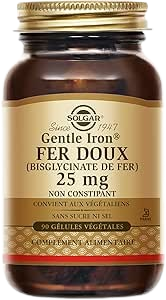
Solgar - Gentle Iron
A trusted bisglycinate capsule at 25 mg, well above the teen RDA, with a strong reputation for zero stomach upset.
- Elemental iron25 mg per capsule
- FormIron bisglycinate
- Other ingredientsVegetable cellulose, vegetable magnesium stearate
- CertificationsVegan, kosher, gluten-free, non-GMO
- Take1 capsule daily
- you want a well-absorbed form at the right dose for a teen
- stomach comfort is a priority
- your teen cannot swallow capsules
- you want vitamin C included in the formula
Solgar Gentle Iron delivers 25 mg of iron bisglycinate per capsule, covering 167 percent of the RDA for a teenage girl while staying comfortably below the 45 mg upper limit. Bisglycinate chelate is one of the best-studied forms for absorption and tolerability: the iron is bound to the amino acid glycine, which allows it to pass through the intestinal wall via a different pathway than conventional iron salts, reducing the competition with dietary inhibitors.
The capsule is small, vegan-friendly and free from major allergens. The 180-capsule bottle lasts a full six months of daily use, making it one of the best-value options on this list. Buyers across multiple retailers consistently praise the lack of stomach discomfort. The only drawback: no vitamin C is included, so pairing the capsule with a glass of orange juice or a vitamin-C-rich snack will help absorption.
Where to buy
Prices change often, so we don't show them here: check the retailer for today's price.
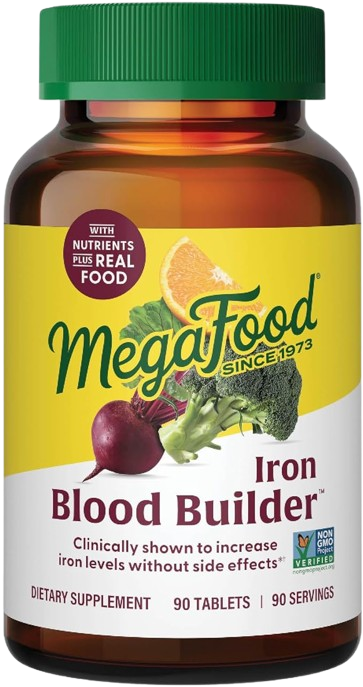
MegaFood - Blood Builder
A food-state formula combining fermented iron with folate, B12 and beetroot, ideal for teens who need broader nutritional support.
- Elemental iron26 mg per tablet
- FormFermented ferrous bisglycinate
- Also containsVitamin C 15 mg, Folate 680 mcg DFE, B12 30 mcg
- Organic beetroot125 mg
- CertificationsB Corp, non-GMO, vegan, kosher
- Take1 tablet daily
- your teen needs iron alongside folate and B12
- you prefer a food-state supplement
- you want a simple iron-only formula
- your teen has trouble swallowing tablets
MegaFood Blood Builder takes a broader approach than a standalone iron capsule. Its 26 mg of fermented ferrous bisglycinate is paired with folate (680 mcg DFE) and B12 (30 mcg), two nutrients the body needs alongside iron to produce healthy red blood cells. The added 125 mg of organic beetroot supplies natural nitrates.
The fermentation process embeds the iron in a food matrix, which may contribute to the strong tolerance profile buyers report. "Raised my Hgb and Hct with no side effects" (R., Amazon). The one-tablet daily dose keeps things simple, and the formula is certified B Corp, non-GMO and free from nine common allergens. The lower vitamin C content (15 mg) means pairing it with a vitamin-C-rich food or drink will help maximize absorption.
Where to buy
Prices change often, so we don't show them here: check the retailer for today's price.
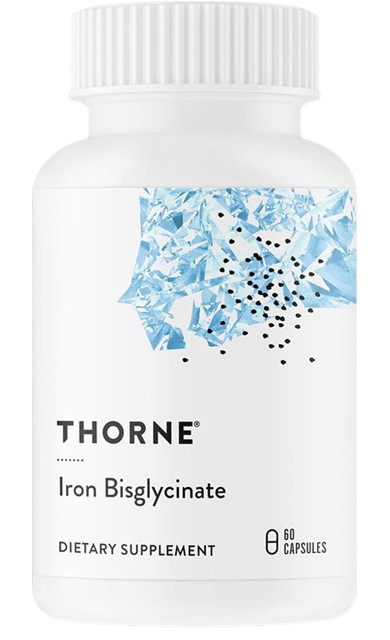
Thorne - Iron Bisglycinate
A minimal Ferrochel capsule at 25 mg, NSF Certified for Sport, with one of the cleanest ingredient lists available.
- Elemental iron25 mg per capsule
- FormFerrochel ferrous bisglycinate chelate
- Other ingredientsLeucine, microcrystalline cellulose
- CertificationsNSF Certified for Sport, gluten-free
- Take1 capsule daily
- stomach comfort is the absolute top priority
- your teen is an athlete who needs NSF certification
- you want vitamin C or B vitamins included
- you prefer a non-capsule format
Thorne uses the patented Ferrochel form of ferrous bisglycinate, one of the most studied chelated irons for absorption and tolerability. At 25 mg per capsule (167 percent of the RDA for teen girls), the dose matches Solgar’s, but Thorne stands out with its NSF Certified for Sport stamp, which matters for teenage athletes subject to substance testing.
The ingredient list is among the shortest on this list: just iron, leucine and microcrystalline cellulose. No fillers, no flavorings, no extras. "Easy on our stomachs" (Lisa, Walmart). The 60-capsule bottle lasts two months. Where Thorne loses ground is value: the smaller bottle and premium pricing make it more expensive per dose than Solgar’s 180-count, and there is no vitamin C or cofactor included.
Where to buy
Prices change often, so we don't show them here: check the retailer for today's price.
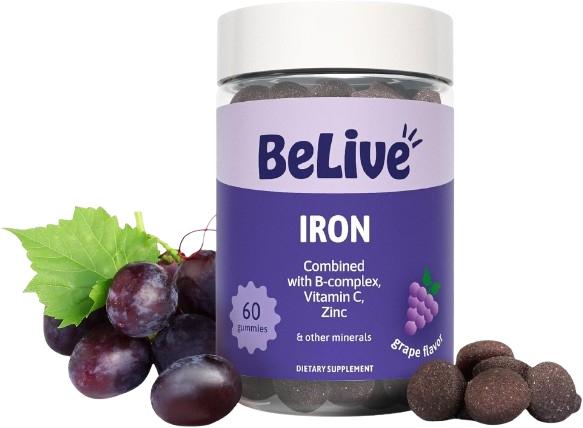
BeLive - Iron Gummies
A grape-flavored gummy with 18 mg of iron plus vitamin C and B vitamins, designed for people who cannot or will not swallow pills.
- Elemental iron18 mg per serving
- FormIron (form not disclosed on label)
- Also containsVitamin C, vitamin A, B3, B5, B6, B12, folic acid, zinc
- CertificationsVegan, gluten-free
- TakeAdults 2 gummies daily; children 4+ 1 gummy daily
- your teen refuses capsules and tablets
- you want iron with added B vitamins and zinc in one chewable
- you want to know exactly which iron form you are taking
- you need the highest possible absorption per milligram
BeLive Iron Gummies solve the biggest compliance problem with teen supplementation: the format. A grape-flavored gummy is vastly easier to build into a teenager’s morning routine than a capsule she dreads swallowing. Each adult serving delivers 18 mg of iron alongside vitamin C for absorption, plus a B-vitamin complex, folic acid and zinc.
The main limitation is transparency. BeLive does not disclose the iron form on the product label or its website. Most iron gummies use ferric pyrophosphate because it is stable in a gummy matrix, but we could not confirm this for BeLive. Ferric pyrophosphate is generally well tolerated but has lower bioavailability than bisglycinate chelate. With over 11,000 Amazon reviews and a 4.2 rating, buyer satisfaction is decent, though the undisclosed form is a transparency gap worth noting.
Where to buy
Prices change often, so we don't show them here: check the retailer for today's price.
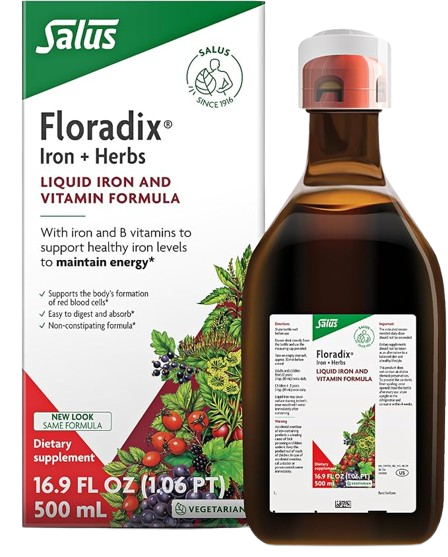
Floradix - Iron + Herbs
A fruit-and-herb liquid delivering 10 mg of ferrous gluconate per dose, ideal for teens who struggle with both pills and gummies.
- Elemental iron10 mg per 10 mL (2 tsp)
- FormFerrous gluconate
- Also containsB1 2.3 mg, B2 3.6 mg, B6 1.8 mg, B12 6.8 mcg, vitamin C
- Herbal blendNettle, fennel, carrot, spinach, rosehip
- ContainsWheat germ extract, yeast extract
- Take10 mL twice daily (adults); 10 mL once daily (children)
- your teen cannot swallow pills or chew gummies
- you want a liquid she can mix into juice
- your teen has a wheat or yeast sensitivity
- you need a higher dose per serving
Floradix has been a go-to liquid iron supplement for decades. Its 10 mg of ferrous gluconate per 10 mL dose is the lowest on this list, but for a teen whose iron is only mildly low, a single daily dose covers two-thirds of the RDA, and the liquid format means the iron hits the stomach already dissolved, bypassing the disintegration step that can cause irritation with tablets.
The formula includes B vitamins and a herbal blend of nettle, fennel and rosehip in a fruit-juice base that most teenagers find palatable. "Great for those who don’t tolerate iron pills well" (Annie, Walmart). The trade-offs: Floradix contains wheat germ extract and yeast extract, ruling it out for teens with wheat or yeast sensitivities, and it must be refrigerated after opening. The lower dose also means it may not be enough on its own for moderate or severe deficiency.
Where to buy
Prices change often, so we don't show them here: check the retailer for today's price.
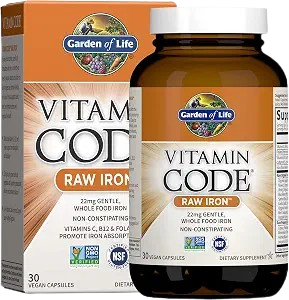
Garden of Life - Vitamin Code Raw Iron
A whole-food capsule pairing 22 mg of brown-rice-chelated iron with a fruit and vegetable blend, probiotics and digestive enzymes.
- Elemental iron22 mg per capsule
- FormBrown rice chelate
- Also containsVitamin C 25 mg, Folate 400 mcg DFE, B12 500 mcg
- Fruit & veg blend310 mg
- Probiotic & enzyme blend60 mg
- CertificationsNon-GMO, NSF gluten-free, kosher, vegan, B Corp
- Take1 capsule daily
- you want a whole-food approach with probiotics and cofactors
- your teen follows a vegan diet
- you want a simple, single-ingredient iron supplement
- you need a cost-effective option for long-term use
Garden of Life Vitamin Code Raw Iron wraps 22 mg of iron from a brown rice chelate in a whole-food matrix that includes a fruit and vegetable blend (310 mg), a probiotic and enzyme blend (60 mg), plus vitamin C, folate and B12. The philosophy is to deliver iron the way it arrives in food, surrounded by cofactors that support both absorption and digestion.
At 147 percent of the RDA for teen girls, the dose is appropriate for daily supplementation. The probiotic blend is a thoughtful addition for teens who are prone to the digestive disruption that iron supplements can cause. The main downside is value: the 30-capsule bottle lasts only one month, making it one of the more expensive daily costs on this list. For a teenager who will be supplementing for three to six months, that adds up.
Where to buy
Prices change often, so we don't show them here: check the retailer for today's price.
Who should not take iron supplements
Do not give a teenager an iron supplement without a blood test confirming low iron or iron deficiency. Excess iron accumulates in organs and can cause serious harm, particularly in people with hemochromatosis or other iron-loading conditions. Iron can interact with thyroid medication, tetracycline antibiotics and antacids. Keep iron supplements out of reach of younger children: accidental overdose of iron-containing products is a leading cause of fatal poisoning in children under six.
Iron supplements are not appropriate for every teenager. Teens with hemochromatosis or a family history of iron-loading conditions should not take supplemental iron unless directed by a specialist. If your teen takes levothyroxine (thyroid medication), tetracycline or quinolone antibiotics, or certain antacids, these medications need to be separated from iron by at least two to four hours.
A teenager who is not iron-deficient does not benefit from iron supplementation and faces only the risk of side effects and iron overload. Routine supplementation without a confirmed deficiency is not recommended by any major medical organisation. If your teen’s blood work is normal but she still feels tired, there are many other possible explanations worth exploring with her doctor.
Frequently asked questions
How much iron should a teenage girl take per day?
The NIH sets the recommended dietary allowance at 15 mg per day for girls aged 14 to 18. The tolerable upper intake level is 45 mg per day. A supplement in the 15 to 26 mg range covers the RDA and stays well within the safe limit. If a doctor has diagnosed moderate or severe deficiency, they may prescribe a higher dose under supervision.
Can a teenager take an adult iron supplement?
Yes, provided the elemental iron dose is appropriate. Most supplements on this list deliver 18 to 26 mg, which sits comfortably within the teen range. Avoid high-dose adult formulas (45 mg or above) unless a doctor has specifically recommended them. Always check the Supplement Facts panel for the elemental iron content, not just the compound weight.
What are the signs of iron deficiency in a teenager?
Common signs include persistent fatigue, pale skin, shortness of breath during exercise, difficulty concentrating at school and unusually frequent headaches. Some teens develop pica (cravings for ice or non-food items) or notice brittle nails. A blood test measuring hemoglobin and ferritin is the only reliable way to confirm whether iron is the cause.
Are iron gummies as effective as capsules?
Gummies typically use iron forms such as ferric pyrophosphate that are gentler but slightly less bioavailable than the bisglycinate chelate found in most capsules. For a teen with a mild shortfall, the practical difference is often small, especially when the gummy includes vitamin C to support absorption. The bigger factor is compliance: a gummy she takes every day will outperform a capsule she skips.
How long should a teen take iron supplements?
Most doctors recommend supplementing for three to six months, then rechecking hemoglobin and ferritin to confirm recovery. Stopping too soon is a common mistake: hemoglobin can normalize within weeks, but ferritin (iron stores) takes longer to rebuild. Your teen’s doctor will advise when it is safe to stop based on follow-up blood work.
The bottom line
For most teenage girls with confirmed low iron, a 25 mg bisglycinate capsule offers the best combination of absorption, tolerance and value. It covers the RDA, stays safely below the upper limit and rarely causes the nausea or constipation that drives teenagers to stop taking their supplement. If capsules are a deal-breaker, a gummy or a liquid trades a small amount of absorption for a format she will actually use, and consistency matters more than theoretical bioavailability.
Whichever supplement you choose, start with a blood test, pair the iron with vitamin C, keep it away from tea and dairy, and follow up with her doctor after two to three months to confirm that levels are heading in the right direction.
Solgar - Gentle Iron
- 25 mg iron bisglycinate per capsule, 167% of the teen RDA
- 180-capsule bottle covers six months of daily use
- Vegan, kosher, gluten-free, non-GMO

Independent guides to natural remedies and supplements, checked against NHS and EFSA references.