Home › Best Supplements › What is the best form of iron supplement?
RankingsWhat is the best form of iron supplement?
We may earn a commission when you buy through links on this page. No brand pays to be ranked. How we rank products
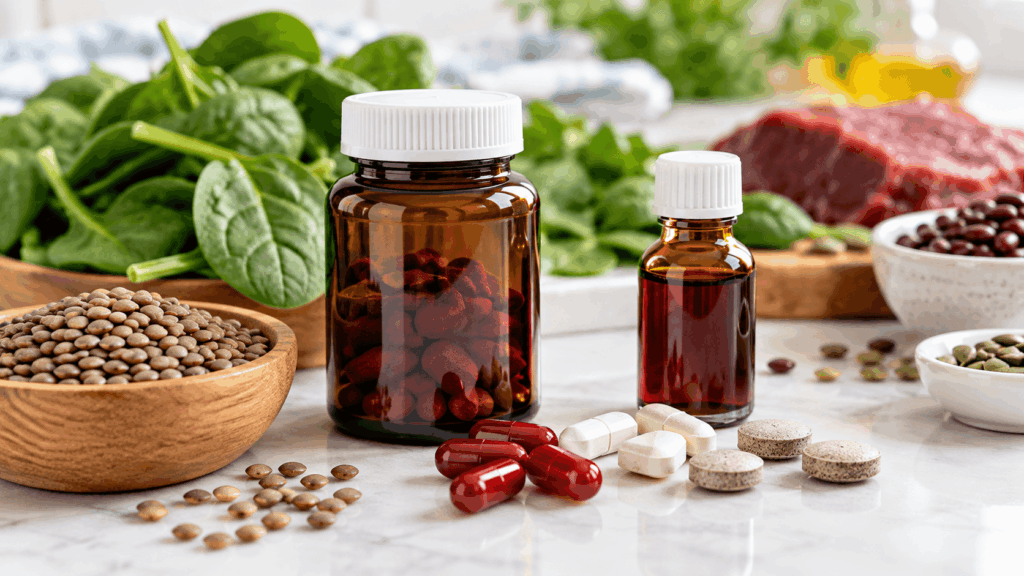
Walk into any pharmacy or scroll through Amazon and you will find iron supplements in half a dozen forms: ferrous sulfate, bisglycinate, heme iron polypeptide, gluconate, food-created blends. Each label promises absorption, but the differences between them are real and they matter. The form of iron you choose affects how much your body actually takes in, how your stomach reacts and how consistently you can stick with the supplement long enough to rebuild your stores.
We compared five common iron forms, reviewed the clinical evidence behind each one and selected six supplements that represent the best option in every category. Whether you are topping up mildly low ferritin or recovering from iron deficiency anemia, this guide will help you pick the form that fits your body, your budget and your daily routine.
Ferrous bisglycinate offers the best balance of absorption and comfort
For most people, ferrous bisglycinate (chelated iron) hits the sweet spot: it absorbs well, causes far fewer stomach side effects than ferrous sulfate and is backed by solid clinical data. Our top pick is Thorne Iron Bisglycinate for its trusted Ferrochel form and clean formula. On a tighter budget, NOW Iron 36 mg delivers the same chelated iron at a lower price per capsule.
Why your body needs iron, and how much you should get
Iron is an essential mineral your body uses to make hemoglobin, the protein inside red blood cells that carries oxygen from your lungs to every tissue. Without enough of it, you may feel persistently tired, short of breath during light activity or unusually cold in your hands and feet.
The recommended dietary allowance (RDA) set by the National Institutes of Health depends on age and sex. Adult men need 8 mg a day. Women aged 19 to 50 need 18 mg to offset menstrual losses. During pregnancy, the requirement jumps to 27 mg. After menopause, it drops back to 8 mg.
Iron from food comes in two broad categories. Heme iron from animal sources (red meat, poultry, fish) is absorbed at a rate of roughly 15 to 35 percent. Non-heme iron from plants (spinach, lentils, fortified cereals) sits between 2 and 20 percent, depending heavily on what else you eat at the same meal. When diet alone cannot close the gap, or when a blood test shows low ferritin or iron deficiency anemia, a supplement fills the shortfall.
But the form of iron inside that supplement shapes both how well it works and how it feels in your stomach. That difference is what this guide is about.
Five forms of iron supplement, explained
1. Ferrous sulfate: the classic prescription form
Ferrous sulfate is the oldest and most widely studied oral iron. Decades of clinical trials have used it as the reference standard, and most doctors still prescribe it first. A single tablet can deliver a high dose of elemental iron: Nature Made, for example, provides 65 mg per tablet, which is 361 percent of the RDA for adult women.
Absorption sits at roughly 10 to 15 percent on an empty stomach and responds well to vitamin C taken alongside it. The main drawback is tolerability. A 2015 systematic review by Tolkien et al. found that ferrous sulfate caused significantly more gastrointestinal side effects than placebo, including nausea, constipation, diarrhea and abdominal pain.
Best for: people whose doctor has prescribed a specific high dose and who tolerate iron salts without problems.
2. Ferrous bisglycinate: the chelated option
Ferrous bisglycinate (also sold as iron bisglycinate or under the trade name Ferrochel) is iron bonded to two molecules of the amino acid glycine. This chelation protects the iron from binding to food components that block absorption and shields the gut lining from direct contact with free iron ions.
A systematic review by Cancelo-Hidalgo et al. (2013) found that bisglycinate produced significantly fewer gastrointestinal side effects than ferrous sulfate at comparable elemental iron doses. Several absorption studies suggest bisglycinate may deliver more iron per milligram, potentially allowing a lower dose to achieve the same result.
Best for: anyone who has experienced stomach problems with iron salts, or who wants a well-tolerated daily supplement at a moderate dose.
3. Heme iron polypeptide: the animal-derived route
Heme iron polypeptide (HIP) is derived from animal hemoglobin. Unlike every non-heme form, it enters intestinal cells through a separate transporter and its absorption is largely unaffected by phytates, polyphenols, calcium or other common inhibitors found in food and drinks.
Absorption rates for heme iron are estimated at roughly 15 to 35 percent, compared with 2 to 20 percent for non-heme forms, though results vary between studies. Because heme iron does not release free iron ions in the gut, it rarely causes nausea or constipation. The trade-off: the elemental dose per tablet tends to be lower (Proferrin ES provides 10.5 mg) and it is not suitable for vegetarians or vegans.
Best for: people who react badly to all non-heme forms, or who need to take iron with food without losing effectiveness.
4. Ferrous gluconate: the liquid formula base
Ferrous gluconate is the form most commonly used in liquid iron supplements such as Floradix Iron + Herbs. It delivers a lower dose per serving (typically around 10 mg) but in a liquid that is quickly diluted in the stomach, which may reduce localized irritation compared with a tablet that dissolves slowly in one spot.
Liquid formulas also appeal to people who struggle to swallow tablets or capsules. Many include B vitamins and herbal extracts that support energy metabolism. The trade-off is a higher cost per milligram of iron and the need for refrigeration once opened.
Best for: anyone who cannot or prefers not to swallow tablets, or who finds even low-dose capsules uncomfortable.
5. Food-created iron: the whole-food approach
Some supplements culture iron within a food matrix, typically using Saccharomyces cerevisiae (baker’s yeast) or a blend of organic fruits and vegetables. Garden of Life Vitamin Code Raw Iron, for example, uses iron from a brown rice chelate cultured with yeast, alongside food-sourced vitamin C, folate and B12.
The idea is that iron presented within a food structure is recognized and absorbed more like dietary iron. Limited research supports the concept, and rigorous head-to-head trials comparing food-created iron with conventional forms remain scarce. These supplements tend to be gentle on the stomach and appeal to people who prefer a whole-food philosophy, but they cost more per capsule and sometimes offer fewer capsules per pack.
Best for: people who prioritize a whole-food approach and want built-in cofactors such as vitamin C and B12 alongside their iron.
A label that says "325 mg ferrous sulfate" does not mean 325 mg of iron. Only about 20 percent of ferrous sulfate is elemental iron, so a 325 mg tablet delivers roughly 65 mg of the mineral itself. Always check the "elemental iron" figure on the Supplement Facts panel. That is the number that counts toward your RDA.
How to choose the right form for your situation
On a tight budget
Ferrous sulfate remains the cheapest option by a wide margin. If your stomach tolerates it, there is no clinical reason to pay more. Nature Made Iron 65 mg is USP verified and available at most US pharmacies. If sulfate upsets your stomach, NOW Iron 36 mg offers chelated bisglycinate at a fraction of premium-brand prices.
Sensitive stomach or a history of GI side effects
Switch to ferrous bisglycinate or heme iron polypeptide. Both bypass the mechanisms that cause most gut irritation. A 2020 study by Stoffel et al. also found that taking iron every other day rather than daily improved absorption per dose, which means you may be able to take a gentler form less often and still build your stores effectively.
Vegan or plant-based
Heme iron polypeptide is off the table (it is animal-derived), but ferrous bisglycinate, food-created iron and ferrous gluconate are all available in vegan formulations. Check labels for gelatin capsules, carmine or other animal-derived excipients. Thorne, NOW and Garden of Life all offer vegan-friendly capsules.
Looking for the best absorption
Heme iron has the highest absorption ceiling because it uses a separate transporter unaffected by food inhibitors. Among non-heme forms, bisglycinate consistently outperforms sulfate and fumarate in absorption studies. Whichever form you choose, taking it with a source of vitamin C and away from tea, coffee, calcium and antacids will improve uptake.
Taking iron on an empty stomach maximizes absorption, but if that causes nausea, a small snack is fine. Heme iron polypeptide is the exception: it absorbs well with or without food, so you can take it at any meal.

How we chose these supplements
We started with the five main iron forms available in the US and identified the best-regarded supplement in each category. For chelated bisglycinate, we included both a premium option and a budget alternative because this form suits the widest range of people.
Each product was scored on four criteria: Dose vs RDA (whether the dose is practical for the average self-supplementer), Tolerance (published tolerability data plus buyer reports), Value (cost per capsule or serving relative to the category) and Buyer feedback (verified reviews across major US retailers). Every composition detail was checked against the official Supplement Facts panel or retailer listing. You can read more about our process on our how we rank products page.
The best form of iron supplement: our six picks
| Rank | Product | Form | Score | |
|---|---|---|---|---|
| #1Best overall | Thorne - Iron Bisglycinate | Ferrous bisglycinate capsule 25 mg elemental iron | 9.0/10 | Check price |
| #2Best value | NOW - Iron 36 mg | Ferrous bisglycinate capsule 36 mg elemental iron | 8.5/10 | Check price |
| #3Best heme iron | Proferrin - ES Heme Iron | Heme iron polypeptide tablet 10.5 mg elemental iron | 8.0/10 | Check price |
| #4Best whole-food | Garden of Life - Vitamin Code Raw Iron | Food-created capsule 22 mg elemental iron | 7.7/10 | Check price |
| #5Best liquid | Floradix - Iron + Herbs | Ferrous gluconate liquid 10 mg per 10 ml | 7.4/10 | Check price |
| #6Best budget classic | Nature Made - Iron 65 mg | Ferrous sulfate tablet 65 mg elemental iron | 7.0/10 | Check price |
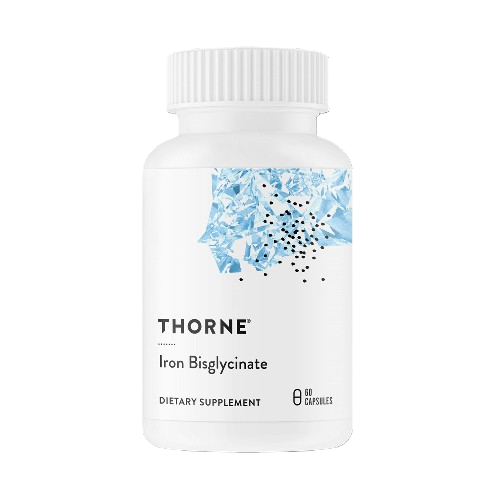
Thorne - Iron Bisglycinate
A well-dosed chelated iron with minimal side effects, backed by strong buyer feedback across multiple retailers.
- Elemental iron25 mg per capsule
- FormFerrous bisglycinate (Ferrochel)
- Other ingredientsLeucine, microcrystalline cellulose
- Take1 capsule daily
- you want a gentle chelated form at a moderate dose
- you have experienced stomach issues with ferrous sulfate
- your doctor has prescribed a higher therapeutic dose
- you are looking for the cheapest option available
Thorne uses the patented Ferrochel form of ferrous bisglycinate, which has been the subject of multiple tolerability and absorption studies. At 25 mg of elemental iron per capsule, it delivers 139 percent of the RDA for adult women without the high doses that tend to trigger nausea and constipation.
Buyers consistently praise the lack of stomach discomfort compared with ferrous sulfate. The capsule is small, vegan-friendly and free from major allergens. If there is a downside, it is the price: you are paying a premium for the Thorne name and its third-party testing program.
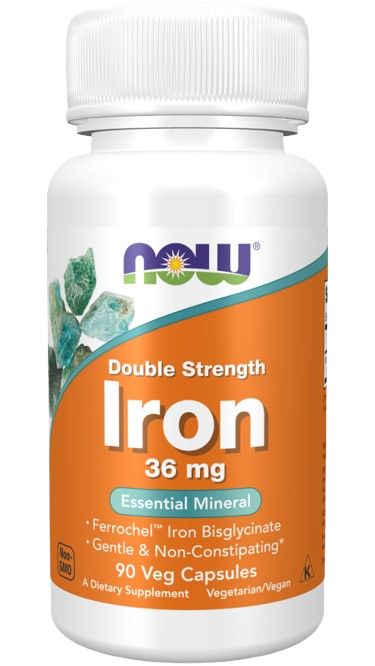
NOW - Iron 36 mg Double Strength
The same Ferrochel chelate used by premium brands, at a substantially lower price per capsule.
- Elemental iron36 mg per capsule
- FormFerrous bisglycinate (Ferrochel)
- Other ingredientsRice flour, stearic acid (vegetable source)
- Take1 capsule daily with food
- you want chelated iron without the premium price tag
- you need a slightly higher dose than 25 mg
- you prefer a lower daily dose for gentle maintenance
- brand reputation matters more to you than cost
NOW sources the same Ferrochel ferrous bisglycinate as Thorne but packages it at a higher 36 mg dose in a bottle of 90 capsules, which stretches the supply to three months. The result is a cost per milligram of elemental iron that undercuts most chelated competitors.
The 36 mg dose (200 percent RDA) is higher than Thorne’s 25 mg, making this a reasonable pick if your doctor has suggested a dose above the standard RDA. Tolerance remains strong thanks to the chelated form, though a handful of reviewers report mild stomach warmth at this dose. NOW holds GMP certification and the capsules are vegan, non-GMO and halal.
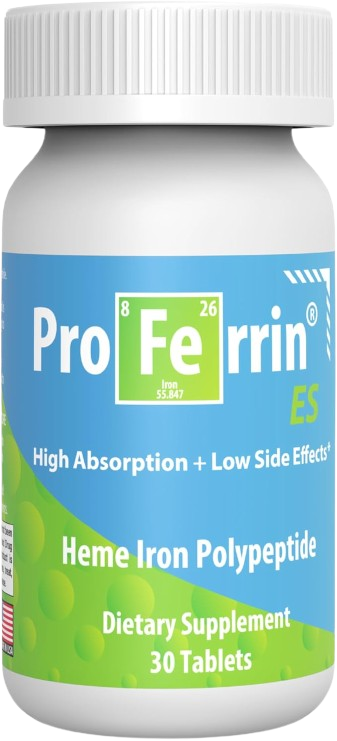
Proferrin - ES Heme Iron
The only widely available heme iron polypeptide supplement in the US, absorbed through a pathway that food inhibitors cannot block.
- Elemental iron10.5 mg per tablet
- FormHeme iron polypeptide
- Take1 tablet up to 3 times daily, with or without food
- Made byColorado Biolabs
- non-heme forms upset your stomach even at low doses
- you want to take iron with meals without losing absorption
- you follow a vegetarian or vegan diet
- you need a single high-dose tablet
Proferrin ES stands apart because it delivers heme iron polypeptide, a form derived from animal hemoglobin that enters the gut through a different transporter than all non-heme forms. That separate pathway means phytates in tea, polyphenols in coffee and calcium in dairy do not block its absorption.
At 10.5 mg per tablet, the dose is lower than most non-heme options, but the higher absorption rate partially compensates. The label allows up to three tablets a day for a maximum of 31.5 mg. Buyers report virtually no stomach issues, which is consistent with the published literature on heme iron. The obvious limitation: it is not suitable for vegans or vegetarians.
Where to buy
Prices change often, so we don't show them here: check the retailer for today's price.
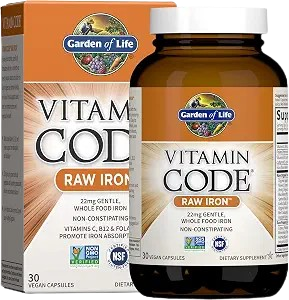
Garden of Life - Vitamin Code Raw Iron
Iron cultured in a food matrix with built-in vitamin C, folate and B12, designed to mimic the way you absorb iron from whole foods.
- Elemental iron22 mg per capsule
- FormIron from brown rice chelate (food-created)
- Also containsVitamin C 25 mg, folate 400 mcg DFE, B12 500 mcg
- BonusRAW probiotic and enzyme blend (60 mg)
- Take1 capsule daily
- you prefer whole-food supplements with built-in cofactors
- you want iron alongside folate and B12 in one capsule
- you need a large supply per bottle (only 30 capsules)
- budget is your main priority
Garden of Life takes a different approach by culturing iron within a food matrix of fruits, vegetables and yeast, then pairing it with food-sourced vitamin C (25 mg), folate (400 mcg DFE) and B12 (500 mcg). The idea is to present iron in a way the body recognizes as dietary rather than synthetic.
At 22 mg of elemental iron (122 percent RDA), the dose is practical for most women. The capsule also includes a small probiotic and enzyme blend, which the brand says supports digestion. Tolerance is generally good. The main weakness is the 30-capsule pack size, which means you are buying a new bottle every month, and the cost per serving is higher than most standalone iron supplements.
Where to buy
Prices change often, so we don't show them here: check the retailer for today's price.
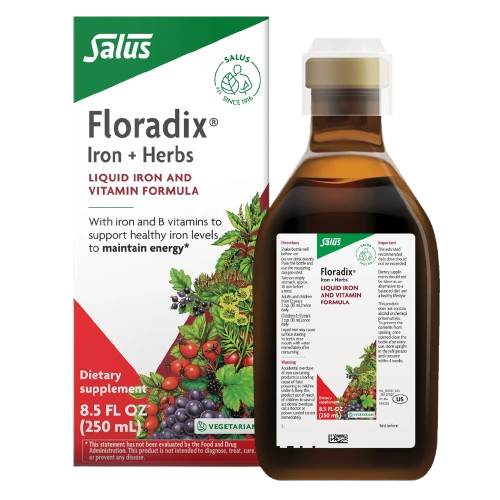
Floradix - Iron + Herbs
A liquid formula combining ferrous gluconate with B vitamins and herbal extracts, popular with people who cannot swallow tablets.
- Elemental iron10 mg per 10 ml serving
- FormFerrous gluconate
- Also containsVitamins B1, B2, B6, B12
- Herbal blendCarrot, nettle, spinach, fennel, rosehip
- Take10 ml twice daily before meals
- you cannot swallow capsules or tablets
- you prefer a liquid supplement with herbal ingredients
- you need a high-dose iron supplement
- you travel frequently (requires refrigeration once opened)
Floradix has been a household name in liquid iron for decades, and it remains the go-to recommendation for people who struggle with tablets. The formula delivers 10 mg of iron as ferrous gluconate per 10 ml serving, alongside a blend of B vitamins and herbal extracts including carrot, nettle, spinach and rosehip.
The liquid format means the iron is quickly diluted in the stomach, which may reduce the localized irritation a tablet can cause. Buyers consistently praise the taste and gentleness. The two main downsides: the low iron dose per serving (you would need the full twice-daily dose to reach 20 mg) and the cost per milligram, which is noticeably higher than capsule-based options.
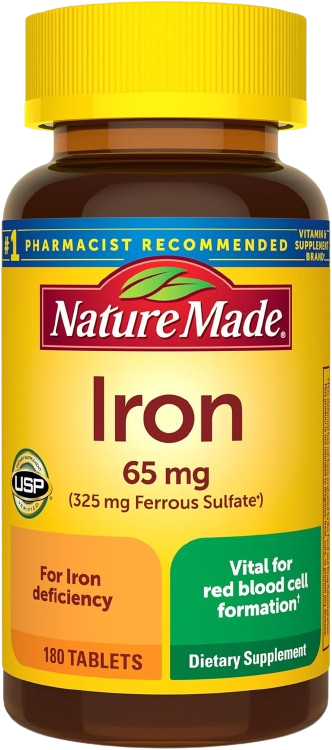
Nature Made - Iron 65 mg
The standard ferrous sulfate tablet at a clinical dose, USP verified for purity and potency, and available at virtually every US pharmacy.
- Elemental iron65 mg per tablet
- FormFerrous sulfate
- CertificationUSP verified
- Take1 tablet daily
- your doctor prescribed ferrous sulfate and your stomach handles it well
- you want the lowest possible cost per dose
- you have a sensitive stomach or a history of GI side effects from iron
- you prefer a gentler, lower-dose form
Nature Made delivers what many doctors still prescribe as the first-line treatment: 65 mg of elemental iron from ferrous sulfate, packed into a simple tablet verified by the United States Pharmacopeia (USP). That independent seal confirms the product contains what it claims, dissolves properly and is free from harmful contaminants.
The 180-tablet bottle lasts six months of daily use, making it by far the cheapest iron supplement on this list per serving. The flip side is the one everyone who has taken ferrous sulfate knows: stomach complaints are common. The Tolkien review noted that roughly one in four people taking this form experiences nausea, constipation or other GI discomfort. If you tolerate it, though, the clinical track record is hard to argue with.
Where to buy
Prices change often, so we don't show them here: check the retailer for today's price.
Who should avoid iron supplements
Do not start an iron supplement without a blood test confirming low iron or low ferritin. Excess iron accumulates in organs and can cause serious harm, particularly in people with hemochromatosis or other iron-loading conditions. See your doctor if you experience persistent fatigue, shortness of breath, unusually heavy periods or dark stools. Iron can interact with certain medications, including thyroid hormones, tetracycline antibiotics and antacids. Keep iron supplements out of reach of children: accidental overdose of iron-containing products is a leading cause of fatal poisoning in children under six.
Iron supplements are not suitable for everyone. People with hemochromatosis (a genetic condition that causes iron overload) should not take supplemental iron unless directed by a specialist. Those receiving regular blood transfusions for conditions such as thalassemia already receive large amounts of iron and may need chelation therapy to remove excess stores, not more iron.
If you take levothyroxine (thyroid medication), separate it from iron by at least four hours, as iron can reduce its absorption. The same applies to tetracycline and quinolone antibiotics, levodopa and certain bisphosphonates. Always tell your doctor or pharmacist about any supplements you take.
Frequently asked questions
Is chelated iron better than ferrous sulfate?
For most people supplementing on their own, ferrous bisglycinate (chelated iron) offers better tolerability with comparable or better absorption per milligram. A 2013 systematic review found significantly fewer gastrointestinal side effects with bisglycinate. That said, ferrous sulfate remains the reference standard for treating diagnosed iron deficiency anemia under medical supervision, and some doctors prefer it for its high dose and long track record.
What form of iron is easiest on the stomach?
Heme iron polypeptide and ferrous bisglycinate are consistently the gentlest forms in both studies and buyer reviews. Heme iron avoids gut irritation by using a separate absorption pathway. Bisglycinate shields the gut lining because the iron is bound to glycine rather than released as free ions.
Should I take iron with food or on an empty stomach?
Iron is generally absorbed best on an empty stomach, taken 30 to 60 minutes before a meal. If that causes nausea, taking it with a small amount of food is a reasonable trade-off. Heme iron polypeptide is the exception: it absorbs well with or without food because its transporter is not affected by food components.
Can I take iron every other day instead of daily?
Research by Stoffel et al. (2020) suggests that alternate-day dosing may improve iron absorption per dose compared with taking it every day. This approach can also reduce side effects. Discuss it with your doctor, especially if daily iron causes discomfort or if you are treating a diagnosed deficiency.
How long does it take for iron supplements to work?
Most people notice improved energy within two to four weeks. Hemoglobin levels typically begin rising within four to six weeks. Fully replenishing ferritin stores can take three to six months of consistent supplementation. Your doctor can track progress with periodic blood tests.
The bottom line
If you have tried ferrous sulfate and abandoned it because of stomach problems, you are not alone. The good news is that gentler, well-absorbed alternatives exist. For most people, a chelated bisglycinate delivers the best balance of tolerability, absorption and cost. Heme iron suits those who react to every non-heme form, and a liquid or whole-food option fills the gap for people with specific preferences.
Whichever form you choose, get a blood test first, take it with vitamin C, keep it away from tea and coffee, and follow up with your doctor to make sure your levels are moving in the right direction.
Thorne - Iron Bisglycinate
- Gentle Ferrochel bisglycinate form
- 25 mg elemental iron per capsule (139% RDA)
- Excellent tolerance and buyer feedback across retailers

Independent guides to natural remedies and supplements, checked against NHS and EFSA references.