Home › Best Supplements › Which iron supplement is best for a sensitive stomach?
RankingsWhich iron supplement is best for a sensitive stomach?
We may earn a commission when you buy through links on this page. No brand pays to be ranked. How we rank products
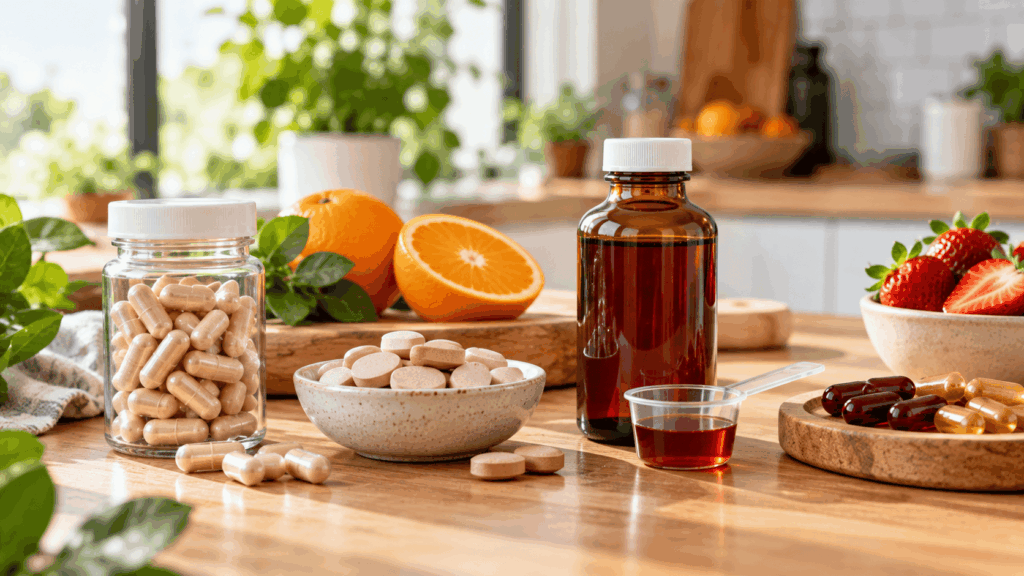
If your last attempt at iron supplementation ended with a bottle abandoned in the medicine cabinet, the problem was probably the form, the dose or the timing, not iron itself. Most iron supplements sold in the US still use ferrous sulfate, a form that works but also tops the list for nausea, cramping and constipation. For anyone with a sensitive stomach, that creates a frustrating loop: you need the iron, but the side effects make it impossible to take consistently.
The research is clear that gentler forms exist, lower doses can absorb just as well, and how often you take iron matters more than most labels let on. This guide walks through the evidence on iron forms, dosing strategies and practical timing, then ranks six supplements chosen specifically for people whose stomachs have pushed back against iron before.
A chelated iron bisglycinate at around 25 mg, taken with vitamin C and a small snack, is the gentlest well-studied starting point.
Our top pick is Solgar – Gentle Iron 25 mg, a single-ingredient bisglycinate that verified buyers consistently praise for stomach comfort. If third-party sport certification matters, Thorne – Iron Bisglycinate uses the same form with NSF batch testing.
Why iron supplements upset your stomach
If you have ever abandoned a bottle of iron tablets after a few days of nausea, cramping or constipation, you are far from alone. A 2015 meta-analysis of 43 randomized trials found that ferrous sulfate roughly doubled the odds of gastrointestinal side effects compared with placebo. That figure covers more than 6,800 adults, and it tells a clear story: the problem is real, common, and not something you are imagining.
Two mechanisms drive most of the discomfort. First, your gut can only absorb a fraction of each dose. Whatever iron is left over travels onward through the digestive tract, where it irritates the lining and disrupts gut bacteria. The bigger the dose, the more leftover iron and the rougher the ride. Second, a hormone called hepcidin rises after you take iron and stays elevated for about 24 hours, partially blocking further absorption. Take a second dose too soon and you absorb less of it while still dumping unabsorbed iron into an already irritated gut.
The good news: three levers solve most of it. The form of iron you choose, the dose you take, and how often you take it. Get those right and iron goes from something you dread to something you barely notice.
Which forms of iron are easiest on the stomach?
Not every iron supplement is made the same way, and the form listed on the Supplement Facts panel matters more than any front-of-label claim. Here is how the main forms compare for tolerance, based on the published evidence and what verified buyers consistently report.
1. Iron bisglycinate (chelated iron)
This is the form most often sold as “gentle iron.” The iron is bonded to the amino acid glycine, which keeps it stable as it travels to the small intestine. More iron is absorbed intact, and less reactive iron is left loose in the gut. A randomized trial in pregnant women found that iron bisglycinate caused significantly fewer adverse effects and better compliance than a traditional ferrous salt. A separate pediatric trial found bisglycinate and ferrous sulfate equally effective at raising iron stores at the same elemental dose. So the gentler form does not sacrifice results.
2. Ferric pyrophosphate (liquid iron)
Liquid formulas often use micronized ferric pyrophosphate (sold under the trade name SunActive Fe). Research indicates its bioavailability is similar to ferrous sulfate, but it is far less likely to cause nausea or constipation. Liquid also lets you fine-tune the dose, which is useful when even a standard capsule feels like too much.
3. Food-based iron
These products deliver iron alongside food concentrates (beet root, organic oranges) and cofactors like vitamin C, B12 and folate. Many people find them easy on the stomach because the iron is bound within a food matrix rather than delivered as a concentrated salt. The trade-off: you get a broader formula, so check the label to avoid doubling up on nutrients you already take in a multivitamin.
4. Ferrous sulfate (the standard)
This is the most prescribed form and the least expensive. It works, but it is also the form most linked to constipation, nausea and cramping, especially at higher doses. If your doctor prescribed it for diagnosed anemia, follow their guidance on dose and timing. If you are supplementing on your own and tolerance is the priority, ferrous sulfate is rarely the best starting point.
Iron salts (ferrous sulfate, fumarate, gluconate) release free iron ions quickly, which boosts absorption but also irritates the gut. Chelated iron (bisglycinate) stays bonded to an amino acid through digestion, absorbing efficiently with far less loose iron left behind. That is the core difference behind the word "gentle."
Three strategies that make any iron easier to tolerate
Switching forms helps, but how you take iron matters just as much as which bottle you buy. These three adjustments, all backed by published evidence, can turn an uncomfortable routine into one you barely think about.
Try alternate-day dosing
Two randomized controlled trials published in The Lancet Haematology found that single morning doses taken every other day optimized iron absorption compared with daily or twice-daily dosing. The reason: each dose raises hepcidin for about 24 hours, so a rest day lets the gatekeeper hormone fall back down before the next dose. Alternate-day dosing is gentler and can be more efficient. It is not a universal rule, though. If you are being treated for diagnosed iron-deficiency anemia, follow your doctor’s schedule.
Pair iron with vitamin C, away from blockers
Vitamin C converts iron into a more absorbable form in the gut. Taking your supplement with a few strawberries, a small glass of orange juice or a vitamin-C-rich snack is an easy win. At the same time, keep iron a couple of hours away from coffee, tea, calcium supplements and dairy-heavy meals, all of which reduce absorption. You do not need a perfect routine. Just avoid the biggest blockers and pick a pattern your stomach tolerates.
Keep the dose moderate
Side effects track with dose. The NIH Office of Dietary Supplements sets the tolerable upper intake level at 45 mg of elemental iron per day for adults from all sources, unless a clinician supervises a higher therapeutic dose. For most people supplementing for everyday support, 25 mg of elemental iron is a sensible starting point. If your multivitamin or prenatal already contains iron, add it up so you stay well under the ceiling.
The big number on the front of the bottle is often the weight of the whole iron compound, not the actual iron your body uses. Always compare the "elemental iron" figure in the Supplement Facts panel. That is what every guideline is based on, and it is the number that determines how your stomach will feel.
How to choose for your situation
Sensitive stomach, general supplementing
Start with a chelated bisglycinate at around 25 mg of elemental iron. Take it with a small snack and some vitamin C, and consider every other day if daily dosing is still rough. This covers the majority of people whose stomachs push back against standard iron tablets.
Vegan or plant-based diet
Plant-based eaters absorb less non-heme iron from food, so a supplement can help close the gap. Look for a certified-vegan bisglycinate or a food-based formula that includes vitamin C and B12 for comprehensive blood-building support.
Trouble swallowing capsules
A liquid iron (ferric pyrophosphate) lets you control the dose precisely and avoids the capsule issue entirely. A chewable chelated tablet is another option, though check the added sugars.
Pregnancy
The recommended daily iron during pregnancy is 27 mg. A gentle bisglycinate at 25-28 mg fits that range well, but iron in pregnancy belongs under your OB-GYN’s or midwife’s guidance, not guesswork. Make sure your prenatal and your standalone iron do not overlap excessively.
Diagnosed iron-deficiency anemia
Your doctor may prescribe a higher dose (often ferrous sulfate) and a specific schedule to rebuild stores quickly. That is a clinical decision. The gentle forms discussed here are for everyday supplementation or for people whose doctor agrees a lower, more tolerable dose is appropriate for their situation.

How we chose these supplements
We compared over 20 iron supplements available on the US market, narrowing the list based on four criteria weighted for people with sensitive stomachs. Every product was verified on its official label or retailer page. Composition, dose and format come from the Supplement Facts panel, never from memory.
Our four criteria: Tolerance (is the iron form backed by evidence for fewer GI side effects?), Dose vs RDA (does the elemental iron fit the recommended range without overshooting?), Value (cost per serving relative to comparable products), and Buyer feedback (what verified purchasers consistently report about stomach comfort). You can read more about our process on our how we rank products page.
| Rank | Product | Form & dose | Score | |
|---|---|---|---|---|
| #1Best overall | Solgar - Gentle Iron 25 mg | Iron bisglycinate chelate capsule 25 mg elemental iron | 9.1/10 | Check price |
| #2Best third-party tested | Thorne - Iron Bisglycinate | Ferrochel bisglycinate chelate capsule 25 mg elemental iron | 8.8/10 | Check price |
| #3Best with vitamin C | Pure Encapsulations - OptiFerin-C | Iron bisglycinate + 100 mg vitamin C capsule 28 mg elemental iron | 8.5/10 | Check price |
| #4Best liquid | Pure Encapsulations - Iron Liquid | Ferric pyrophosphate (SunActive Fe) liquid 15 mg elemental iron per tsp | 8.2/10 | Check price |
| #5Best vegan food-based | MegaFood - Blood Builder | Fermented iron bisglycinate tablet 26 mg elemental iron | 7.9/10 | Check price |
| #6Best chewable | SFI Health - Chewable Iron Chelate | Ferric trisglycinate chelate chewable 30 mg elemental iron | 7.7/10 | Check price |
Our picks, reviewed
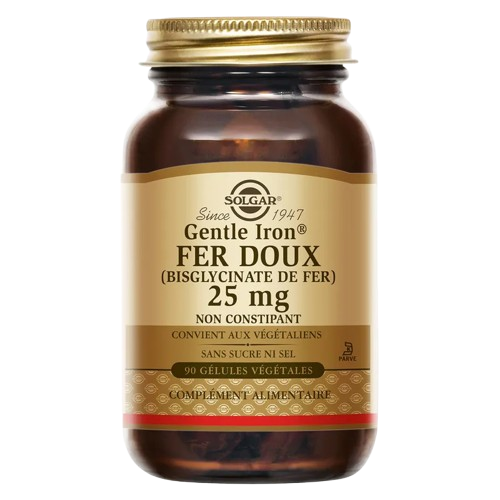
Solgar - Gentle Iron 25 mg
The iron most people with a sensitive stomach should try first: a well-tolerated bisglycinate at a moderate dose.
- Elemental iron25 mg per capsule (139% DV)
- Formiron bisglycinate chelate
- Take1 capsule daily with a meal
- Pack90 or 180 vegetable capsules
- you want a proven gentle iron at a moderate dose
- you prefer a single-ingredient capsule with no extras
- your doctor prescribed a higher therapeutic dose
- you cannot swallow capsules
Solgar Gentle Iron delivers 25 mg of elemental iron as bisglycinate chelate, the form most consistently linked to fewer GI side effects in published trials. The capsule is vegan, free of gluten, wheat, dairy and soy, and contains no artificial flavors or preservatives. At one capsule a day, it covers 139% of the Daily Value without overshooting the 45 mg tolerable upper limit.
Verified buyers on Amazon and iHerb overwhelmingly highlight stomach comfort as the main reason they stick with it. “No stomach issues at all, even on an empty stomach” is a recurring theme. A small number of buyers report mild constipation at first, which tends to resolve within a week or two. The 180-capsule bottle offers strong value per serving, making it practical for the months-long supplementation most people need.
Where to buy
Prices change often, so we don't show them here: check the retailer for today's price.
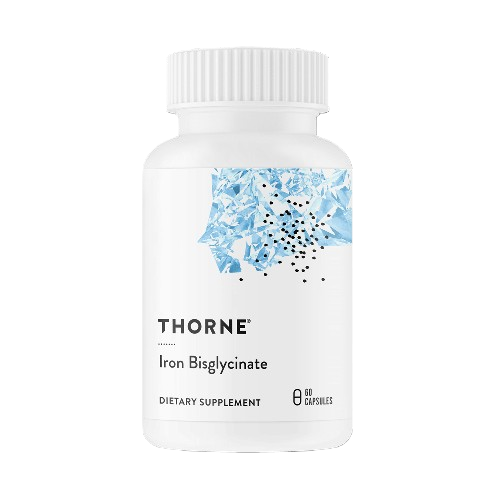
Thorne - Iron Bisglycinate
The same gentle bisglycinate form, with NSF Certified for Sport testing on every batch.
- Elemental iron25 mg per capsule (139% DV)
- FormFerrochel ferrous bisglycinate chelate
- Take1 capsule daily
- CertificationsNSF Certified for Sport
- you want third-party batch testing for purity and banned substances
- you are an athlete subject to anti-doping rules
- you want a bigger pack size for long-term use
- budget is your main concern
Thorne uses the same Ferrochel bisglycinate chelate at the same 25 mg dose as Solgar, but adds a layer of reassurance: every batch is NSF Certified for Sport, meaning it is screened for over 200 banned substances and verified for label accuracy. That matters for competitive athletes, but it also signals a level of third-party oversight that any buyer can appreciate.
The capsule contains minimal other ingredients (hypromellose capsule, leucine, microcrystalline cellulose, silicon dioxide) and is free of gluten, soy and dairy. Buyer feedback on tolerance mirrors Solgar’s: most people report no GI issues. The 60-capsule bottle is smaller, which makes it slightly less economical per serving over a long routine, but the testing standard justifies the difference for buyers who prioritize verified purity.
Where to buy
Prices change often, so we don't show them here: check the retailer for today's price.
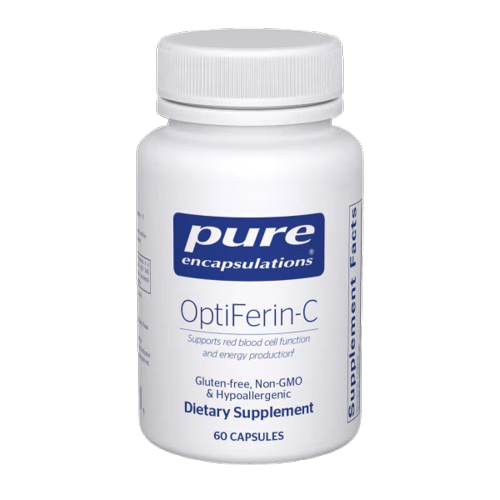
Pure Encapsulations - OptiFerin-C
Bisglycinate iron and buffered vitamin C in one capsule, so you do not need to pair them yourself.
- Elemental iron28 mg per capsule (156% DV)
- Vitamin C100 mg (from calcium ascorbate blend)
- Formiron bisglycinate (Ferrochel)
- Take1 capsule, 1-3 times daily with meals
- you want iron and vitamin C in one convenient capsule
- you prefer a hypoallergenic formula with no fillers
- you already take a separate vitamin C supplement
- you find 28 mg per capsule too high for your needs
OptiFerin-C pairs 28 mg of iron bisglycinate with 100 mg of buffered vitamin C (calcium ascorbate blend), which enhances absorption while being gentler on the stomach than plain ascorbic acid. Pure Encapsulations produces in a cGMP-certified facility and tests through third-party labs for quality and purity. The formula is hypoallergenic, free of unnecessary binders, fillers and preservatives.
The suggested dose is 1 to 3 capsules daily with meals, which gives flexibility but also means the bottle goes faster at higher doses. Most buyers report good tolerance. A few note mild stomach discomfort, though this is less common than with ferrous sulfate products. The higher iron content per capsule (28 mg vs 25 mg) puts it closer to the 45 mg ceiling, so be mindful of other iron sources in your routine.
Where to buy
Prices change often, so we don't show them here: check the retailer for today's price.
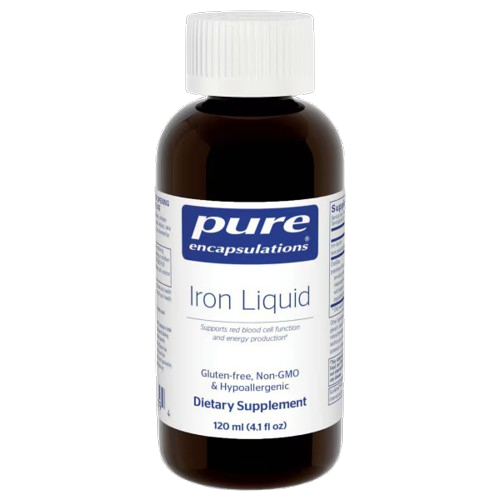
Pure Encapsulations - Iron Liquid
A liquid formula using SunActive Fe for high bioavailability and precise, adjustable dosing.
- Elemental iron15 mg per teaspoon (83% DV)
- Formferric pyrophosphate (SunActive Fe)
- Withcranberry and wild blueberry extracts
- Take1 tsp, 1-2 times daily with meals
- you cannot swallow capsules or tablets
- you want to start with a lower dose and adjust gradually
- you prefer a higher iron dose in one serving
- you want the best value per serving
This liquid delivers 15 mg of elemental iron per teaspoon as micronized ferric pyrophosphate (SunActive Fe), a form whose bioavailability is comparable to ferrous sulfate in clinical research but with significantly fewer GI side effects. The pomegranate flavor is well-received, and the liquid format lets you halve or double the dose easily.
At 24 servings per bottle, the liquid runs out faster and costs more per milligram of iron than capsule alternatives. That is the trade-off for the format’s flexibility. It is a strong choice for people who have struggled with every capsule they have tried, and the cranberry and wild blueberry extract blend adds a modest antioxidant boost. Pure Encapsulations states the product exceeds USP standards and is third-party tested.
Where to buy
Prices change often, so we don't show them here: check the retailer for today's price.
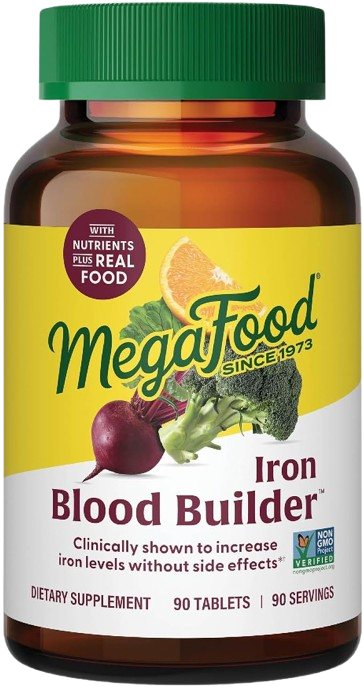
MegaFood - Blood Builder
A food-based iron tablet with vitamin C, B12 and folate, clinically shown to raise iron without nausea or constipation.
- Elemental iron26 mg per tablet (144% DV)
- Withvitamin C 15 mg, folate 680 mcg DFE, B12 30 mcg
- Formfermented iron bisglycinate
- Also containsorganic beet root
- you want a food-based formula with built-in absorption cofactors
- you follow a vegan diet and need B12 and folate alongside iron
- you want a single-ingredient iron supplement
- you already take a B-complex or multivitamin with folate and B12
MegaFood Blood Builder is clinically shown to increase iron levels without causing nausea or constipation in an 8-week trial of people with low iron. It combines 26 mg of fermented iron bisglycinate with vitamin C from organic oranges, folate and B12 for comprehensive red blood cell support, plus organic beet root.
The formula is certified vegan, non-GMO, tested for 125+ pesticides, and Certified B Corporation. You can take it any time of day, even on an empty stomach, which is unusual for an iron supplement. The broader nutrient profile is a plus for vegans, but it also means overlap if you already take a B-complex. Some buyers note the tablets are on the larger side, which may be an issue if swallowing pills is already uncomfortable.
Where to buy
Prices change often, so we don't show them here: check the retailer for today's price.
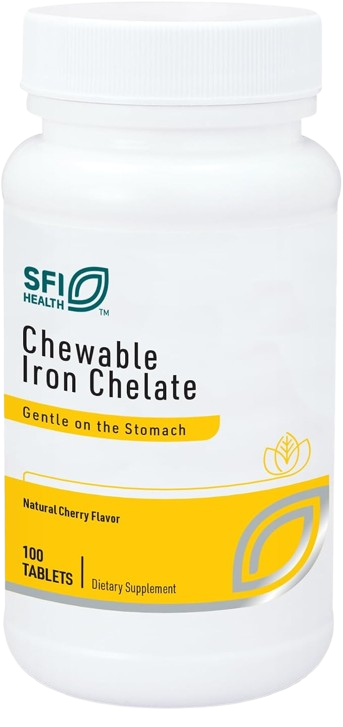
SFI Health - Chewable Iron Chelate
A cherry-flavored chewable using Ferrochel chelated iron, for anyone who cannot tolerate capsules or liquids.
- Elemental iron30 mg per chewable (167% DV)
- FormTRAACS ferric trisglycinate chelate (Albion/Ferrochel)
- Take1 chewable tablet daily with food
- Free ofgluten, soy, egg, dairy, fish, peanut
- you need a chewable option because capsules and liquids are not an option
- you want chelated iron in a convenient format
- you are sensitive to added sugars (contains 2 g fructose per tablet)
- you prefer a lower iron dose for everyday use
Formerly sold under the Klaire Labs name, this chewable delivers 30 mg of elemental iron as TRAACS ferric trisglycinate chelate (Albion/Ferrochel), a chelated form designed for enhanced absorption and gentleness. The natural cherry flavor makes it palatable, though each tablet contains 2 g of fructose as a sweetener.
The 100-tablet bottle lasts over three months at one chewable per day. It is free of gluten, soy, egg, dairy, tree nuts, fish, peanuts and artificial preservatives. Buyer feedback is more limited than for the capsule options, and some reviewers find the cherry flavor slightly artificial. The 30 mg dose is the highest in our lineup, which may be more than some people need for everyday supplementation. Talk to your doctor if you are unsure whether 30 mg is appropriate for you.
Where to buy
Prices change often, so we don't show them here: check the retailer for today's price.
Who should be careful with iron supplements
You have not had your iron levels tested (a ferritin and CBC blood test should come before any supplement). You are a man or postmenopausal woman with no diagnosed deficiency. You have hemochromatosis or a family history of iron overload. You take thyroid medication, certain antibiotics or levodopa, which iron can interfere with. You are pregnant or breastfeeding. You have a digestive condition (celiac disease, IBD, history of bariatric surgery). Keep all iron supplements out of reach of children: accidental overdose of iron-containing products is a leading cause of fatal poisoning in children under 6.
Iron is not a “just in case” supplement. Unlike most vitamins, your body has no efficient way to excrete excess iron, so taking it when you do not need it can lead to a harmful buildup over time. The NIH sets the tolerable upper intake at 45 mg per day for adults unless a healthcare professional supervises a higher dose. Always start with a blood test, and if you notice persistent dark stools, severe constipation, vomiting or stomach pain, stop taking iron and contact your doctor.
Frequently asked questions
What is the gentlest form of iron for a sensitive stomach?
Iron bisglycinate, often sold as "gentle iron," is the form most consistently linked to fewer GI side effects in clinical trials. It stays bonded to the amino acid glycine through digestion, so less reactive iron is left loose in the gut. Liquid ferric pyrophosphate (SunActive Fe) is another well-tolerated option, especially if you cannot swallow capsules.
Can I take iron every other day instead of daily?
Yes, and research supports it. Two randomized trials published in The Lancet Haematology found that single morning doses on alternate days optimized iron absorption in iron-depleted women, because each dose raises the hormone hepcidin for about 24 hours. A rest day lets absorption recover. If you are treating diagnosed anemia, follow your doctor’s recommended schedule.
Should I take iron on an empty stomach or with food?
Iron absorbs best on an empty stomach, but that is also when it is most likely to cause nausea. A practical middle ground: take it with a small snack and a source of vitamin C (citrus, strawberries, bell pepper). Avoid taking iron with coffee, tea, calcium supplements or dairy, all of which reduce absorption.
How long does it take for iron supplements to work?
Most people begin to feel better within 2 to 4 weeks as hemoglobin starts to recover. Rebuilding ferritin (stored iron) typically takes 3 to 6 months of consistent supplementation. Your doctor can track progress with blood tests. Do not stop early because you feel better: stores need time to refill.
What is the difference between elemental iron and iron compound weight?
The iron compound weight (for example, 325 mg ferrous sulfate) is the total weight of the chemical compound. Elemental iron is the actual amount of iron your body can use, which is always smaller. For ferrous sulfate, elemental iron is about 20% of the compound weight. Always compare the elemental iron line on the Supplement Facts panel, not the front-label number.
Is 25 mg of iron enough?
For most adults supplementing to maintain healthy levels, 25 mg of elemental iron exceeds the RDA (8 mg for men and postmenopausal women, 18 mg for premenopausal women). For diagnosed iron-deficiency anemia, your doctor may recommend a higher therapeutic dose. The 45 mg daily tolerable upper limit from the NIH applies to all sources combined, unless a clinician supervises a higher amount.
Our verdict
The best iron supplement for a sensitive stomach is not the highest dose or the most expensive bottle. It is the one you can take consistently for months without your gut fighting back. For most people, that means a chelated bisglycinate at around 25 mg of elemental iron, taken with a small snack and some vitamin C, on a schedule your stomach can handle.
Solgar Gentle Iron earns the top spot because it does exactly that: a clean, well-tolerated bisglycinate at a sensible dose, widely available, with strong buyer feedback on stomach comfort. If third-party batch testing matters to you, Thorne Iron Bisglycinate offers the same form with NSF Certified for Sport verification. And if capsules are not an option, Pure Encapsulations Iron Liquid delivers a highly bioavailable liquid iron that most stomachs accept without complaint.
Whichever you choose, start with a blood test, read the elemental iron line on the label, and give your body time to adjust. Consistency beats potency every time.
Best overallSolgar - Gentle Iron 25 mg
- Iron bisglycinate chelate, the gentlest well-studied form
- 25 mg elemental iron, a moderate dose that fits under the 45 mg ceiling
- Vegan, non-constipating, free of major allergens
AmazonFast delivery · check today's priceCheck on Amazon

Independent guides to natural remedies and supplements, checked against NHS and EFSA references.