
What to know about iron
- Iron helps your body make haemoglobin, the protein in red blood cells that carries oxygen to every tissue and organ.
- The NHS recommends 8.7 mg a day for men and 14.8 mg a day for women aged 19 to 49.
- Most people can get enough iron from food, but women with heavy periods, pregnant women and people on plant-based diets are at higher risk of running low.
- A simple blood test from your GP can check whether your iron levels are where they should be.
Iron is one of those minerals that works quietly in the background until something goes wrong. You rarely think about it when your levels are fine, but if they drop, the effects can show up almost everywhere: in your energy, your concentration, your hair, even the colour of your skin.
So what exactly does iron do, and how much do you actually need? Here is what the evidence says.
How iron works in your body
Iron’s most important job is helping your body make haemoglobin, the protein inside red blood cells that picks up oxygen in your lungs and delivers it to every tissue and organ. Without enough iron, your body produces fewer red blood cells, and those it does make carry less oxygen. That is the basic mechanism behind iron deficiency anaemia.
Iron also helps produce myoglobin, a related protein that stores oxygen in your muscles and releases it when they need to work. On top of that, iron plays a part in energy-yielding metabolism, which is the process your cells use to turn the nutrients you eat into usable energy.
Under EU and UK nutrition regulations, these are some of the authorised health claims for iron. In plain language, iron contributes to:
- The normal formation of red blood cells and haemoglobin
- Normal oxygen transport in the body
- The reduction of tiredness and fatigue
- Normal cognitive function (concentration, memory, mental clarity)
- The normal function of the immune system
- Normal energy-yielding metabolism
These are not marketing claims. They come from the GB Nutrition and Health Claims Register and can only be used when a product or food provides a meaningful amount of iron.
What happens when iron runs low
Because iron is involved in so many processes, the signs of deficiency can be surprisingly wide-ranging. The NHS and the British Dietetic Association list the following as common symptoms:
- Tiredness and lack of energy that does not improve with rest
- Pale skin, pale nail beds, or a pale tongue
- Shortness of breath, especially on exertion (climbing stairs, walking uphill)
- Heart palpitations
- Feeling the cold more than usual
- Brittle nails or hair loss
- Difficulty concentrating
Mild deficiency is common and often goes unnoticed for months. It is usually picked up through a blood test (a full blood count and ferritin test) ordered by your GP.
Haemoglobin tells you how much oxygen your blood is carrying right now. Ferritin tells you how much iron your body has in reserve. You can have a normal haemoglobin level but low ferritin, which means your stores are running down. Ask your GP to check both if you suspect your iron is low.
How much iron do you need each day?
The NHS recommends the following daily intakes for adults in the UK:
- 8.7 mg a day for men aged 19 and over
- 14.8 mg a day for women aged 19 to 49
- 8.7 mg a day for women aged 50 and over (unless you still have periods, in which case the higher figure applies)
Pregnant women need more. The NHS advises speaking to your GP or midwife about iron during pregnancy, as requirements increase to support the growing baby and the extra blood volume your body produces.
Most people should be able to get enough from a varied and balanced diet. If you take an iron supplement without a GP’s advice, the NHS recommends keeping the dose to 17 mg a day or less to avoid side effects such as constipation and nausea.
Where to find iron in your diet
There are two types of dietary iron, and they are absorbed differently.
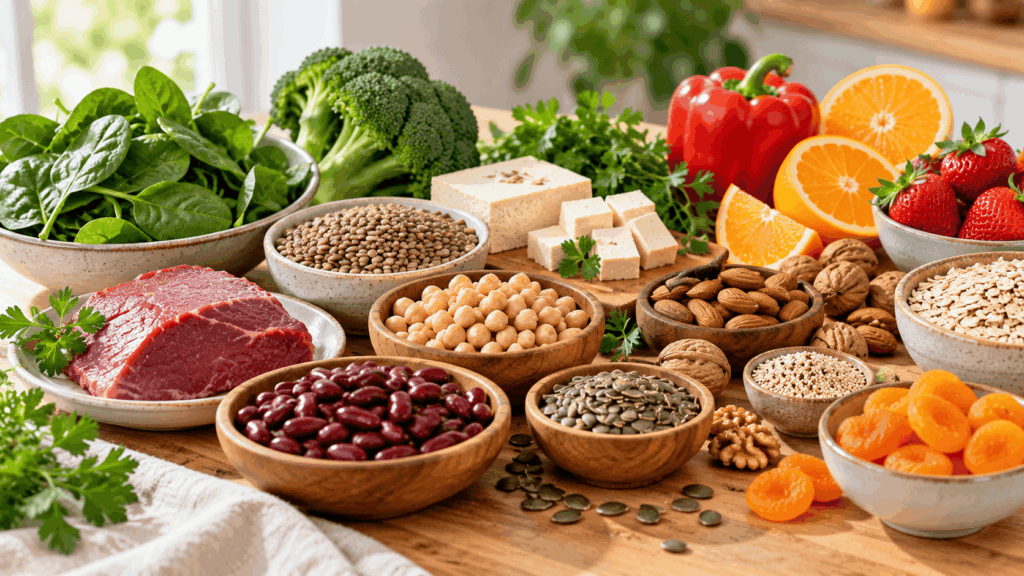
Haem iron comes from animal sources (red meat, poultry, fish) and is absorbed more easily by the body. Non-haem iron comes from plant sources (beans, lentils, spinach, fortified cereals, dried fruit, tofu) and is less readily absorbed on its own.
Good UK food sources include:
- Red meat and liver (the NHS advises limiting red and processed meat because of the probable link with bowel cancer, and avoiding liver during pregnancy)
- Beans and pulses (kidney beans, chickpeas, lentils)
- Fortified breakfast cereals
- Dark green leafy vegetables (spinach, kale, broccoli)
- Nuts and seeds
- Dried fruit (apricots, raisins)
- Tofu and soy products
Eating a source of vitamin C at the same meal (an orange, a handful of strawberries, some red pepper) helps your body absorb non-haem iron more effectively. On the other hand, tea, coffee and calcium-rich foods can reduce iron absorption if consumed at the same time as iron-rich foods. The NHS recommends avoiding tea and coffee with meals if your iron is low.
Who is most at risk of low iron?
Some groups are more likely to develop iron deficiency than others:
- Women with heavy periods. Menstrual blood loss is the most common reason women of reproductive age have lower iron stores than men.
- Pregnant women. Blood volume increases significantly during pregnancy, raising iron demands.
- Vegetarians and vegans. Plant-based diets rely on non-haem iron, which is less well absorbed. The British Dietetic Association recommends eating vitamin C-rich foods alongside plant-based iron sources to improve uptake.
- People with gut conditions. Coeliac disease, inflammatory bowel disease and other conditions can reduce the body’s ability to absorb iron from food.
- Frequent blood donors. Regularly giving blood depletes iron stores more quickly.
- Teenagers. Rapid growth increases iron needs, especially for girls once periods begin.
When to see your GP
If you recognise the symptoms of low iron (persistent tiredness, breathlessness, pale skin, hair loss), do not self-diagnose or start taking high-dose iron supplements on your own. Too much iron can cause serious side effects, and iron overload conditions such as haemochromatosis require medical management.
You feel tired all the time and rest does not help. You are short of breath doing things that did not used to be a problem. You notice your skin, nails or the inside of your lower eyelids look unusually pale. You are losing more hair than normal. You are pregnant or planning a pregnancy and are unsure whether you need an iron supplement. You have been told you have heavy periods. Always keep iron supplements out of the reach of children. Iron is toxic in overdose, and small children are particularly at risk.
Your GP can order a full blood count and ferritin test. If your iron is low, they will look for the cause (diet, blood loss, absorption problems) and advise on the right dose and form of supplement if you need one.
Common questions about iron
Can you get too much iron?
Yes. The NHS advises that taking more than 17 mg a day of iron supplements (without a GP’s recommendation) could be harmful. Side effects of high-dose iron include constipation, nausea and stomach pain. Very high doses can be dangerous, particularly for children. If your GP has prescribed a higher dose, follow their guidance.
Does cooking in a cast-iron pan increase your iron intake?
There is some evidence that cooking acidic foods (such as tomato-based sauces) in cast-iron cookware can transfer small amounts of iron into the food. The effect is modest and depends on what you are cooking, how long you cook it and how acidic it is. It is not a reliable substitute for eating iron-rich foods, but it may contribute a small amount.
Is it better to take iron on an empty stomach?
Iron supplements are generally absorbed better on an empty stomach, but they can cause nausea and stomach discomfort for some people. If you find iron hard to tolerate, try taking it with a small amount of food (not dairy, tea or coffee, which can reduce absorption). Your GP or pharmacist can advise on the best approach for you.
Why do women need more iron than men?
Women aged 19 to 49 lose iron through menstrual blood each month, so their daily requirement (14.8 mg, per the NHS) is higher than men’s (8.7 mg). After the menopause, when periods stop, the recommended intake drops to 8.7 mg. Women who have particularly heavy periods may need even more and should speak to their GP.
Can low iron cause hair loss?
It can. Iron helps deliver oxygen to hair follicles, and when levels are low, the body prioritises vital organs over hair growth. If you are shedding more hair than usual, low iron is one possible cause, but it is not the only one. A blood test can rule it in or out.

Independent guides to natural remedies and supplements, checked against NHS and EFSA references.