Home › Natural Remedies › What are the main types of complementary therapies?
Natural RemediesWhat are the main types of complementary therapies?

What to know
- Complementary therapies are treatments used alongside conventional medicine, not instead of it. They cover a wide range of practices, from acupuncture and massage to herbal medicine and meditation.
- Evidence varies widely. Some therapies, such as acupuncture for chronic pain and yoga for stress and anxiety, have reasonable clinical support. Others, such as homeopathy and reiki, have little or no evidence of specific therapeutic effects beyond placebo.
- Safety is not guaranteed just because a therapy is described as natural. Herbal medicines can interact with prescribed drugs, and some therapies are not suitable for everyone.
- The NHS offers a small number of complementary therapies for specific conditions, including acupuncture for chronic pain and hypnotherapy for irritable bowel syndrome.
Complementary therapies is a broad term that covers a wide range of treatments used alongside conventional medicine. They include everything from acupuncture and massage to herbal remedies, meditation and energy healing. The NHS describes them as treatments that fall outside standard medicine, and notes that while some may be offered on the NHS for specific conditions, most are not.
It is worth being clear about one distinction from the start. Complementary therapy means something used alongside conventional treatment. Alternative therapy means something used instead of it. The National Cancer Institute (NCI) makes this distinction clearly, and it matters: replacing prescribed treatment with an unproven therapy carries real risks. This article focuses on complementary use.
How complementary therapies are grouped
There is no single agreed system, but most clinical sources, including the NCI and Johns Hopkins Medicine, use five broad categories. Many therapies sit across more than one group.
Mind-body therapies
These combine mental focus, breathing techniques and body movement to support physical and emotional wellbeing. They are among the most widely studied complementary approaches.
- Meditation and mindfulness. Techniques for calming the mind and developing present-moment awareness. Mind notes good evidence for benefits in stress, sleep and general wellbeing. However, Mind also flags that meditation can occasionally worsen dissociation or flashbacks in some people with trauma histories.
- Yoga. A practice combining physical postures, breathing and relaxation. Mind describes the evidence for stress, anxiety and depression as good. Several NHS and clinical sources recommend it as a complementary approach.
- Tai chi. A gentle martial art involving slow, flowing movements. There is some evidence for benefits in balance, wellbeing, depression and anxiety.
- Hypnotherapy. Uses deep relaxation to change habits or thinking patterns. The NHS may offer it for irritable bowel syndrome when other treatments have not worked. Mind notes evidence for sleep and anxiety, but cautions that it may not be suitable for people with schizophrenia, psychosis or epilepsy.
- Creative therapies. Art, music and dance therapies use creative expression to support emotional wellbeing. They are used in some NHS mental health services.
Body-based therapies
These involve physical manipulation, movement or touch.
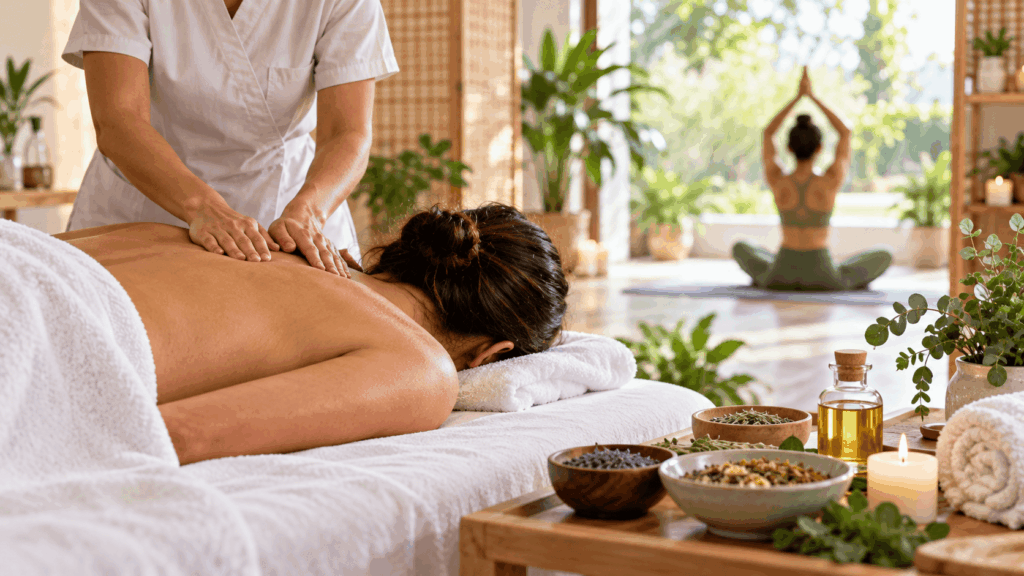
- Massage. Manual manipulation of soft tissue, used for pain, muscle tension, relaxation and general wellbeing. Widely available and generally considered safe for most people.
- Osteopathy. Treatment of the muscles, joints and spine through massage, stretching and manipulation. Osteopaths are regulated by law in the UK and must be registered with the General Osteopathic Council.
- Chiropractic. Focuses on the spine and musculoskeletal system. Chiropractors are also legally regulated and must be registered with the General Chiropractic Council. The NHS notes that chiropractic may not be safe for people taking blood thinners or with weak bones.
- Reflexology. Applies pressure to specific points on the feet or hands. Mind describes the evidence as poor quality.
- Alexander technique. Lessons to improve posture, balance and movement. The NHS may offer it for people with Parkinson’s disease who have balance problems.
Herbal and dietary therapies
These use plants, plant extracts, vitamins, minerals and dietary changes to support health.
- Herbal medicine. Uses preparations made from plant roots, leaves, bark or flowers. Some herbs have well-researched effects: St John’s wort, for example, has evidence for mild to moderate depression, but it interacts with many prescription medicines, including hormonal contraceptives, antidepressants and blood thinners. The NHS advises checking with a pharmacist before taking any herbal medicine alongside prescribed medication.
- Vitamins and supplements. Mind notes that supplements are unlikely to help with mental health unless there is an underlying nutrient deficiency. Excessive intake can be harmful.
- Traditional herbal systems. Ayurvedic medicine (from India), traditional Chinese medicine and other systems use complex herbal formulations that have been developed over centuries. Evidence for individual preparations varies widely.
The NHS warns that herbal medicines may interact badly with statins, antidepressants, diabetes medicines, blood pressure medicines, blood thinners (such as warfarin) and hormonal contraceptives. Always tell your GP and pharmacist about any herbal remedies you are taking. Look for the THR (Traditional Herbal Registration) mark on packaging, which confirms the product meets UK safety standards.
Energy therapies
These are based on the idea that energy flows through and around the body, and that health problems arise when this flow is disrupted.
- Reiki. A practitioner places their hands on or above the body to channel healing energy. Mind describes the studies as small and of low quality, mostly showing little effect.
- Therapeutic touch. Similar in principle to reiki. The NCI notes that there is not enough evidence to confirm that the energy fields these therapies work with exist, but adds that they do not appear to cause harm.
- Acupuncture. Fine needles are inserted at specific points on the body. Although rooted in traditional Chinese energy theory, acupuncture has more clinical evidence behind it than most other energy-based therapies. The NHS may offer it for chronic pain, migraine-type headaches and severe hiccups.
Whole medical systems
These are complete systems of theory and practice that developed independently of Western medicine, often over thousands of years.
- Traditional Chinese medicine (TCM). Includes acupuncture, herbal medicine, tai chi, qigong and dietary therapy. Some elements, particularly acupuncture, have reasonable evidence; others have less.
- Ayurveda. An ancient Indian system using herbal treatments, diet, exercise, meditation and yoga. Evidence for specific Ayurvedic treatments is generally limited, and some preparations have been found to contain heavy metals.
- Naturopathy. Combines nutrition, herbal medicine, lifestyle changes and sometimes homeopathy. Evidence for the system as a whole is limited, though individual elements (such as dietary advice) may have support.
- Homeopathy. Uses extremely diluted preparations of substances. The NHS does not offer homeopathy, and Mind states that there is no evidence it can treat any health condition. Any benefit is attributed to the placebo effect and the time spent with a practitioner.
Some complementary therapies have good-quality evidence for specific uses: acupuncture for chronic pain, yoga for stress and anxiety, hypnotherapy for IBS. Others have weak, mixed or no evidence. “Complementary” is a broad label, not a quality mark. The key question is always: what does the evidence say for this specific therapy, used for this specific purpose?
How to stay safe
The Better Health Channel and the NHS both emphasise that “natural” does not automatically mean safe. Practical steps to reduce risk include:
- Tell your GP and pharmacist about any complementary therapy or herbal medicine you are using, including over-the-counter supplements.
- Never stop or change prescribed medication without speaking to your doctor first.
- Check your practitioner’s credentials. Osteopaths and chiropractors must be legally registered. For other therapists, check whether they are registered with a professional body accredited by the Professional Standards Authority (PSA). The Complementary and Natural Healthcare Council (CNHC) maintains a UK register of complementary therapists.
- Look for the THR mark on herbal medicine packaging. This confirms the product is registered with the MHRA and meets UK safety standards.
- Be cautious about buying herbal medicines online. The NHS advises against purchasing unlicensed products, which may contain undisclosed ingredients or contaminants.
- Exercise extra caution if you are pregnant, breastfeeding, have a liver or kidney condition, or are giving any product to a child. The NHS advises against herbal medicines in these situations unless specifically recommended by a healthcare professional.
Before starting any therapy, ask: What training and qualifications do you have? Are you registered with a professional body? What evidence is there that this therapy works for my particular concern? Are there any risks or side effects? Will it interact with any medication I am taking? How many sessions will I need, and what will it cost?
What the NHS offers
The NHS offers a small number of complementary therapies for specific, evidence-supported uses. As of the most recent NHS guidance:
- Acupuncture may be offered for chronic pain, migraine-type headaches, or severe hiccups.
- Hypnotherapy may be offered for irritable bowel syndrome when other treatments have not worked, or for severe hiccups.
- Alexander technique may be offered for people with Parkinson’s disease who have balance or movement problems.
Availability varies by area, and your GP can advise on what is available locally. Most complementary therapies are accessed privately, and the cost is not covered by the NHS.
Common questions about complementary therapies
What is the difference between complementary and alternative therapy?
Complementary therapy is used alongside conventional medicine, not instead of it. Alternative therapy is used in place of conventional treatment. The distinction matters: replacing prescribed treatment with an unproven therapy can be harmful. Most clinical guidelines recommend complementary use only, and advise against stopping prescribed medication without speaking to your doctor.
Are complementary therapies safe?
Safety varies widely depending on the therapy, the practitioner and your individual health. Some, such as yoga and meditation, are generally safe for most people. Others, such as herbal medicines, can interact with prescribed drugs or cause side effects. Always tell your GP and pharmacist about any complementary therapy you are using, and check your practitioner’s qualifications and registration.
Does the NHS offer complementary therapies?
The NHS offers a small number of complementary therapies for specific conditions. These currently include acupuncture for chronic pain and migraine-type headaches, hypnotherapy for irritable bowel syndrome, and Alexander technique for Parkinson’s disease. Most complementary therapies are not available on the NHS and are accessed privately.
Is there evidence that complementary therapies work?
Evidence varies from therapy to therapy and from condition to condition. Acupuncture for chronic pain, yoga for stress and anxiety, and hypnotherapy for IBS all have reasonable clinical support. Homeopathy, reiki and many herbal remedies have little or no good-quality evidence of effects beyond placebo. The key is to look at the evidence for the specific therapy and the specific condition, not for complementary therapies as a whole.
How do I find a qualified complementary therapist?
Osteopaths and chiropractors must be legally registered in the UK. For other therapists, check whether they are registered with a professional body accredited by the Professional Standards Authority (PSA). The Complementary and Natural Healthcare Council (CNHC) maintains a register of complementary therapists. Ask about their training, qualifications, insurance and experience before starting treatment.

Independent guides to natural remedies and supplements, checked against NHS and EFSA references.