Home › Skin & Hair › What is prickly heat and how do you get rid of it?
Skin & HairWhat is prickly heat and how do you get rid of it?
What to know
- Prickly heat (heat rash) is a common skin rash caused by blocked sweat glands. It is uncomfortable but usually harmless.
- The rash typically appears as small, raised spots that feel itchy or prickly. It is most common in hot, humid weather.
- Most cases clear up on their own within a few days once the skin is cooled down.
- Simple measures like wearing loose clothing, staying cool and using calamine lotion usually help. See your GP if the rash does not improve or shows signs of infection.
Prickly heat is one of those things most people recognise instantly: a cluster of small, itchy bumps that appear when you get too hot. It is especially common in summer, during holidays abroad, and in babies who are dressed too warmly. The medical name is miliaria, and it happens when sweat gets trapped under the skin instead of evaporating normally.
The good news is that prickly heat is almost always harmless and clears up on its own. But it can be genuinely uncomfortable, and knowing what helps (and what does not) can make a real difference while you wait it out.
What prickly heat looks like
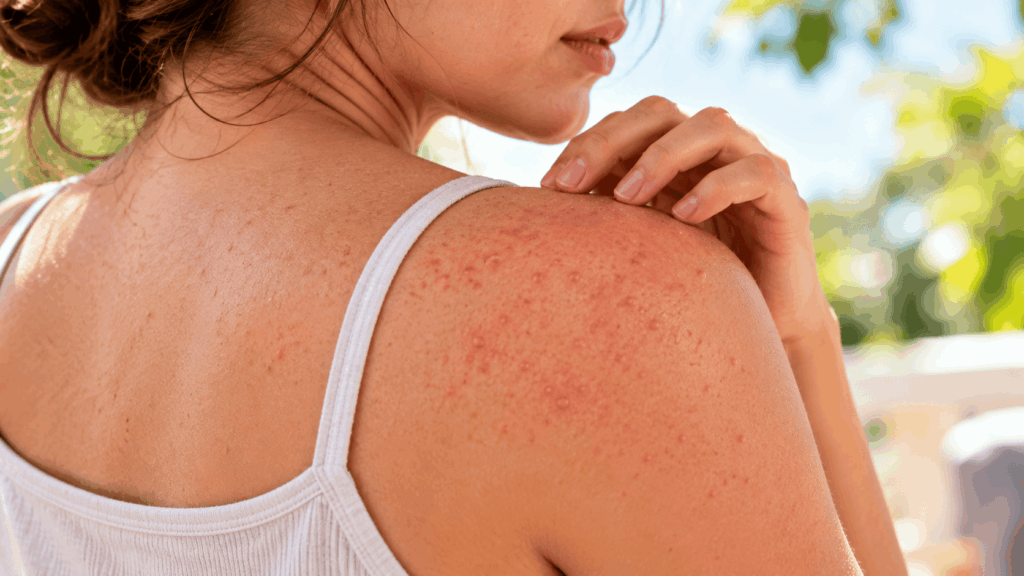
The NHS describes heat rash as small, raised spots (around 2 to 4 mm across) with an itchy, prickly feeling and mild swelling. On lighter skin, the spots appear red. On darker skin, they may look grey or white. The rash can spread, but it is not contagious.
Prickly heat tends to appear in areas where sweat collects: the neck, chest, back, armpits, groin, and skin folds. In babies, it often shows up on the face, neck and nappy area.
Types of heat rash
Doctors classify heat rash into three types, depending on how deep the sweat duct blockage occurs:
- Miliaria crystallina. The mildest form. Tiny, clear blisters that break easily, usually without itching. Common in newborns.
- Miliaria rubra. The most common type, and the one most people mean by “prickly heat.” Small red bumps with an itchy, prickling sensation that gets worse when you sweat.
- Miliaria profunda. Less common and more uncomfortable. Larger, firm, flesh-coloured bumps that develop deeper in the skin. This type can affect the body’s ability to cool itself and needs medical attention.
What causes prickly heat
Prickly heat happens when sweat ducts become blocked. Normally, sweat travels through narrow ducts to the surface of the skin and evaporates. When those ducts are clogged (by dead skin cells, bacteria or friction), the sweat has nowhere to go and leaks into the surrounding skin, triggering inflammation and the characteristic prickly rash.
Common triggers include:
- Hot, humid weather. The most common cause by far, especially during heatwaves or holidays in tropical climates.
- Overdressing. Tight clothing, synthetic fabrics and too many layers trap heat and moisture against the skin.
- Physical activity. Exercise and heavy exertion in warm conditions increase sweating.
- Fever. A raised body temperature from illness can trigger heat rash, even in cool environments.
- Babies and young children. The NHS notes that babies are especially prone because they cannot regulate their body temperature as well as older children and adults.
- Certain medications. Some medicines increase sweating or reduce the body’s ability to cool down (including beta-blockers, opioids and clonidine).
Babies get prickly heat more easily than adults. Dress your baby in loose, breathable layers and check for signs of overheating, especially in warm rooms and during car journeys. If you are unsure, the NHS advises that a baby’s tummy should feel warm but not hot or sweaty.
How to get rid of prickly heat at home
Most cases of prickly heat clear up within a few days once the skin cools down. The NHS recommends these straightforward steps:
- Stay cool. Move to a cooler room, use a fan or air conditioning, and avoid direct sunlight during the hottest part of the day.
- Wear loose cotton clothing. Cotton breathes better than synthetic fabrics. Avoid tight waistbands, straps and anything that presses against the affected skin.
- Take cool baths or showers. This helps bring the skin temperature down and can unclog pores. Pat the skin dry gently afterwards rather than rubbing.
- Apply cool, damp cloths or ice packs. Wrap ice in a cloth and hold it against the rash for up to 20 minutes at a time. Do not apply ice directly to the skin.
- Drink plenty of fluids. Staying hydrated helps your body regulate its temperature.
- Use lightweight bedding. Swap duvets for a cotton sheet on warm nights.
- Avoid perfumed products. Scented soaps, shower gels and lotions can irritate the rash further.
The most important thing is to resist scratching. Scratching can break the skin and lead to infection, which will make things worse.
What your pharmacist can suggest
If the itch is hard to manage at home, a pharmacist can recommend several over-the-counter options without you needing to see a GP:
- Calamine lotion. Applied to the skin to cool and soothe itching. Widely available and suitable for most people, including children.
- Antihistamine tablets. Can help reduce itching, especially at night. Ask your pharmacist which type is suitable for you (some cause drowsiness).
- Hydrocortisone cream (1%). A mild steroid cream that can help with inflammation and itching. The NHS notes that hydrocortisone cream should not be used on children under 10 unless advised by a doctor.
Your pharmacist can also help you work out whether the rash is likely to be prickly heat or something else that might need a GP appointment.
Natural and traditional remedies for prickly heat
Some traditional approaches are commonly used for heat rash alongside the NHS-recommended steps above. Here is what people try and how honest the evidence is:
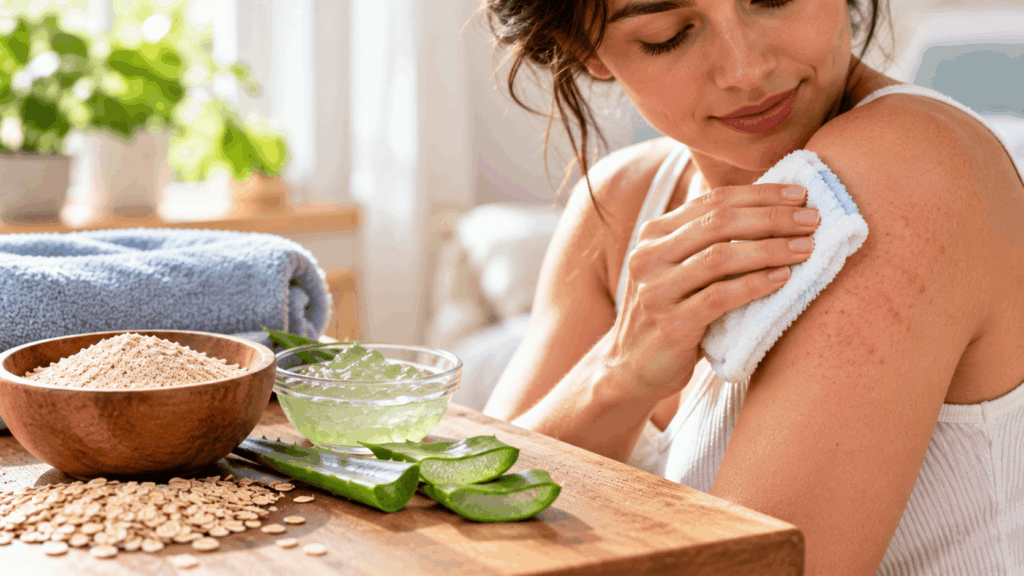
- Colloidal oatmeal. Adding finely ground oatmeal to a lukewarm bath is one of the most widely used home remedies for itchy skin. Colloidal oatmeal has some evidence for reducing itch and inflammation in inflammatory skin conditions, and it is the basis of several over-the-counter skin-soothing products (such as Aveeno). It is gentle and unlikely to cause harm.
- Aloe vera gel. Often applied directly to the skin to cool and soothe. There is limited clinical evidence for aloe vera in heat rash specifically, but it has been studied for minor skin irritation and is generally considered safe for topical use.
- Cool compresses. A flannel soaked in cold water, applied to the rash for 10 to 20 minutes, provides immediate relief. This is a straightforward physical remedy with no downside.
You may read about sandalwood paste, neem, baking soda baths and other traditional remedies for prickly heat. There is very little clinical evidence behind these for heat rash. They are unlikely to cause harm in most cases, but they are no substitute for the basics: cooling the skin, wearing loose clothing and keeping the area clean and dry.
When to see your GP or get urgent help
Your prickly heat rash has not improved after a few days of self-care. The rash is spreading or getting worse. You are worried about a baby or young child with a rash. The affected skin is swollen, warm to the touch, or painful. There is pus or discharge from the rash (this may be a sign of infection). You develop a fever alongside the rash. The rash keeps coming back.
Most prickly heat rashes are harmless and clear up quickly. But a rash that does not improve, or that develops signs of infection (increasing redness, swelling, warmth, pus or fever), needs to be seen by a doctor. Your GP can prescribe stronger steroid creams or antibiotics if the skin has become infected.
If a baby or young child has a rash you are not sure about, it is always worth getting it checked. The NHS advises seeing a GP if you are worried about your child’s rash.
Common questions about prickly heat
Is there a cure for prickly heat?
Prickly heat does not need a cure in the traditional sense. It is not a disease but a temporary skin reaction to overheating. Once you cool the skin down, the rash usually clears up on its own within a few days. The most effective approach is prevention: staying cool, wearing loose clothing and avoiding situations that cause you to overheat.
How long does prickly heat last?
Most cases of prickly heat clear up within two to three days once the skin has cooled down. If the rash has not improved after several days, or if it is getting worse, the NHS recommends seeing your GP to rule out infection or another skin condition.
Can adults get prickly heat?
Yes. Prickly heat is common in babies, but adults get it too, especially in hot and humid conditions, during exercise, or when wearing tight or synthetic clothing. Adults who work outdoors, travel to hot climates or have a condition that causes excessive sweating are particularly susceptible.
Is prickly heat the same as a sun rash?
Not exactly. Prickly heat (miliaria) is caused by blocked sweat ducts and does not require sun exposure. Sun rash (polymorphic light eruption) is a reaction to UV light and appears after sun exposure, often on the chest, arms and legs. The two can look similar but have different causes and may need different treatment. If you are unsure, ask your pharmacist or GP.
Can I prevent prickly heat?
You can reduce the risk by keeping your skin cool and dry. Wear loose, breathable cotton clothing, avoid heavy exertion in the hottest part of the day, stay in the shade or use a fan, and take cool showers after sweating. For babies, dress them in light layers and check regularly for signs of overheating.

Independent guides to natural remedies and supplements, checked against NHS and EFSA references.