Home › Natural Remedies › Do natural remedies for vaginal thrush work?
Natural RemediesDo natural remedies for vaginal thrush work?
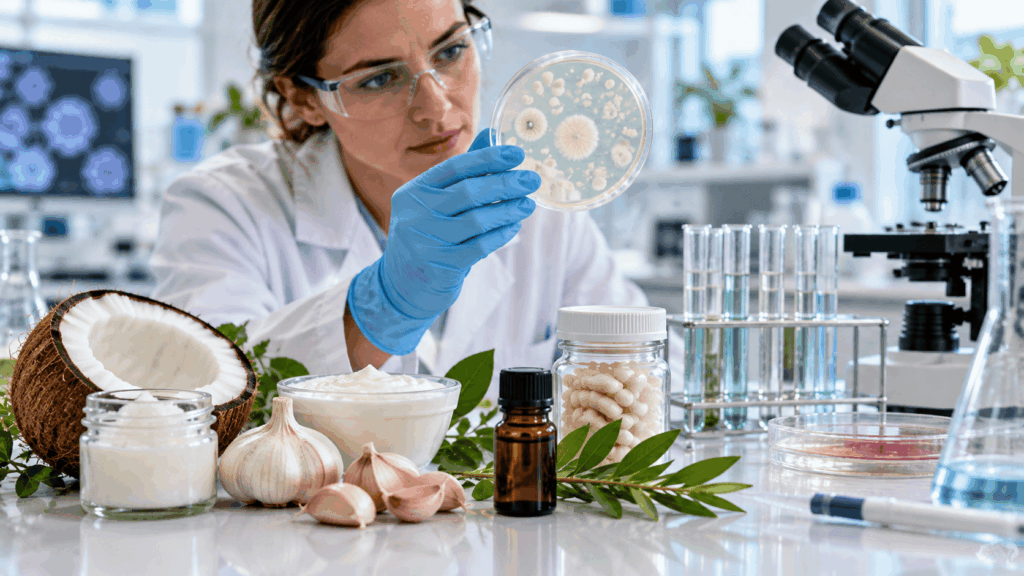
It depends, but most natural remedies for vaginal thrush have little or no reliable clinical evidence behind them. The NHS recommends over-the-counter antifungal treatments (a pessary, oral tablet or cream) as the standard approach. Some remedies, such as boric acid, have limited evidence in specific situations, but none is a proven replacement for conventional treatment.
If you have ever searched for ways to treat thrush at home, you will have found no shortage of suggestions: yoghurt, coconut oil, tea tree oil, garlic, apple cider vinegar and more. Some of these have been used for generations. But do any of them actually work, and are they safe?
This guide looks at the most commonly recommended natural remedies for vaginal thrush, what the research says about each one, and what the NHS actually advises.
What the NHS recommends for vaginal thrush
Before looking at natural options, it helps to know what the evidence-based standard is. The NHS recommends treating vaginal thrush with antifungal medicine, which is available from a pharmacy without prescription if you have had thrush before and recognise the symptoms. The main options are:
- A pessary (an antifungal tablet inserted into the vagina, most commonly clotrimazole).
- An oral capsule (fluconazole, a single-dose tablet taken by mouth).
- An antifungal cream to relieve external itching and irritation.
Symptoms usually clear within 7 to 14 days. The NHS does not mention any natural or home remedies on its thrush pages. Its self-care advice focuses on washing the affected area with water and an emollient rather than soap, drying well, and wearing cotton underwear.
If it is your first episode, if you are pregnant or breastfeeding, or if thrush keeps coming back (more than four times in 12 months), the NHS advises seeing your GP rather than self-treating.
What the research says about natural remedies
Most natural remedies for thrush have been studied mainly in laboratory settings (in vitro) or in very small trials. Very few have been tested in well-designed human studies comparing them directly with standard antifungal treatments. Here is what the evidence looks like for the remedies you are most likely to encounter.
Boric acid
Of all the natural or alternative remedies, boric acid has the most clinical evidence, though it is still limited. A systematic review of 14 studies found it to be safe and effective for chronic or recurrent thrush when conventional treatment has failed, with success rates ranging from 40 to 100 per cent depending on the study. It is used as a vaginal suppository, typically over one to two weeks.
However, boric acid is not a first-line treatment. It is generally considered an option only when standard antifungals have not worked or when the infection is caused by a resistant strain of Candida. It should only be used under the guidance of a healthcare professional.
Boric acid is toxic if swallowed and must never be taken by mouth. It should not be used during pregnancy, on broken skin, or by anyone with a sensitivity to it. Side effects can include temporary vaginal burning and irritation.
Probiotics and yoghurt
Probiotics, particularly Lactobacillus strains, are among the most commonly recommended natural approaches to thrush. The idea is that supplementing with “friendly” bacteria may help restore a healthy vaginal balance and keep Candida in check.
A Cochrane review protocol has looked at probiotics for vulvovaginal candidiasis, and some smaller studies have suggested a possible benefit when probiotics are used alongside conventional antifungal treatment, not as a replacement. However, the overall quality of evidence remains low, and many studies are small, poorly designed or industry-funded.
As for applying natural yoghurt directly to the vagina, there is very little clinical evidence to support this. If you do try it, use only plain, unsweetened yoghurt with live cultures. Sugary or flavoured yoghurt could make things worse, as sugar may encourage yeast growth.
Tea tree oil
Tea tree oil has well-documented antifungal properties in the laboratory. Studies have shown that it can damage fungal cell membranes, and some animal research has been encouraging. However, there are no robust human clinical trials supporting its use for vaginal thrush.
Tea tree oil can also cause allergic reactions, stinging and irritation when applied to sensitive skin. Current clinical guidelines do not recommend tea tree oil or other essential oils for treating or preventing vaginal thrush. If you choose to use it externally, it must always be properly diluted in a carrier oil and should never be applied undiluted to the genital area or used internally.
Coconut oil
Coconut oil has antifungal activity against Candida albicans in laboratory studies. A 2024 in vitro study found that it may be effective at inhibiting C. albicans growth. However, this has not been tested in human clinical trials for vaginal thrush, and no effective dose has been established.
If you use coconut oil, be aware that oil-based products can damage latex condoms and diaphragms, which may lead to contraceptive failure.
Garlic
Some laboratory research suggests that garlic compounds can inhibit Candida growth, though effectiveness varies between strains. One small study compared oral garlic supplements with fluconazole, but the evidence is far too limited to draw firm conclusions.
Do not insert garlic cloves into the vagina. Despite this being a widely shared folk remedy, garlic compounds can cause burns, irritation and pain when applied to delicate vaginal tissue. If you want to include more garlic in your diet, that is fine as part of a balanced diet, but it is not an evidence-based treatment for thrush.
Apple cider vinegar
Apple cider vinegar has some antimicrobial properties, and one study showed antifungal effects against Candida in oral samples. However, this has not been demonstrated in human studies for vaginal thrush. The idea that it works by “rebalancing vaginal pH” is not well supported, as vaginal thrush does not always involve a pH change.
If you want to try it, some sources suggest adding half a cup to a lukewarm bath. Never douche with apple cider vinegar or any other substance. The NHS explicitly advises against douching, as it disrupts the vaginal environment and can increase the risk of infection.
Most natural remedies for thrush have been tested only in laboratory conditions (in test tubes or on agar plates) or in animal studies. Showing that a substance can kill Candida in a dish is very different from showing it can safely and effectively clear a vaginal infection in a real person. Until well-designed human trials are conducted, claims about these remedies remain unproven.
What to avoid
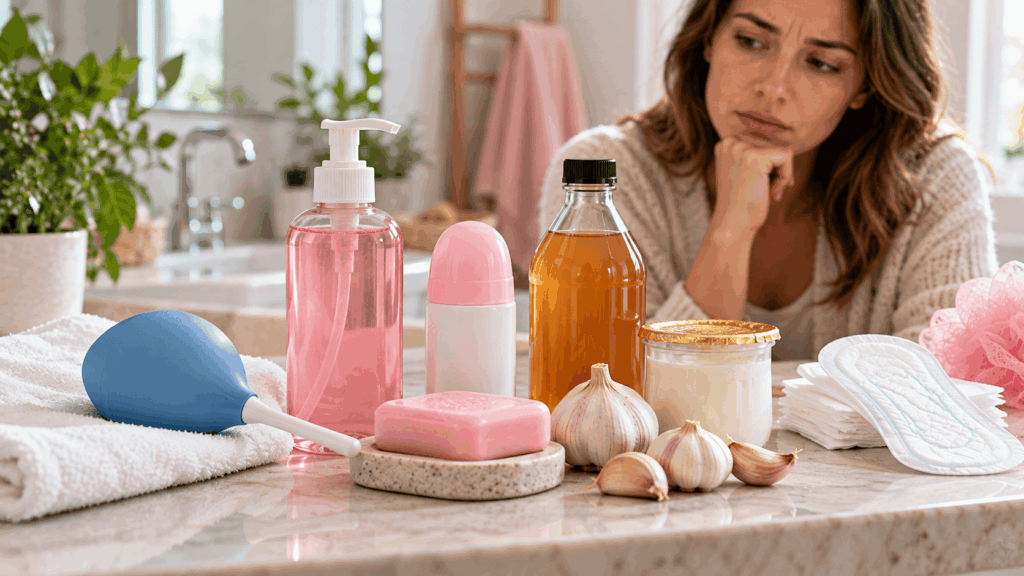
Some popular suggestions for treating thrush at home can actually make things worse. The NHS and clinical guidelines specifically warn against the following:
- Douching. Washing inside the vagina with water, vinegar or any other liquid disrupts the natural balance of bacteria and can increase your risk of thrush and other infections. The NHS advises against it.
- Scented soaps, shower gels and vaginal deodorants. These can irritate the vulva and vaginal area, making symptoms worse.
- Inserting food products. Garlic cloves, yoghurt and other foods are sometimes suggested as vaginal remedies, but they carry risks of irritation, infection and allergic reaction.
- Vaginal steaming. There is no evidence that this helps with thrush, and the heat and moisture may actually encourage yeast growth.
See your GP if this is your first episode of thrush, if you are under 16 or over 60, if symptoms have not cleared after treatment, if thrush keeps coming back (more than four times in a year), if you are pregnant or breastfeeding, or if you have a weakened immune system (for example, due to diabetes, HIV or chemotherapy). Do not self-treat with natural remedies in any of these situations. Recurrent thrush can sometimes be a sign of an underlying condition such as diabetes, and your GP may want to run tests.
Practical steps that may help alongside treatment
While natural remedies lack strong evidence, there are some evidence-based self-care steps that the NHS recommends alongside antifungal treatment:
- Wash the vulval area with water and an emollient (such as E45 cream) rather than soap.
- Dry the area thoroughly after washing.
- Wear cotton underwear and avoid tight clothing such as tights or leggings.
- Avoid sex until the thrush has cleared, if it is uncomfortable.
- If you are taking antibiotics, be aware they can trigger thrush. Speak to your GP or pharmacist about prevention if this is a recurring pattern.
Eating a balanced diet, managing stress and supporting your immune system are all sensible general health measures, but there is no strong evidence that specific dietary changes can prevent or treat individual episodes of thrush.
Common questions
Can yoghurt cure vaginal thrush?
There is very little clinical evidence that applying yoghurt to the vagina can treat thrush. While natural yoghurt contains Lactobacillus bacteria, which are part of the normal vaginal flora, studies have not shown this to be an effective treatment. If you try it, use only plain, unsweetened yoghurt, as sugar can feed yeast. The NHS recommends antifungal medicine as the standard treatment.
Is tea tree oil safe to use for thrush?
Tea tree oil has antifungal properties in laboratory studies, but there is no good clinical evidence for its use in vaginal thrush. It can cause stinging, burning and allergic reactions on sensitive skin. It should never be applied undiluted or used internally. Current clinical guidelines do not recommend essential oils for treating or preventing thrush.
Can thrush go away on its own?
Mild thrush can sometimes clear without treatment, but this is not guaranteed. If symptoms persist for more than a few days, pharmacy antifungal treatment is the recommended approach. See your GP if it is your first episode, if you are pregnant, or if thrush keeps coming back.
Why does my thrush keep coming back?
Recurrent thrush (more than four episodes a year) can be triggered by antibiotics, hormonal changes, poorly controlled diabetes, or a weakened immune system. Your GP can investigate the cause, check for underlying conditions and may prescribe a longer course of antifungal treatment. Do not rely on natural remedies for recurrent thrush without medical advice.
Is boric acid safe to use for thrush?
Boric acid has some evidence for treating thrush that has not responded to standard antifungal treatment, but it is not a first-line option. It is toxic if swallowed and must only be used as a vaginal suppository under medical guidance. It should not be used during pregnancy or on broken skin. Always speak to your GP or pharmacist before trying boric acid.

Independent guides to natural remedies and supplements, checked against NHS and EFSA references.