Home › Iron › What should you eat if you have iron deficiency?
IronWhat should you eat if you have iron deficiency?
What to know
- Iron deficiency is the most common nutritional deficiency worldwide. Diet is an important part of both prevention and recovery, alongside any treatment your GP recommends.
- There are two types of dietary iron: haem iron (from animal foods, absorbed well) and non-haem iron (from plant foods, absorbed less efficiently). A good diet includes both.
- The NHS recommends eating more dark green leafy vegetables, fortified cereals and bread, meat, dried fruit and pulses. Eating vitamin C-rich foods alongside iron-rich meals helps your body absorb more iron.
- Tea, coffee and calcium-rich foods can reduce iron absorption when consumed at the same time as iron-rich foods. Have them between meals instead.
If you have been told you are low in iron, one of the first things you can do is look at what you eat. Diet alone may not be enough to correct an established deficiency, which is why your GP may also prescribe iron tablets, but the right foods can support your recovery, help your body absorb iron more efficiently and reduce the risk of the problem coming back. This guide covers which foods to focus on, what can get in the way of absorption and how to put it all together in a practical way.
Two types of iron in food
Not all dietary iron is the same. Understanding the difference between the two forms helps explain why some foods raise iron levels more effectively than others.
- Haem iron is found in animal foods: red meat, poultry, fish and seafood. It is the form your body absorbs most easily. According to the American Red Cross, up to 30% of haem iron from food is absorbed.
- Non-haem iron is found in plant foods: vegetables, legumes, nuts, seeds, fortified cereals and bread. Only about 2% to 10% is absorbed. Eggs also contain non-haem iron.
Both types contribute to your overall iron intake, and a balanced diet should include sources of each. If you follow a vegetarian or vegan diet, you can still meet your needs, but you will need to pay closer attention to absorption (see below). Healthdirect Australia notes that plant-based eaters may need around 80% more iron than meat eaters to compensate for the lower absorption rate of non-haem iron.
Foods to eat more of
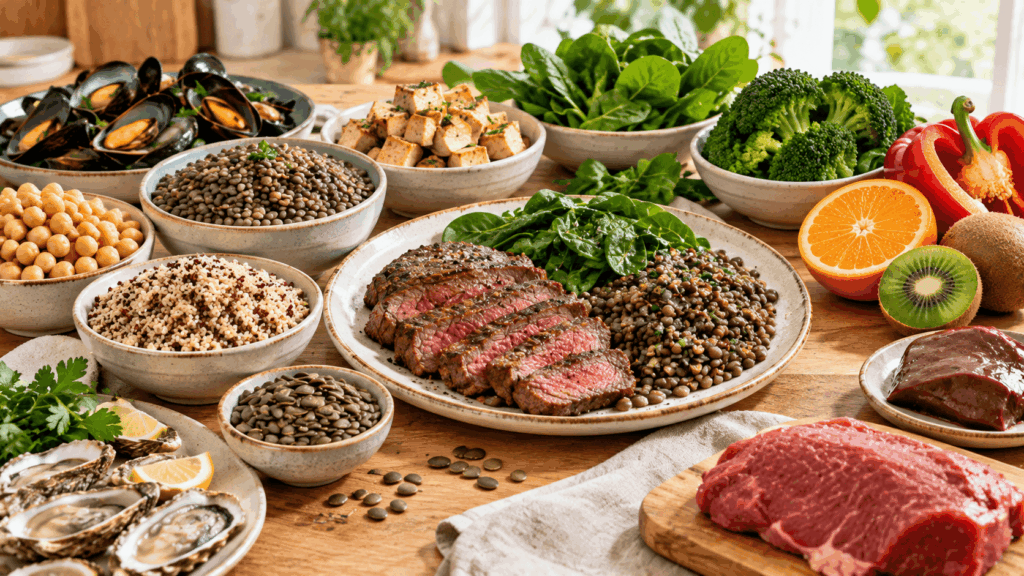
The NHS recommends the following foods as part of a diet to support iron levels:
- Dark green leafy vegetables such as watercress, curly kale and spinach.
- Fortified cereals and bread (check the label for added iron).
- Meat, particularly red meat such as beef and lamb. Darker cuts tend to contain more iron.
- Dried fruit such as apricots, prunes and raisins.
- Pulses including beans, peas and lentils.
Beyond the NHS list, other good sources include:
- Shellfish such as oysters, mussels and clams, which are among the richest sources of haem iron.
- Organ meats such as liver and kidney. Liver is exceptionally high in iron, though it should be avoided during pregnancy because of its high vitamin A content.
- Tofu, a useful non-haem source for vegetarians and vegans.
- Nuts and seeds, particularly pumpkin seeds, cashews and pine nuts.
- Chickpeas, kidney beans and lentils, which provide non-haem iron along with fibre and protein.
Adding a handful of spinach or watercress to a sandwich, stirring lentils into a soup or stew, or sprinkling pumpkin seeds over porridge are small changes that can add meaningful amounts of iron over the course of a week. You do not need to overhaul your diet all at once.
What helps iron absorption
Getting iron into your food is only half the picture. How well your body absorbs it depends on what you eat alongside it.
Vitamin C
Eating foods rich in vitamin C at the same meal as iron-rich foods can significantly improve absorption, particularly of non-haem iron. Good sources of vitamin C include:
- Citrus fruits (oranges, lemons, grapefruit)
- Strawberries, kiwi fruit and blackcurrants
- Red, yellow and orange peppers
- Tomatoes
- Broccoli
The NHS suggests that drinking a glass of orange juice after taking an iron tablet may also help improve absorption. The same principle applies to meals: a squeeze of lemon over dark leafy greens or a side of tomato salad with a bean dish can make a real difference.
Combining haem and non-haem sources
Eating a source of haem iron (such as meat or fish) alongside non-haem iron foods helps your body absorb the non-haem iron more completely. A meal that includes both, such as a beef and bean chilli or a chicken and lentil stew, is a practical way to maximise your iron intake.
What can reduce absorption
Certain foods and drinks can interfere with iron absorption when consumed at the same time as iron-rich foods. The NHS advises eating or drinking less of the following with meals:
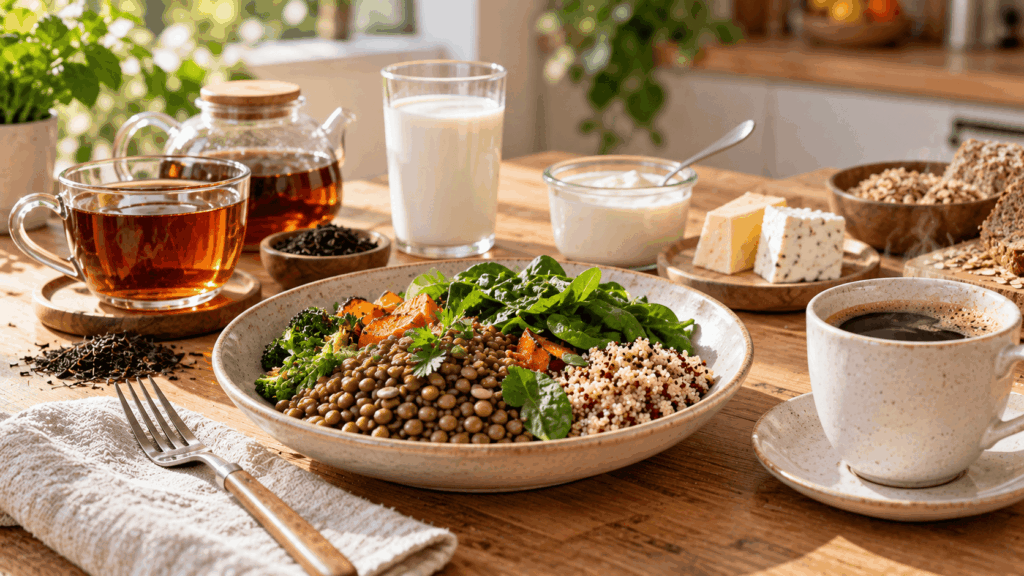
- Tea and coffee. Both contain compounds called polyphenols that bind to non-haem iron and reduce how much your body absorbs. This applies to black tea, green tea and coffee. Having your tea or coffee between meals rather than with them can make a significant difference.
- Milk and dairy products. Calcium can inhibit iron absorption when consumed in large amounts at the same meal. Medical News Today cites research suggesting that 300 to 600 mg of calcium (roughly the amount in a large glass of milk and a portion of cheese) can reduce iron absorption at that meal.
- Wholegrain cereals in large amounts. The NHS notes that foods high in phytic acid, such as wholegrain cereals, can reduce iron absorption. This does not mean you should avoid wholegrains, which are an important part of a healthy diet, but if your iron levels are low, it may help to eat your main iron-rich meal separately from large portions of high-fibre cereals.
None of these foods need to be cut out entirely. The key is timing: have them between meals rather than at the same time as your iron-rich foods, and the effect on absorption is much smaller.
How much iron do you need?
The recommended daily intake varies by age, sex and life stage. In the UK, the NHS reference nutrient intake (RNI) for iron is:
- Men aged 19 and over: 8.7 mg per day
- Women aged 19 to 49: 14.8 mg per day
- Women aged 50 and over: 8.7 mg per day
- Pregnancy: requirements are not increased above 14.8 mg in UK guidelines, as menstruation stops, but many women enter pregnancy with low stores and may need supplementation on medical advice.
Women who menstruate need more iron than men because of monthly blood loss. After the menopause, the requirement drops to the same level as men. If you have been diagnosed with iron deficiency, your GP may recommend a higher therapeutic dose through supplements in addition to dietary changes.
Practical meal ideas
You do not need a complicated diet plan to eat well for iron. Here are a few simple combinations that bring together good iron sources with absorption-boosting vitamin C:
- Breakfast: fortified cereal with a handful of dried apricots and a glass of orange juice, or porridge topped with pumpkin seeds and strawberries.
- Lunch: a lentil and tomato soup with a slice of fortified bread, or a chicken and spinach wrap with red pepper.
- Dinner: lamb chops with broccoli and new potatoes, a bean and vegetable chilli with brown rice, or grilled salmon with curly kale and a lemon dressing.
- Snacks: a handful of cashews or dried fruit, hummus with raw pepper sticks, or a kiwi fruit.
When diet is not enough
Dietary changes are an important first step, but they may not be sufficient on their own to correct an established iron deficiency, particularly if the deficiency has progressed to iron deficiency anaemia.
The NHS advises seeing your GP if you think you might have iron deficiency anaemia. Common symptoms include persistent tiredness, breathlessness, heart palpitations and pale skin. Your GP can confirm the diagnosis with a simple blood test (a full blood count) and prescribe iron tablets if needed. Most courses of iron tablets last around six months.
Some people find it harder to absorb iron from food due to conditions such as coeliac disease, inflammatory bowel disease or previous stomach surgery. In these cases, your GP or a specialist may recommend intravenous iron or refer you to a dietitian for tailored advice.
If you have symptoms of iron deficiency anaemia such as persistent tiredness, breathlessness, heart palpitations or pale skin, see your GP. Do not self-diagnose or start taking iron supplements without medical advice, as too much iron can also cause problems. Iron tablets should be kept out of reach of children, as an overdose can be fatal in young children.
Common questions
What is the fastest way to raise iron levels?
If you have been diagnosed with iron deficiency, iron tablets prescribed by your GP are the fastest way to raise your levels. Dietary changes support the process but work more gradually. Your GP will monitor your progress with follow-up blood tests, and most people need to take iron tablets for around six months to restore their iron stores fully.
Can you get enough iron from a vegetarian or vegan diet?
Yes, but it requires more attention. Plant-based iron (non-haem) is absorbed less efficiently than iron from meat and fish. Including plenty of pulses, dark leafy greens, fortified cereals, nuts and seeds in your diet, and pairing them with vitamin C-rich foods, can help. Some plant-based eaters may still need a supplement, particularly women of childbearing age. Your GP or a dietitian can advise.
Should I avoid tea and coffee if I am low in iron?
You do not need to give them up entirely, but it helps to have them between meals rather than with iron-rich foods. The polyphenols in tea and coffee can reduce how much non-haem iron your body absorbs from that meal. Leaving a gap of at least an hour before or after eating can minimise the effect.
Does cooking in a cast iron pan increase iron intake?
Some research suggests that cooking acidic foods (such as tomato sauce) in a cast iron pan can add small amounts of iron to the food. The effect is modest and not a substitute for eating iron-rich foods, but it may contribute to overall intake.
How do I know if I have iron deficiency?
The only reliable way to know is through a blood test arranged by your GP. Common symptoms include tiredness, breathlessness, pale skin, headaches and heart palpitations, but these can have many causes. If you suspect iron deficiency, see your GP rather than self-diagnosing or starting supplements on your own.

Independent guides to natural remedies and supplements, checked against NHS and EFSA references.