What to know
- Iron absorption depends not just on how much iron you eat or take, but on what you eat it with and when. Your body absorbs only a fraction of the iron in food and supplements.
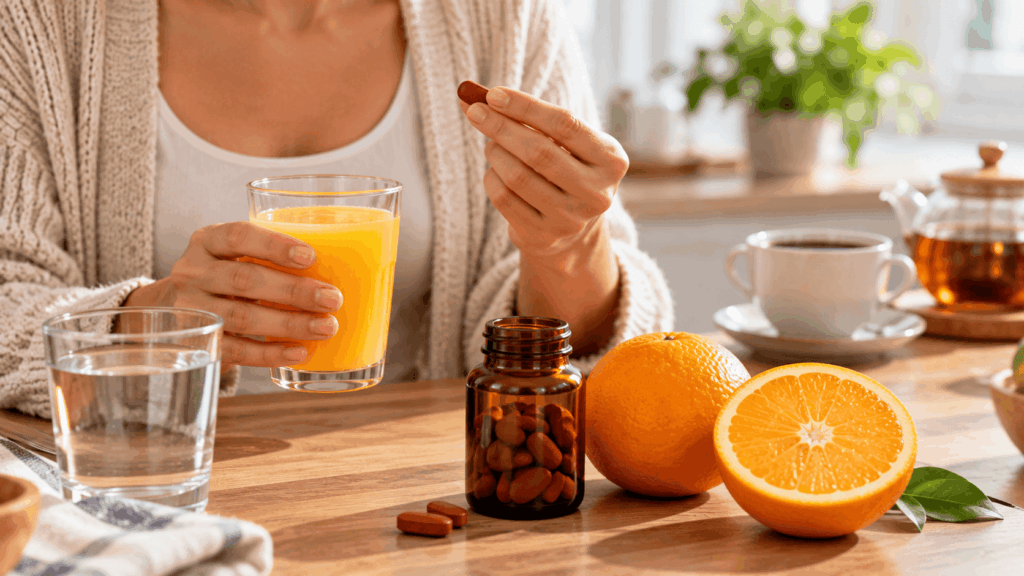
- Vitamin C is the best-studied absorption enhancer. The NHS suggests taking iron supplements with orange juice or a vitamin C supplement to increase uptake.
- Tea, coffee, dairy and wholegrain cereals can reduce iron absorption. The NHS advises leaving a two-hour gap between iron and these foods or drinks.
- Heme iron, found in meat, fish and poultry, is absorbed far more efficiently than non-heme iron from plant foods. Eating both together can improve overall absorption.
- If you are taking iron supplements and still not seeing results, speak to your GP. Poor absorption can sometimes point to an underlying condition that needs investigating.
If you have been prescribed iron tablets, or you are trying to increase your iron intake through food, you have probably noticed that simply taking more iron does not always solve the problem. That is because your body does not absorb all the iron you give it. A narrative review in ACS Omega (2022) noted that of the 10 to 15 mg of iron a typical diet provides each day, only about 1 to 2 mg is actually absorbed.
The good news is that a few straightforward changes to what you eat, when you eat it, and how you take supplements can make a real difference to how much iron reaches your bloodstream.
Why iron absorption varies so much
Iron comes in two forms, and your body handles them very differently.
Heme iron comes from animal sources: red meat, poultry, fish and shellfish. It is absorbed relatively efficiently, at roughly 15 to 35 per cent of what you consume. It is also less affected by other foods in the meal.
Non-heme iron comes from plant foods, fortified foods and supplements. It makes up the majority of dietary iron intake (an estimated 85 to 90 per cent in Western diets), but it is absorbed much less efficiently and is heavily influenced by what else you eat at the same time.
This distinction matters. If you eat a largely plant-based diet, or you rely on supplements, absorption enhancers and inhibitors have a bigger effect on your iron levels than they do for someone eating red meat several times a week.
What helps iron absorption
Vitamin C
This is the most consistently supported dietary enhancer of iron absorption. Vitamin C converts non-heme iron into a form your gut can absorb more easily. The NHS advises that a doctor or pharmacist may suggest taking iron supplements with orange juice or a vitamin C supplement to increase absorption.
The ACS Omega review reported that in one study, increasing vitamin C from 25 mg to 1,000 mg raised absorption of non-heme iron from 0.8 per cent to 7.1 per cent in a meal containing 4.1 mg of non-heme iron. The effect was strongest when the vitamin C was consumed at the same meal as the iron.
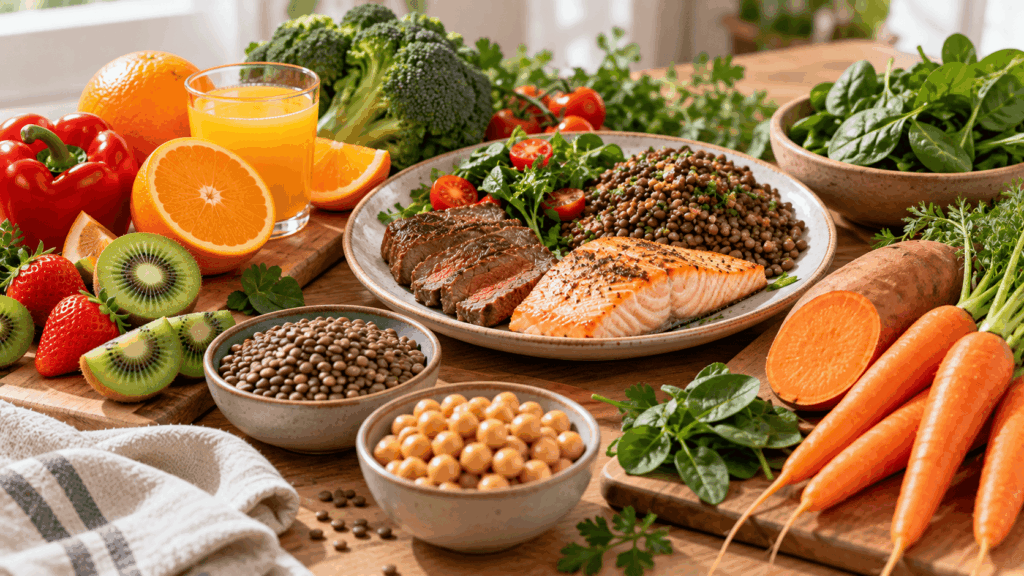
A practical pairingHave a glass of orange juice or a handful of strawberries, peppers or kiwi fruit alongside your iron-rich meal or supplement. This is the simplest, best-evidenced way to improve absorption, and the NHS itself recommends it.
Meat, fish and poultry
Eating animal protein alongside plant-based iron sources improves non-heme iron absorption. This is sometimes called the “meat factor”, and although the exact mechanism is not fully understood, the effect has been demonstrated in several studies. The ACS Omega review cited research showing that adding 50 to 75 g of pork to a meal raised non-heme iron absorption by 44 to 57 per cent. Fish had a similar effect in phytate-rich bean meals.
If you eat meat or fish, including even a small portion with meals that contain beans, lentils, leafy greens or fortified cereals can help you absorb more of the non-heme iron in those foods.
Vitamin A and beta-carotene
Some evidence suggests that vitamin A and beta-carotene (found in carrots, sweet potatoes, spinach and red peppers) may also support iron absorption, though the evidence is less robust than for vitamin C. Including orange and dark green vegetables in iron-rich meals is good dietary practice regardless.
What gets in the way of iron absorption
Several common foods and drinks reduce how much iron your body takes up. The NHS iron deficiency anaemia page specifically names tea, coffee, milk and dairy, and wholegrain cereals as things to have less of if your iron is low.
Tea and coffee
Both contain polyphenols (tannins in tea, chlorogenic acid in coffee) that bind to non-heme iron and reduce absorption. The ACS Omega review cited a study in which tea reduced iron absorption from wheat bread by 56 to 72 per cent. The NHS advises leaving a two-hour gap between taking iron (or eating iron-rich foods) and drinking tea or coffee.
Dairy and calcium
Calcium reduces the absorption of both heme and non-heme iron in the short term. The ACS Omega review noted that 500 mg of calcium (roughly the amount in two glasses of milk) cut absorption from a single meal from 10.2 per cent to 4.8 per cent. The NHS page on ferrous fumarate lists milk and eggs among foods that can affect how iron works.
However, longer-term studies have found that habitual calcium intake does not appear to affect overall iron status. The practical advice is to avoid having calcium-rich foods or supplements at the same time as your iron, rather than cutting them out of your diet altogether.
Phytates
Phytic acid, found in wholegrain cereals, beans, lentils, nuts and seeds, is one of the strongest inhibitors of non-heme iron absorption. The ACS Omega review reported that 250 mg of phytate reduced absorption by up to 82 per cent. The NHS iron deficiency anaemia page lists wholegrain cereals among foods that can stop your body absorbing iron from other foods and from tablets.
This does not mean you should stop eating wholegrains or pulses. They are valuable sources of fibre, minerals and protein. But if your iron is low, pairing these foods with vitamin C can help counteract the inhibitory effect of phytates.
Soaking beans and lentils before cooking, and using yeast-leavened bread rather than unleavened, can reduce the phytate content of these foods. Cooking in general breaks down some phytates, which is another reason to eat iron-rich pulses cooked rather than raw.
How to get more from iron supplements
If you are taking prescribed iron tablets (most commonly ferrous sulfate or ferrous fumarate in the UK), a few practical steps can help you absorb more of each dose.
- Take iron on an empty stomach if you can. The NHS advises taking ferrous sulfate 30 minutes before eating or 2 hours after. This is when absorption is highest. If it upsets your stomach, taking it with food is fine, though absorption will be slightly lower.
- Pair it with vitamin C. A glass of orange juice or a vitamin C supplement taken at the same time can improve uptake.
- Leave a two-hour gap between iron and tea, coffee, eggs, or dairy.
- Avoid taking iron at the same time as antacids, calcium supplements, or medicines containing magnesium or zinc. The NHS lists these as potential interactions for ferrous fumarate. If you take any of these, separate them by at least two hours.
- Consider alternate-day dosing. Emerging research suggests that taking iron supplements every other day may actually improve overall absorption compared with daily dosing. Your GP can advise whether this approach is appropriate for you.
Iron is dangerous in overdose, especially for young children. The NHS advises storing all iron supplements in child-resistant containers and keeping them well out of sight and reach. If you suspect a child has swallowed iron tablets, call 999 or take them to A&E immediately.
Extra considerations for plant-based diets
If you follow a vegetarian or vegan diet, you rely entirely on non-heme iron, which is more sensitive to dietary inhibitors. The Healthline guide on iron absorption notes that vegetarians are often advised to aim for 1.8 times the standard recommended iron intake to compensate for lower absorption rates.
Practical steps that make the biggest difference for plant-based eaters:
- Include a source of vitamin C at every meal that contains iron-rich plant foods (lentils, beans, tofu, dark leafy greens, fortified cereals).
- Separate tea and coffee from meals by at least two hours.
- Soak beans, lentils and grains before cooking to reduce their phytate content.
- Use cast iron cookware. Some iron leaches into food during cooking, which can add to your overall intake. The ACS Omega review noted this as a recognised, if modest, dietary source.
- Do not rely on spinach alone. Spinach contains iron but also high levels of oxalates, which may reduce how much of that iron is available to your body. Vary your greens: watercress, kale and broccoli are lower in oxalates.
When to speak to your GP
If you have been taking iron supplements for several weeks and your symptoms (fatigue, breathlessness, pallor) are not improving, speak to your GP. Poor response to iron can sometimes indicate:
- Ongoing blood loss that has not been identified (heavy periods, gastrointestinal bleeding).
- A malabsorption condition such as coeliac disease, inflammatory bowel disease, or a stomach condition that reduces acid production.
- The wrong dose or form of iron for your situation.
- Non-adherence due to side effects. Many people stop taking iron because of constipation, nausea or stomach cramps. Your GP can suggest a different formulation or dosing schedule.
Your GP can arrange a blood test to check your ferritin (iron stores) and haemoglobin levels, and investigate further if needed.
Common questions about iron absorption
Does vitamin C really help iron absorption?
Yes. Vitamin C is the best-studied enhancer of non-heme iron absorption. It works by converting iron into a form your gut can absorb more easily. The NHS suggests taking iron supplements with orange juice or a vitamin C supplement. The effect is strongest when vitamin C is consumed at the same meal as iron, not hours before or after.
How long should I wait between iron and tea or coffee?
The NHS advises leaving a two-hour gap between taking iron (or eating iron-rich foods) and drinking tea or coffee. Both contain compounds that bind to non-heme iron and reduce absorption. If you drink tea or coffee regularly, timing your iron for a different part of the day can help.
Is heme iron better absorbed than non-heme iron?
Yes. Heme iron, found in meat, poultry and fish, is absorbed at roughly 15 to 35 per cent. Non-heme iron, found in plant foods and supplements, is absorbed much less efficiently and is more affected by other foods in the meal. Eating a small portion of meat or fish alongside plant-based iron sources can improve overall absorption.
Can I take iron and calcium at the same time?
It is better to separate them. Calcium can reduce iron absorption in the short term, and the NHS lists calcium-containing medicines among potential interactions with iron supplements. Leave at least a two-hour gap between taking iron and any calcium supplement or calcium-rich food such as milk or yoghurt.
Why am I still tired after taking iron tablets?
It can take several weeks for iron tablets to improve your symptoms. The NHS notes that iron levels may take a couple of months to recover. If you have been taking iron for several weeks with no improvement, speak to your GP. They can check your blood levels and investigate whether something else is affecting your absorption or your iron stores.

Independent guides to natural remedies and supplements, checked against NHS and EFSA references.