Home › Best Supplements › What is the best iron supplement for older adults?
RankingsWhat is the best iron supplement for older adults?
We may earn a commission when you buy through links on this page. No brand pays to be ranked. How we rank products
Iron deficiency is one of the most common nutritional shortfalls in older adults, yet it often goes undiagnosed. Around one in six people over 65 has some form of anemia, and iron deficiency accounts for a significant share of those cases. The tricky part: symptoms like fatigue, weakness and shortness of breath overlap with so many other age-related conditions that low iron is easily missed.
At the same time, supplementing without a confirmed need carries real risk. The body has no efficient way to excrete excess iron, and older adults are more likely to have conditions where extra iron can do harm. A blood test showing low ferritin is the essential first step, and a doctor can distinguish true iron deficiency from anemia of chronic disease, which looks similar but requires different treatment.
We reviewed over a dozen iron supplements available in the US, verified every label against its official listing, and read hundreds of buyer reviews with a focus on tolerance, ease of use and suitability for older adults. Below, we explain what matters most when choosing iron later in life, then walk through our five scored picks.
A gentle bisglycinate capsule at 25 mg is the safest starting point for most older adults with confirmed low iron.
Our top pick is Thorne – Iron Bisglycinate, an NSF-certified capsule that is well tolerated and easy to swallow. If swallowing capsules is difficult, consider Floradix – Iron + Herbs, a liquid formula delivering 10 mg per dose.
Why iron deficiency looks different after 65
The recommended dietary allowance for adults aged 51 and over is 8 mg of iron per day, the same for men and postmenopausal women. Most people meet this through diet. When they do not, the reasons are usually medical rather than dietary.
A 2014 review in Frontiers in Pharmacology (Busti et al.) outlined the main drivers of iron deficiency in older adults:
- Chronic GI blood loss is the most frequent cause. Peptic ulcers, colon polyps, and a condition called angiodysplasia can cause slow, invisible bleeding. Anticoagulants and daily NSAIDs prescribed for cardiovascular disease or arthritis raise the risk further.
- Reduced stomach acid impairs iron absorption. Atrophic gastritis becomes more common with age, as does long-term use of proton pump inhibitors (PPIs) such as omeprazole.
- Chronic disease inflammation drives up hepcidin, a liver hormone that blocks iron absorption and locks iron inside cells. This can produce low hemoglobin even when iron stores appear adequate on a standard ferritin test.
- H. pylori infection affects up to half of people over 60, according to a 2019 study in BMC Infectious Diseases, and can impair iron absorption independently.
These two conditions look similar on basic blood tests but require different approaches. Iron supplements help the first and can worsen the second. A full iron panel, including ferritin, transferrin saturation, and ideally soluble transferrin receptor, gives your doctor a clearer picture. Do not start iron based on hemoglobin alone.
What to look for in an iron supplement as an older adult
Choosing iron after 65 involves considerations that rarely apply to younger adults. Here is what matters most.
Form and tolerance
Iron bisglycinate (chelated iron) is iron bonded to two molecules of the amino acid glycine. A 2023 systematic review in Nutrition Reviews (Fischer et al.) found that bisglycinate raised hemoglobin comparably to ferrous sulfate while producing roughly a third as many GI complaints. For older adults already dealing with constipation, reflux or a sensitive stomach, this difference matters more than for younger users.
Ferrous sulfate and ferrous gluconate remain effective options, especially at lower doses, but are more likely to cause constipation and nausea. Slow-release ferrous sulfate reduces peak stomach irritation but may deliver some iron past the duodenum, where absorption is less efficient.
Dose
More is not better. A 2017 study in The Lancet Haematology (Stoffel et al.) found that alternate-day dosing produced comparable ferritin repletion to daily dosing, with fewer side effects. For mild deficiency, a dose of 15-28 mg of elemental iron is usually sufficient. Higher doses (45-65 mg) should be reserved for confirmed anemia under medical supervision.
Ease of use
Swallowing difficulty (dysphagia) affects an estimated one in seven adults over 65 in community settings. Liquid iron formulas are an important alternative for anyone who struggles with capsules or tablets. They also allow dose adjustment, which can be helpful when a doctor recommends a non-standard amount.
Drug interactions
Older adults take more prescription medications on average, and iron interacts with several of them. Iron reduces the absorption of levothyroxine (thyroid medication), certain antibiotics (tetracyclines, quinolones), levodopa (for Parkinson’s disease), and bisphosphonates (for osteoporosis). A gap of at least two hours between iron and these medications is standard advice, but check with your pharmacist if you take multiple prescriptions.
Take your iron with a source of vitamin C, such as a glass of orange juice. Avoid tea, coffee and calcium supplements within two hours of your iron dose. If stomach upset is a problem, taking iron with a small amount of food reduces discomfort while only slightly lowering absorption.
How we scored
We evaluated each supplement on four criteria, weighted to reflect what matters most for older adults. Every specification was verified against the product label or official listing, and every buyer quote comes from a named review platform.
- Dose & form (35%) – Is the iron form well absorbed and gentle? Does the dose suit an older adult with confirmed low iron without overshooting the 45 mg upper limit?
- Tolerance (25%) – How likely is it to cause constipation, nausea or stomach discomfort, based on the form and real-world feedback?
- Value (20%) – Cost per day and pack size, without displaying prices (these change frequently).
- Buyer feedback (20%) – What verified buyers say on Amazon, Walmart and iHerb, weighted toward stomach-related comments, ease of swallowing, and effectiveness.
Scores run from 0 to 10, rounded to one decimal place, and decrease strictly from our top pick to our fifth. Full methodology: how we rank products.
Our ranking at a glance
| Rank | Product | Form & dose | Score | |
|---|---|---|---|---|
| #1Best overall | Thorne - Iron Bisglycinate | Iron bisglycinate capsule 25 mg elemental iron | 8.8/10 | Check price |
| #2Best value | Solgar - Gentle Iron | Iron bisglycinate chelate capsule 25 mg elemental iron | 8.5/10 | Check price |
| #3Best with vitamin C | Pure Encapsulations - OptiFerin-C | Iron bisglycinate capsule 28 mg elemental iron | 8.3/10 | Check price |
| #4Best liquid | Floradix - Iron + Herbs | Ferrous gluconate liquid 10 mg elemental iron | 8.0/10 | Check price |
| #5Best whole-food formula | MegaFood - Blood Builder | Fermented iron bisglycinate tablet 26 mg elemental iron | 7.8/10 | Check price |
Our picks reviewed
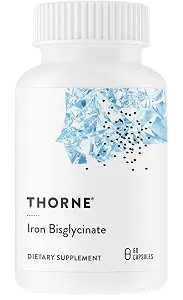
Thorne - Iron Bisglycinate
A clean, well-dosed bisglycinate backed by NSF certification and consistently positive feedback on stomach comfort.
- Elemental iron25 mg per capsule
- Formiron bisglycinate
- Capsule typevegetarian
- CertificationsNSF Certified for Sport, NSF/ANSI 173
- you want a gentle, well-tested daily iron capsule
- you value third-party testing and a short ingredient list
- you have difficulty swallowing capsules
- your doctor prescribed a higher dose for anemia
Thorne's bisglycinate capsule delivers 25 mg of elemental iron in a form widely regarded as the gentlest on the stomach. The NSF Certified for Sport mark means the product is independently tested for purity and label accuracy, which gives an extra layer of assurance for older adults who want to know exactly what they are taking. Each bottle holds 60 capsules, enough for two months at one capsule a day.
Verified buyers on Walmart describe it as "easy on our stomachs" (L., Walmart) and "recommended by hematologist for better absorption" (H., Walmart). The capsule is small enough for most adults to swallow without difficulty. The only real limitation is the absence of added vitamin C, so pairing it with a glass of orange juice at the time of dosing can help absorption.
Where to buy
Prices change often, so we don't show them here: check the retailer for today's price.
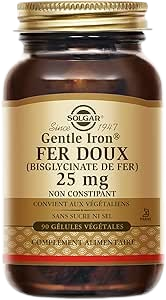
Solgar - Gentle Iron
Six months of gentle bisglycinate in a single bottle, with vegan and kosher certification.
- Elemental iron25 mg per capsule
- Formiron bisglycinate chelate
- Capsule typevegetable
- Free fromgluten, wheat, dairy, soy
- CertificationsNon-GMO, Kosher Parve
- you want the lowest cost per day without switching forms
- you need a supplement free from common allergens
- you need third-party sport certification
- you prefer a smaller bottle to try first
Solgar's Gentle Iron matches Thorne on form and dose, 25 mg of iron bisglycinate chelate per vegetable capsule, but stands out on pack size. The 180-count bottle delivers a full six months, which brings the daily cost well below most competitors. It is certified vegan, kosher parve, gluten-free, and free from dairy, soy and sugar.
On Walmart, one verified buyer called it "gentle on stomach as advertised" (Walmart customer). For older adults on a fixed income who need to supplement for several months, the larger bottle offers meaningful savings. The capsule contains no artificial colors or flavors. Solgar lacks the third-party sport certification that Thorne carries, which is why it scores slightly lower on dose and form.
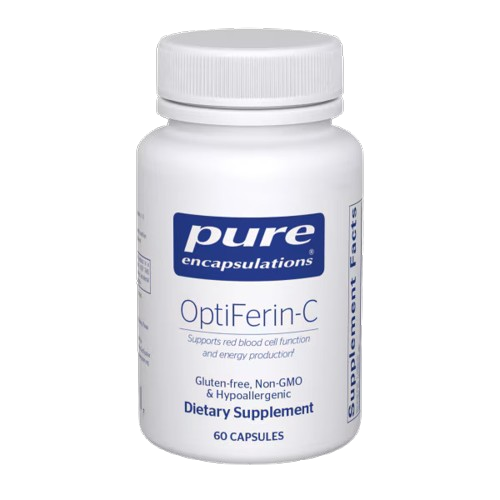
Pure Encapsulations - OptiFerin-C
Iron bisglycinate paired with 100 mg of vitamin C for better absorption, in a hypoallergenic capsule.
- Elemental iron28 mg per capsule
- Vitamin C100 mg (ascorbate blend)
- Formiron bis-glycinate
- Capsule typevegetarian
- Free fromgluten, GMOs, common allergens
- you want iron and vitamin C in one capsule without juggling timing
- you have multiple food sensitivities
- you are on a tight budget
- 28 mg is more than your doctor recommended
Pure Encapsulations combines 28 mg of iron bisglycinate with 100 mg of vitamin C from a calcium ascorbate blend. Vitamin C is a well-established enhancer of non-heme iron absorption, and bundling them into one capsule simplifies a routine that may already involve multiple medications. The brand's hypoallergenic pledge means the capsule is free from gluten, dairy, soy, eggs, peanuts and common fillers, which suits older adults with sensitivities.
On iHerb, a verified buyer wrote "gentle on the stomach which is a must for me" (NikolSilver, iHerb), and another reported that their "iron stores went from 7 to 19" after using it alongside blood monitoring (iHerb customer). The 60-capsule bottle lasts two months. The trade-off is cost: OptiFerin-C sits at the premium end of the market.
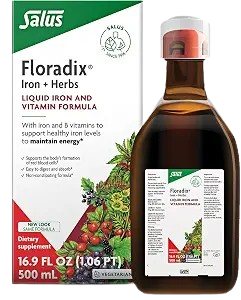
Floradix - Iron + Herbs
A low-dose liquid formula for older adults who struggle with capsules or need flexible dosing.
- Elemental iron10 mg per 10 ml serving
- Formferrous gluconate
- B vitaminsthiamin, riboflavin, B6, B12
- Otherherbal extracts (nettle, spinach, fennel)
- Free fromalcohol, preservatives, artificial additives
- you have difficulty swallowing capsules or tablets
- you need a lower dose or flexible dosing
- you need more than 10 mg per dose
- you dislike herbal-tasting liquids
Floradix delivers 10 mg of elemental iron as ferrous gluconate in a liquid formula that also provides B vitamins and herbal extracts. For older adults with dysphagia (difficulty swallowing), this is the most practical option on our list. The liquid format also allows dose adjustment: your doctor may suggest a half or double serving depending on your blood work.
Verified buyers on Walmart praised it as "great for those who don't tolerate iron pills well" (Annie, Walmart) and noted it is "not constipating like every other iron supplement I've tried" (Krista, Walmart). The taste is mildly herbal and fruity. The main limitation is the lower iron dose: at 10 mg per serving, it suits mild deficiency or maintenance but may not be enough for confirmed anemia. The bottle must be refrigerated after opening and used within four weeks.
Where to buy
Prices change often, so we don't show them here: check the retailer for today's price.
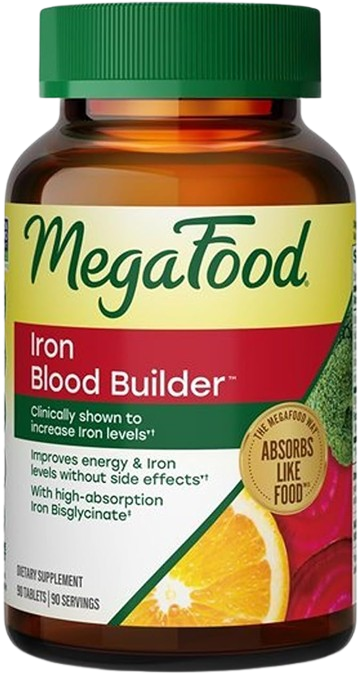
MegaFood - Blood Builder
A fermented iron tablet with B12, folate and vitamin C for older adults who need more than iron alone.
- Elemental iron26 mg per tablet
- Vitamin C15 mg
- Folate680 mcg DFE
- Vitamin B1230 mcg
- Otherorganic beetroot 125 mg
- CertificationsNon-GMO, Certified Vegan, Certified B Corp
- you need iron alongside B12 and folate
- you prefer whole-food-based supplements
- you only need iron and want a simpler formula
- the B12 dose (1,250% DV) feels excessive for your situation
MegaFood's Blood Builder pairs 26 mg of fermented iron bisglycinate with folate, B12 and vitamin C, plus organic beetroot. The combination is particularly relevant for older adults: B12 deficiency affects an estimated 10-15% of people over 60, according to the NIH, and can occur alongside low iron. By addressing both in one tablet, Blood Builder reduces the number of separate supplements in your routine.
The product is certified vegan, Non-GMO Project Verified and produced by a B Corporation. Buyer feedback on third-party sites frequently highlights the absence of digestive complaints. The main drawback is that the B12 dose sits at 1,250% of the daily value, which is unnecessary if your B12 is already normal. The whole-food approach also makes it pricier per day than a straightforward bisglycinate capsule.
Where to buy
Prices change often, so we don't show them here: check the retailer for today's price.
When to avoid iron supplements
Iron is not a nutrient to take without a confirmed reason, and the stakes are higher for older adults. The body has no efficient mechanism to remove excess iron, and accumulation can damage the liver, heart and pancreas over time.
You have not had a blood test confirming low iron or low ferritin. You have been diagnosed with hemochromatosis or any iron-loading condition. You have anemia of chronic disease without confirmed iron deficiency. You are taking medications that interact with iron, including levothyroxine, certain antibiotics (tetracyclines, quinolones), levodopa, or bisphosphonates. Always tell your doctor and pharmacist about every supplement you take.
Hemochromatosis affects roughly 1 in 225 people of Northern European ancestry, and men are more likely to develop symptomatic iron overload after age 40. According to the National Institute of Diabetes and Digestive and Kidney Diseases, symptoms include joint pain, fatigue, and unexplained weight loss. If you have never been tested, ask your doctor before starting iron.
Even without hemochromatosis, the diagnostic picture is more complex in older adults. Inflammation from chronic conditions can raise ferritin levels, masking true iron deficiency. The Frontiers in Pharmacology review noted that a ferritin cutoff of less than 50 mcg/L may be more reliable than the standard less than 15 mcg/L when diagnosing iron deficiency in hospitalized older patients.
Iron supplementation in older adults should not be open-ended. A follow-up blood test after two to three months of supplementation is standard practice. Once stores are replenished, most people can stop and maintain levels through diet, reducing the risk of accumulation.
Common questions about iron for older adults
How much iron does an older adult need per day
The recommended dietary allowance for adults aged 51 and over is 8 mg per day, the same for men and postmenopausal women. This includes iron from food and supplements combined. Most older adults meet this through diet, and supplements should only be taken when a blood test confirms a shortfall.
Is liquid iron better than capsules for older adults
Not inherently, but it can be more practical. Liquid iron suits anyone who has difficulty swallowing capsules or who needs a dose that does not match standard capsule sizes. The iron form (bisglycinate, ferrous gluconate) matters more for absorption and tolerance than whether it comes as a liquid or a capsule.
Can iron supplements cause constipation
Yes, particularly ferrous sulfate at higher doses. Iron bisglycinate and ferrous gluconate tend to cause fewer GI side effects. A 2023 meta-analysis in Nutrition Reviews found that bisglycinate produced roughly a third as many digestive complaints as other forms in clinical trials.
Should I take iron with food or on an empty stomach
On an empty stomach if you can tolerate it, as this improves absorption. If that causes nausea or discomfort, taking iron with a small amount of food is acceptable. Avoid dairy, tea, coffee and calcium supplements within two hours of your dose.
Can I take iron with my other medications
Iron interacts with several common medications, including levothyroxine (thyroid), certain antibiotics, levodopa (Parkinson's disease), and bisphosphonates (osteoporosis). Leave at least two hours between iron and these medications. Ask your pharmacist to review your full medication list before starting iron.
The bottom line
Iron deficiency in older adults is common but should never be treated without a confirmed diagnosis. The right supplement depends on the severity of your deficiency, your ability to swallow capsules, and the other medications you take. A gentle bisglycinate at 25 mg covers most mild to moderate cases, while a liquid formula offers a practical alternative for those who need it.
Thorne - Iron Bisglycinate
- 25 mg iron bisglycinate per capsule
- NSF Certified for Sport
- Well tolerated according to buyer reviews

Independent guides to natural remedies and supplements, checked against NHS and EFSA references.