Home › Natural Remedies › Why are my ankles swollen, and what helps?
Natural RemediesWhy are my ankles swollen, and what helps?
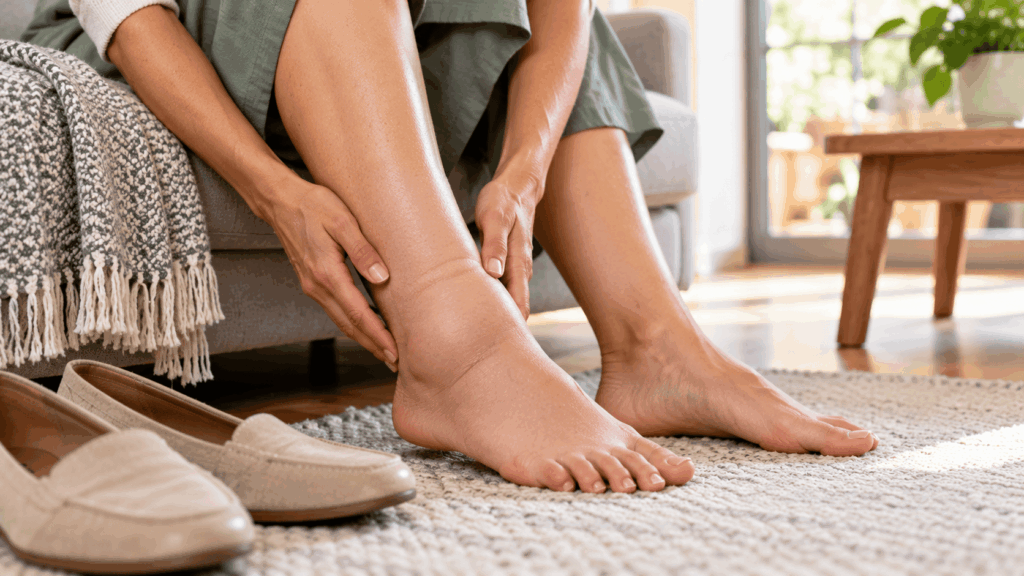
What to know about swollen ankles
- Swelling in the ankles, feet or legs is called oedema and is usually caused by fluid building up in the tissues.
- The most common triggers are standing or sitting too long, eating too much salt, pregnancy and certain medicines.
- Simple measures (raising your legs, moving more, wearing comfortable shoes) often help within a few days.
- Sudden swelling in one leg, swelling with breathlessness or chest pain, or swelling that does not improve needs medical attention.
Swollen ankles are one of those things that can look alarming but often have a straightforward explanation. You have been on your feet all day, the weather is warm, your shoes are tight, or you have been sitting in one position for hours. Fluid pools in your lower legs, your ankles puff up, and by the next morning it has usually gone down again.
The medical term for this kind of swelling is oedema. Most of the time it is harmless and temporary. But it can also be a sign of something that needs attention, which is why it is worth understanding what causes it and when to act.
Common causes of swollen ankles
The NHS lists the following as common causes of oedema in the ankles, feet and legs:
- Standing or sitting in the same position for too long. Gravity pulls fluid downward, and without movement your muscles are not pumping it back up through the veins.
- Eating too much salt. Sodium makes the body hold on to water, which can show up as puffiness in the ankles and feet.
- Being overweight. Extra body weight puts pressure on the veins in your legs and can slow the return of blood to the heart.
- Pregnancy. Hormonal changes and pressure from the growing baby can cause fluid to collect in the feet and ankles, especially in the third trimester.
- Certain medicines. Some blood pressure medications (particularly calcium channel blockers), contraceptive pills, hormone therapy, antidepressants and steroids can cause ankle swelling as a side effect.
- Varicose veins. When the valves in your leg veins stop working properly, blood can pool and fluid can leak into surrounding tissues.
- Hot weather. Heat causes blood vessels to widen, making it easier for fluid to move into the tissues.
Less common but more serious causes include heart, kidney or liver problems, a blood clot (deep vein thrombosis), a thyroid condition, or an infection.
What you can do at home
If your swelling is mild and you have a good idea of what caused it (a long day on your feet, a salty meal, a long flight), the NHS suggests these practical steps:
- Raise your legs. Prop your feet up on a cushion or footstool so they are above the level of your heart when you can. Even 15 to 20 minutes helps.
- Get moving. Gentle exercise such as walking improves blood flow and helps your muscles pump fluid back up through the veins. Even flexing your ankles while sitting can make a difference.
- Wear comfortable shoes. Wide-fitting shoes with a low heel and a soft sole give your feet room to breathe. Avoid tight socks or shoes that dig in.
- Cut back on salt. Reducing salty snacks, processed food and adding less salt at the table can help your body release retained fluid.
- Stay hydrated. It sounds counterintuitive, but drinking enough water helps your kidneys flush out excess sodium.
- Moisturise your skin. Swollen skin can become dry and cracked. Keeping it clean and moisturised helps prevent infections, especially if the swelling is persistent.
Things to avoid: standing or sitting for long stretches without a break, crossing your legs while seated (it restricts blood flow), and wearing clothing or socks that are too tight around the calves or ankles.
If you are flying or travelling by coach or car for more than three or four hours, get up and walk around when you can. While seated, flex your ankles and circle your feet regularly. The NHS recommends this to reduce the risk of both oedema and deep vein thrombosis.
What your pharmacist can suggest
If home measures are not enough, your pharmacist can help with a few things without the need for a GP appointment:
- Compression stockings. These apply gentle, graduated pressure to your lower legs and help push fluid back up towards the heart. They are available in different strengths and lengths. Your pharmacist can help you choose the right type and size. Compression stockings are widely recommended for swelling caused by standing, sitting, varicose veins and chronic venous insufficiency.
- Emollients. If the skin on your ankles or feet is dry, tight or cracking, a pharmacist can recommend a suitable moisturiser.
If you suspect a medicine you are taking is causing the swelling, do not stop taking it without speaking to your GP or pharmacist first. They can review your medication and suggest alternatives if appropriate.
Natural and traditional remedies
Some natural approaches are backed by reasonable evidence. Others are traditional practices with limited proof. Here is an honest look at what people try:
- Leg elevation and gentle exercise are the two most effective non-medical remedies. They are recommended by the NHS and have a clear physiological basis: they help blood and lymph fluid return from the legs to the rest of the body.
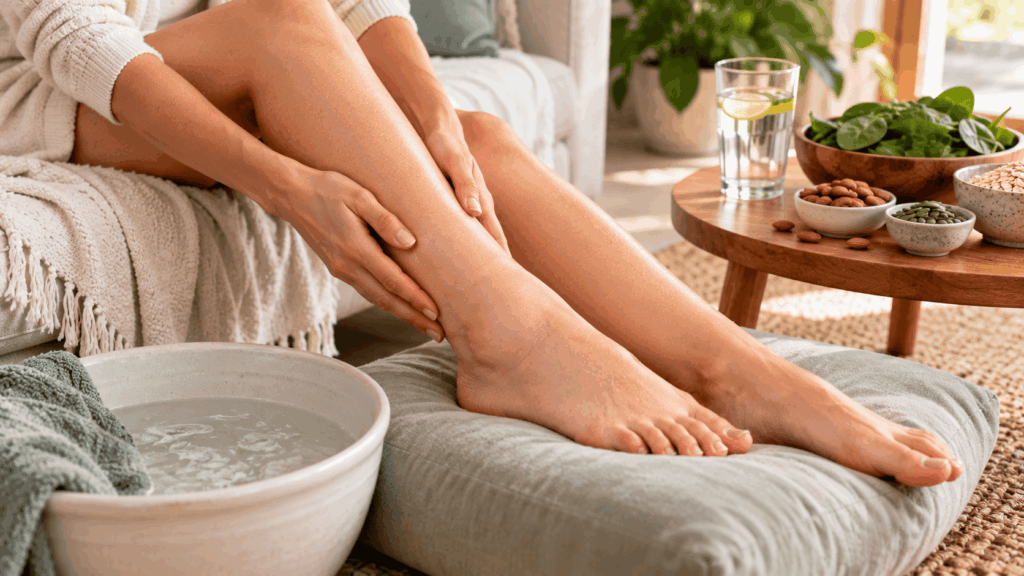
- Cold water soaking. Some people find that soaking swollen feet in cool (not ice-cold) water helps reduce puffiness. There is limited clinical evidence for this, but it is unlikely to cause harm if the water is not too cold and your skin is intact.
- Massage. Gentle upward strokes towards the knee may help move fluid out of the ankles. Avoid firm pressure on very swollen or painful areas, and do not massage if there is any chance of a blood clot.
- Magnesium. Low magnesium has been linked to water retention in some studies, and magnesium supplements are sometimes suggested for swollen ankles. The evidence is limited and does not support routine use for oedema. If you think your magnesium intake is low, eating magnesium-rich foods (spinach, nuts, seeds, whole grains) is a sensible first step.
Horse chestnut seed extract (Aescin) has been studied for chronic venous insufficiency (a condition where leg veins struggle to return blood to the heart) and some trials suggest it may reduce swelling and discomfort. However, the evidence is modest, and horse chestnut is not recommended as a substitute for medical treatment. It can interact with blood-thinning medicines. If you are considering it, speak to your GP or pharmacist first.
Swollen ankles during pregnancy
Mild swelling in the feet and ankles is very common during pregnancy, especially in the later months. The NHS considers it a normal part of pregnancy caused by extra fluid in the body and pressure from the baby on the veins in the pelvis.
You can ease pregnancy-related swelling by raising your feet when resting, wearing comfortable shoes, doing gentle exercise (walking, swimming), sleeping on your left side, and avoiding standing for long periods.
However, sudden or severe swelling in pregnancy, especially in the face, hands or feet, can be a sign of pre-eclampsia, a serious condition that needs urgent medical attention. If you notice sudden swelling alongside headaches, vision problems or pain just below the ribs, contact your midwife, GP or maternity unit immediately.
When to see your GP or get urgent help
See your GP or call NHS 111 ifYou have swelling in one ankle or leg and you do not know what is causing it. The swelling is severe, painful or started very suddenly. The swollen area is red or feels hot to the touch. You have a very high temperature or feel hot, cold or shivery alongside the swelling. You have diabetes and your feet or ankles are swollen. The swelling has not improved after a few days of home treatment. You also have swelling in your face, hands or tummy. You are pregnant and notice sudden swelling (possible pre-eclampsia: contact your midwife or maternity unit straight away).
The NHS advises calling 999 or going to A&E if you have swollen legs alongside:
- Shortness of breath or difficulty breathing
- Chest pain or a feeling of tightness in the chest
- Coughing up blood
- Heart palpitations
- Feeling lightheaded, faint, confused or clammy
These could be signs of a blood clot in the lungs (pulmonary embolism), which needs immediate hospital treatment.
Common questions about swollen ankles
How can I get rid of swollen ankles fast?
The quickest way to bring mild swelling down is to lie down and raise your feet above the level of your heart for 15 to 20 minutes. Gentle ankle circles and flexing your feet while elevated helps too. Avoid salty food for the rest of the day and drink plenty of water. If the swelling does not go down within a few days, see your GP.
Is it normal for ankles to swell in hot weather?
Yes. Heat causes blood vessels to widen, which allows more fluid to move into the surrounding tissues. This is common and usually goes away when you cool down, raise your legs and move around. If it happens regularly or does not resolve, mention it to your GP.
Should I worry about swollen ankles?
Mild, occasional swelling after a long day or a salty meal is usually nothing to worry about. You should seek medical advice if the swelling is sudden, painful, in one leg only, accompanied by redness or heat, or if you also feel short of breath or have chest pain. Persistent swelling that does not improve warrants a GP visit.
Can swollen ankles be a sign of heart problems?
They can. Swelling in both legs, especially if it comes with fatigue and breathlessness, can be a sign of heart failure. This does not mean everyone with puffy ankles has a heart condition, but it is one of the reasons persistent or worsening swelling should be checked by a GP.
Do compression socks help with swollen ankles?
Yes. Compression stockings apply gentle pressure to the lower legs and help push fluid back towards the heart. They are recommended by the NHS for people with varicose veins, chronic venous insufficiency and swelling caused by standing or sitting for long periods. Your pharmacist can advise on the right type and fit.

Independent guides to natural remedies and supplements, checked against NHS and EFSA references.