Home › Pregnancy & Baby › Which teething remedies are safe for babies?
Pregnancy & BabyWhich teething remedies are safe for babies?

Chilled teething rings, gentle gum rubbing and sugar-free paracetamol (from 2 months) or ibuprofen (from 3 months) are the safest options, according to the NHS.
The NHS does not recommend homeopathic teething products. Teething gels have limited evidence of benefit and should only be used after non-medicinal options. Amber teething necklaces pose a serious choking and strangulation risk and should not be used.
Teething is one of the first uncomfortable milestones your baby will go through, and it can be hard to watch. Most babies start teething at around 6 months, though some begin as early as 3 months or as late as 12. The process is normal and temporary, but the drooling, fussiness and sore gums can leave parents searching for anything that might help.
The good news is that the safest remedies are also the simplest. The bad news is that some widely marketed products carry real risks. Here is what the evidence says.
What the NHS recommends
The NHS teething advice focuses on a handful of straightforward, low-risk approaches:
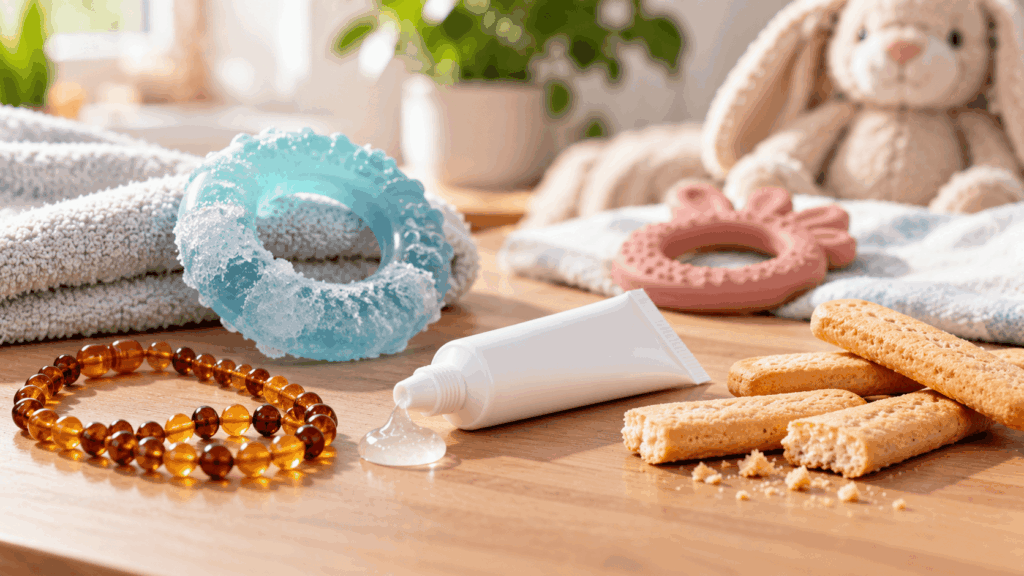
- Teething rings. A firm rubber teething ring gives your baby something safe to chew on. You can cool it in the fridge first to help soothe sore gums. Never put a teething ring in the freezer (it can damage gums) and never tie one around your baby’s neck (choking risk).
- Gum rubbing. Gently rubbing your baby’s gums with a clean finger can ease discomfort and is one of the first things to try.
- Chilled food (from 6 months). If your baby is weaning, pieces of chilled fruit or vegetable (melon, cucumber, banana) can soothe gums. Always supervise closely to prevent choking.
- Comfort and distraction. Cuddling, playing and simply being close can distract your baby from the pain.
When to try paracetamol or ibuprofen
If your baby is still in pain after trying the measures above, the NHS says you can give a sugar-free painkilling medicine:
- Paracetamol can be given from 2 months of age
- Ibuprofen can be given from 3 months of age
Always follow the dosage instructions on the packaging and use products designed for babies. Never give aspirin to a child under 16. If you are unsure about the right dose or product, ask your pharmacist or health visitor.
What about teething gels?
Teething gels contain a mild local anaesthetic (usually lidocaine) and are available from pharmacies. However, the NHS notes there is a lack of evidence that they are effective and recommends trying teething rings and sugar-free painkillers first.
If you do choose to use a gel, the NHS advises making sure it is specifically designed for young children. General oral pain relief gels intended for adults are not suitable for babies.
In the UK, the MHRA (Medicines and Healthcare products Regulatory Agency) reviewed lidocaine-containing teething products and restricted them to pharmacy-only sale, with smaller pack sizes and clearer labelling. The message is clear: teething gels are a second-line option, not a first choice.
There are two distinct types of teething gel on the market. Medicated gels contain lidocaine, a local anaesthetic, and are available only from pharmacies. Homeopathic gels contain highly diluted substances and are a separate category. The NHS recommends neither as a first option, but the evidence and regulatory picture are different for each. If you are unsure which you are buying, ask your pharmacist.
Are homeopathic teething remedies safe?
This is one of the most searched questions from new parents, and the answer from UK health authorities is clear: the NHS does not recommend homeopathic products for teething.
In the UK, some homeopathic teething products (granules, gels, pillules) are licensed by the MHRA and remain available. The MHRA has stated that these licensed products meet UK safety standards. However, the NHS still advises trying non-medicinal options and simple painkillers first.
The concern is greater with unlicensed homeopathic teething tablets sold online. In 2016, the FDA in the United States warned that some homeopathic teething tablets contained inconsistent levels of belladonna (a toxic plant extract) and were linked to serious side effects including seizures, difficulty breathing and muscle weakness in young children. The MHRA issued its own warning, advising UK parents not to buy unlicensed homeopathic products online.
The bottom line: there is no good evidence that homeopathic teething remedies work, and unlicensed products carry real safety risks. If you choose to use one, make sure it is licensed for use in the UK. But the NHS position is that they are not recommended.
Remedies to avoid
Some products and practices marketed for teething are not safe for babies:
- Amber teething necklaces and jewellery. These pose a serious choking and strangulation risk. There is no credible evidence that amber releases pain-relieving substances through the skin. Health bodies including the FDA and UK health professionals advise against them.
- Benzocaine-based gels. The FDA has warned that benzocaine (found in some US oral pain products) can cause a rare but serious condition called methemoglobinaemia, which reduces the blood’s ability to carry oxygen. Benzocaine products are not commonly used for teething in the UK, but they may be available online.
- Frozen teething rings. A teething ring that has been in the freezer can become hard enough to damage a baby’s gums. Chill it in the fridge, never the freezer.
- Rusks and sugary foods. The NHS advises against rusks because nearly all brands contain sugar, which can contribute to tooth decay even in babies with only a few teeth.
Your baby has a temperature above 38°C (this is unlikely to be caused by teething alone and may indicate illness). Your baby seems unusually listless, refuses feeds or is hard to wake. Teething pain is not improving with the measures above. You are unsure which medicine or product is safe for your baby’s age. You have given your baby an unlicensed product bought online and they show any unusual symptoms.
How to tell if it really is teething
Teething can cause sore and red gums, increased dribbling, flushed cheeks, chewing on fingers and objects, and mild irritability. According to the NHS, teething may produce a very mild temperature (below 38°C), but it should not cause a high fever, diarrhoea, or make your baby seriously unwell.
If your baby has a temperature of 38°C or above, seems very upset or clearly unwell, do not assume it is teething. Contact your GP, call NHS 111, or in an emergency call 999.
Common questions about baby teething remedies
Can I give paracetamol to a 3-month-old for teething?
Yes. The NHS says paracetamol can be given to babies from 2 months of age. Make sure you use an infant formulation and follow the dosage instructions on the packaging. If your baby is under 2 months and seems to be in pain, speak to your GP or health visitor.
Do natural teething remedies work for a 3-month-old?
The safest natural approaches at this age are chilled teething rings and gentle gum rubbing with a clean finger. Chilled food is not suitable until weaning begins (usually around 6 months). There is no good evidence that homeopathic granules, herbal gels or amber necklaces work, and some carry safety risks.
Are teething powders safe?
Teething powders are a form of homeopathic teething product. The NHS does not recommend homeopathic products for teething. If you choose to use one, the MHRA advises making sure it is licensed for use in the UK. Do not buy unlicensed products online.
How long does teething pain last?
Each tooth usually takes a few days to break through, and the worst discomfort tends to come just before and as the tooth cuts through the gum. Most babies have all 20 milk teeth by the age of about 2 and a half. Some babies seem barely affected; others find it much more uncomfortable.
Should I use an amber teething necklace?
No. Amber teething necklaces create a choking and strangulation hazard and there is no scientific evidence that they relieve teething pain. Health professionals in both the UK and the US advise against using them.

Independent guides to natural remedies and supplements, checked against NHS and EFSA references.