Home › Best Supplements › What is the best treatment for cradle cap?
RankingsWhat is the best treatment for cradle cap?
We may earn a commission when you buy through links on this page. No brand pays to be ranked. How we rank products
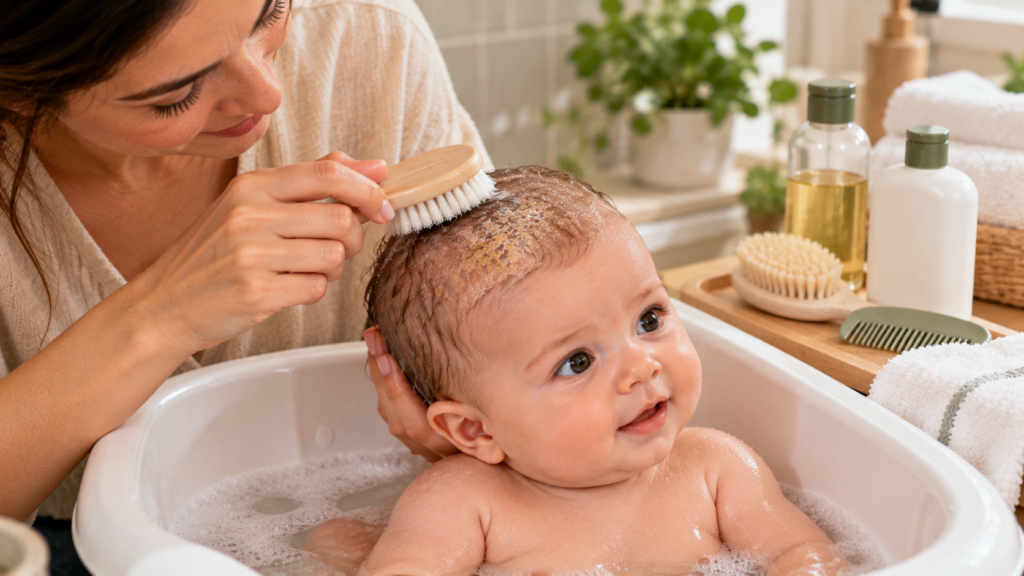
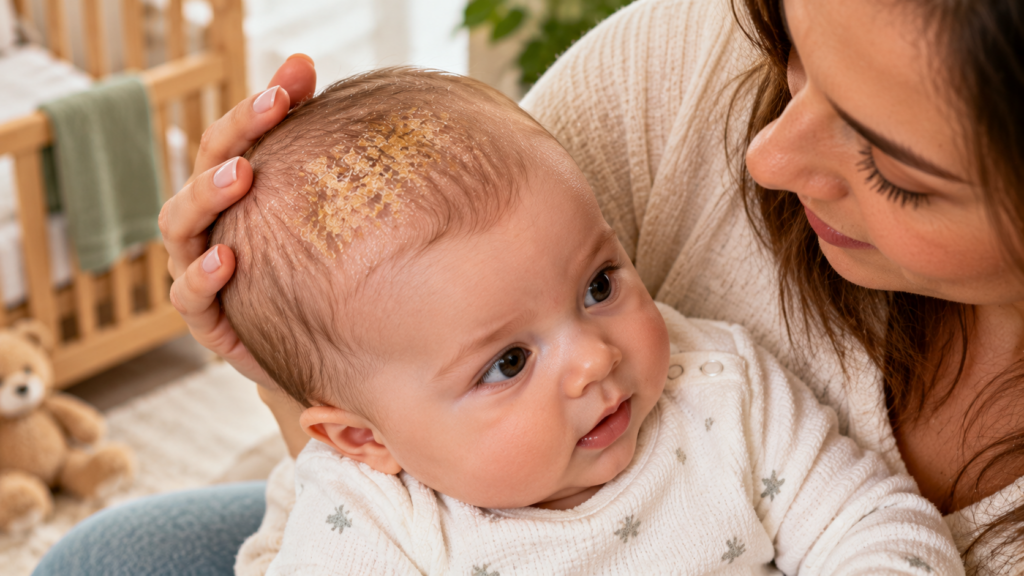
Cradle cap is one of the most common skin conditions in newborns. Those thick, yellowish, flaky patches on your baby’s scalp can look alarming, but the condition is harmless and rarely bothers the baby at all. Medically known as infantile seborrheic dermatitis, it typically appears between two and six weeks of age, peaks around one to three months, and in most cases clears on its own by six to twelve months.
That does not stop parents from wanting to do something about it. The good news is that several effective approaches exist, from medicated shampoos containing pyrithione zinc to gentle foaming washes, physical tool kits that loosen and lift flakes, and organic balms that soften the scales. Some parents find a single product does the job; others combine a shampoo with a brush for the best results.
We compared six widely available cradle cap treatments in the US, spanning medicated shampoos, gentle washes, tool kits and balms. Every product claim was verified against its label or official listing, and every buyer quote comes from a named review platform.
Happy Cappy Medicated Shampoo is our highest-scoring cradle cap treatment, combining pyrithione zinc 0.95% with a gentle, pediatrician-developed formula.
Our top pick is Happy Cappy – Medicated Shampoo & Body Wash, the only FDA-registered OTC cradle cap shampoo formulated specifically for children. For a gentle, non-medicated daily wash, Mustela – Foam Shampoo for Newborns is the best option for mild cases. If you prefer a hands-on approach, FridaBaby – DermaFrida FlakeFixer offers a three-step tool kit that pairs well with any shampoo.
What is cradle cap, and does it need treating?
Cradle cap is a form of seborrheic dermatitis that affects the scalp of infants. It shows up as thick, crusty, yellowish or white patches that can look greasy or waxy. In some babies it stays confined to a small area; in others it covers much of the scalp and occasionally appears on the eyebrows, behind the ears or in skin folds.
The exact cause is not fully understood, but dermatologists believe it involves a combination of leftover maternal hormones that stimulate the baby’s oil glands and an overgrowth of Malassezia yeast, a type of fungus that feeds on the excess oil. This is the same yeast associated with dandruff in adults.
The American Academy of Pediatrics notes that cradle cap does not strictly require treatment because it resolves on its own in the vast majority of cases. However, the AAD recommends gentle home care to manage the scales, including regular shampooing and soft brushing. Treatment is a matter of cosmetic preference and parental comfort rather than medical necessity, unless the condition spreads, becomes painful or shows signs of infection.
Cradle cap and baby eczema (atopic dermatitis) can look similar but behave differently. Cradle cap tends to appear in oily areas (scalp, eyebrows, skin folds), produces thick greasy scales and rarely itches. Eczema tends to appear on the cheeks, arms and legs, produces dry red patches and is often very itchy. If you are unsure which condition your baby has, a pediatrician or dermatologist can tell the difference.
What to look for in a cradle cap treatment
Medicated vs non-medicated
This is the most important decision. Medicated shampoos and gels contain an active ingredient, most commonly pyrithione zinc at 0.95%, which targets the Malassezia yeast believed to contribute to cradle cap. They are designed for persistent or stubborn cases. Non-medicated shampoos use gentle surfactants to loosen flakes during regular bath time and are better suited to mild cases where the scales are thin and the baby’s scalp is not inflamed.
Physical tools
Brushes, combs and sponge kits work by physically loosening and lifting the flakes after they have been softened by oil or shampoo. Many parents find that combining a shampoo with a soft-bristle brush produces better results than either approach alone. The AAD recommends using a soft-bristle brush or fine-tooth comb after shampooing to gently remove loosened scales. Tools should never be used to scratch or pick at dry scales, as this can cause irritation or infection.
Ingredient safety
Baby skin is thinner and more permeable than adult skin. For cradle cap products, look for formulas that are free from fragrance, dyes, parabens, sulfates and phthalates. Pyrithione zinc at 0.95% has a long track record in anti-dandruff products and is the active ingredient in two of the treatments in our ranking. For parents who prefer to avoid any synthetic actives, organic balms and gentle washes offer a milder alternative.
The AAD recommends applying a non-food-based oil such as baby oil or mineral oil to the scalp about an hour before bath time, then shampooing and gently brushing. The oil softens the scales so they lift off more easily during the wash. Avoid food-based oils like olive oil, which the NHS advises against for cradle cap as they may encourage the growth of Malassezia yeast.
How we scored these treatments
We evaluated each product on four criteria, weighted to reflect what matters most when choosing a cradle cap treatment. Every ingredient was verified against the product’s label or official listing, and every buyer quote comes from a named review platform.
- Design and formula (35%) – For shampoos and gels: is the active ingredient appropriate, and is the formula free from common irritants? For tools: is the design well thought out, and are the materials safe for a baby’s scalp?
- Ease of use (25%) – How practical is the product during bath time with a squirming baby? Does it lather, rinse or apply without fuss?
- Value (20%) – How much product do you get, and how long is it likely to last with regular use?
- Buyer feedback (20%) – What do verified buyers say on Target, Walmart, Amazon and other platforms, weighted toward comments about cradle cap specifically?
Scores run from 0 to 10, rounded to one decimal place, and decrease strictly from our top pick to our sixth. Full methodology: how we rank products.
Our ranking at a glance
| Rank | Product | Type | Score | |
|---|---|---|---|---|
| #1Best overall | Happy Cappy - Medicated Shampoo & Body Wash | Medicated shampoo (pyrithione zinc 0.95%) | 8.6/10 | Check price |
| #2Best gentle shampoo | Mustela - Foam Shampoo for Newborns | Gentle foam shampoo (Avocado Perseose) | 8.3/10 | Check price |
| #3Best tool kit | FridaBaby - DermaFrida FlakeFixer | 3-step tool kit (sponge, brush, comb) | 8.0/10 | Check price |
| #4Best medicated gel | Tubby Todd - Bye-Bye Cradle Cap Gel | Medicated gel (pyrithione zinc 0.95%) | 7.7/10 | Check price |
| #5Best organic option | Era Organics - Super Balm | USDA Organic balm (calendula, chamomile) | 7.4/10 | Check price |
| #6Best budget brush | Safety 1st - Cradle Cap Brush and Comb | 2-in-1 hand-mounted brush and comb | 7.1/10 | Check price |
Our picks reviewed
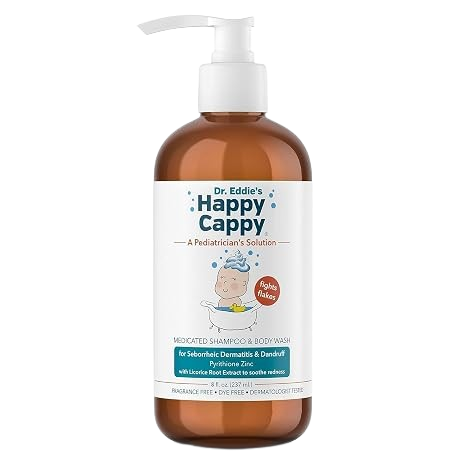
Happy Cappy - Medicated Shampoo & Body Wash
The only FDA-registered OTC cradle cap shampoo formulated specifically for children, with pyrithione zinc 0.95% and licorice root extract.
- Activepyrithione zinc 0.95%
- Key inactivelicorice root extract, aloe vera
- Formliquid shampoo and body wash
- Size8 fl oz
- Free fromfragrance, dyes, sulfates, parabens, phthalates
- Certificationsvegan, cruelty-free
- your baby has persistent or thick cradle cap that has not responded to gentle shampooing
- you want a medicated shampoo with an FDA-registered active ingredient
- the cradle cap is very mild and you prefer to try a gentle, non-medicated shampoo first
- you are looking specifically for an organic or all-natural formula
Happy Cappy is a pediatrician-developed medicated shampoo created by Dr. Eddie Valenzuela, a board-certified pediatric dermatologist. It is the only FDA-registered OTC shampoo with pyrithione zinc 0.95% formulated specifically for children. Pyrithione zinc is the same anti-fungal and anti-bacterial active used in adult dandruff shampoos, but at a concentration and in a formula designed for sensitive baby skin. Licorice root extract is included for its soothing properties, and aloe vera provides additional gentle conditioning.
The formula is free from fragrance, dyes, sulfates, parabens and phthalates, and carries vegan and cruelty-free certifications. It doubles as a body wash, which simplifies bath time. On Walmart, it holds 4.5 out of 5 stars across 669 ratings. One buyer wrote "This is the best shampoo for newborn cradle cap" (Camila S., happycappyshampoo.com). The main consideration is that medicated shampoos are designed for active cradle cap rather than everyday prevention. Once the scales have cleared, many parents switch to a gentler daily wash.
Where to buy
Prices change often, so we don't show them here: check the retailer for today's price.
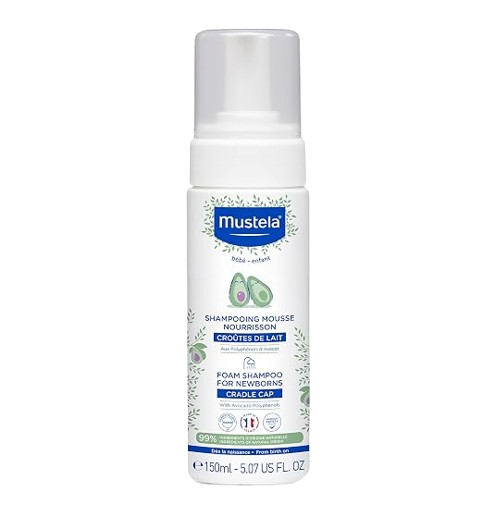
Mustela - Foam Shampoo for Newborns
A tear-free, hypoallergenic foam shampoo with patented Avocado Perseose, designed for daily use from birth to prevent and reduce cradle cap.
- Key ingredientAvocado Perseose (patented)
- Formfoam pump shampoo
- Size5.07 fl oz
- Tear-free, hypoallergenic
- Free fromparabens, phthalates, dyes
- Not a medicated product
- the cradle cap is mild and you want a gentle daily shampoo to manage it
- you prefer a non-medicated, tear-free formula safe for everyday use from birth
- the scales are thick or stubborn and have not responded to regular gentle washing
- you want a medicated shampoo with an active anti-fungal ingredient
Mustela's foam shampoo takes a gentle prevention approach rather than a medicated treatment one. The key ingredient is Avocado Perseose, a patented extract from avocado that Mustela uses across its newborn range. The formula is tear-free and hypoallergenic, designed to be used as a daily shampoo from birth. It does not contain a medicated active ingredient, so it works by keeping the scalp clean and gently loosening flakes during regular bath time.
The foam pump format is a practical advantage. Rather than pouring liquid onto a wet, slippery baby, you dispense a light foam that stays where you put it and spreads easily across the scalp. On Target, it holds 4.6 out of 5 stars across 641 reviews. One buyer wrote "This is hands down the best cradle cap baby shampoo!" (Andi, Target). The trade-off is that without a medicated active, this shampoo relies on gentle cleansing alone. For thick or stubborn scales, pairing it with a soft-bristle brush or stepping up to a pyrithione zinc formula may be more effective.
Where to buy
Prices change often, so we don't show them here: check the retailer for today's price.
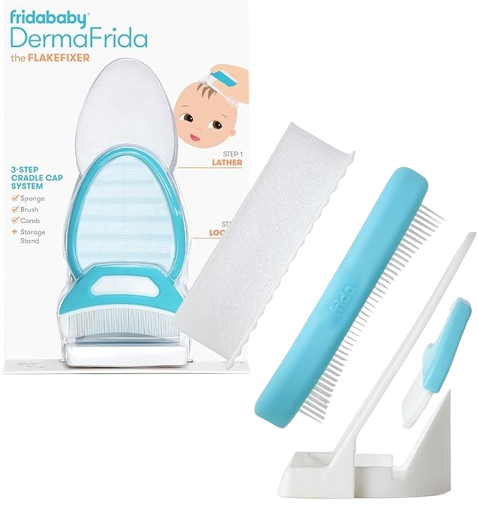
FridaBaby - DermaFrida FlakeFixer
A three-step tool kit with a textured sponge, bristle brush and fine-tooth comb that physically loosens and removes cradle cap flakes without chemicals.
- Includestextured sponge, bristle brush, fine-tooth comb
- Approachmechanical (no shampoo or chemicals included)
- MaterialBPA-free
- Form3-piece bath time tool kit
- Works withany baby shampoo or oil
- you want a chemical-free way to physically remove cradle cap flakes
- you want a tool kit that works alongside any shampoo or oil you already use
- you prefer an all-in-one product that does not require manual brushing
- your baby has a very sensitive scalp or you are uncomfortable brushing near the soft spot
The DermaFrida FlakeFixer takes an entirely mechanical approach to cradle cap. The kit includes three tools used in sequence during bath time: a textured sponge to wet and loosen the scales, a bristle brush to lift them from the scalp, and a fine-tooth comb to remove the loosened flakes. No shampoo or chemical is included. The system is designed to pair with whatever baby shampoo, medicated wash or oil you are already using.
This is the highest-rated product in our ranking by individual buyer score, holding 4.7 out of 5 stars across 1,264 reviews on Target. One buyer wrote "This really works immediately" (Haileya, Target). Another noted it "helped get rid of my son's cradle cap after 2 baths" (Ale C, Target). The trade-off is that it requires hands-on effort during bath time, which some parents find tricky with a squirmy baby. It also does not address the underlying yeast component that medicated products target, so it works best when the goal is physical flake removal rather than treating the root cause.
Where to buy
Prices change often, so we don't show them here: check the retailer for today's price.
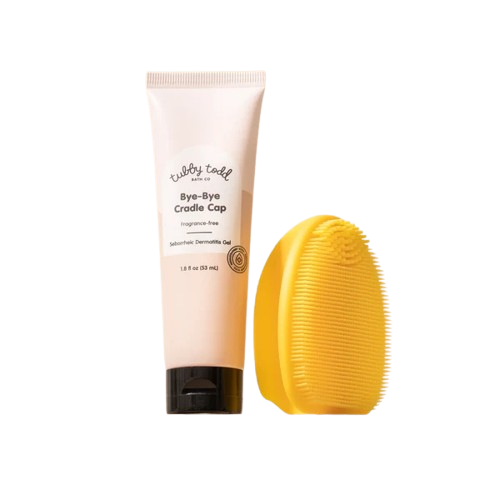
Tubby Todd - Bye-Bye Cradle Cap Gel
A pyrithione zinc 0.95% gel with botanical extras including aloe, green tea and organic avocado extract, in a massage-and-rinse format.
- Activepyrithione zinc 0.95%
- Key inactivesaloe, green tea, cucumber extract, olive fruit oil (organic), avocado extract (organic), glycerin
- Formgel
- Size1.8 oz
- Hypoallergenic, dermatologist-tested, unscented
- Made in USA
- you want a medicated treatment with botanical extras in a concentrated gel format
- you prefer a gel you massage directly into the scalp rather than a full shampoo lather
- you want a product that doubles as a daily shampoo or body wash
- you need a larger size for extended or frequent use
Tubby Todd's gel shares the same pyrithione zinc 0.95% active ingredient as Happy Cappy but delivers it in a different format. Instead of a lathering shampoo, this is a concentrated gel that you massage directly into the baby's scalp, leave for a few minutes, then rinse out. The formula includes a range of botanical extras: aloe, green tea, cucumber extract, organic olive fruit oil, organic avocado extract and glycerin.
The product is hypoallergenic, dermatologist-tested and unscented. On Target, it holds 4.4 out of 5 stars across 1,456 reviews, the largest review base of any product in our ranking. One buyer noted "very little goes a long way!" (Ana, Target). The main trade-off is the 1.8 oz tube, which is small. While the concentrated gel does stretch further per application than a liquid shampoo, frequent users may go through it quickly. It also does not double as a body wash, so you will need a separate product for the rest of bath time.
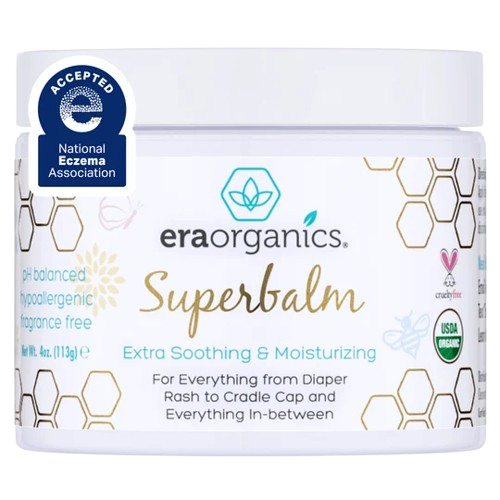
Era Organics - Super Balm
A USDA Certified Organic multi-purpose balm with chamomile, calendula, cocoa butter and coconut oil, free from synthetic ingredients.
- Key ingredientschamomile, beeswax, cocoa butter, coconut oil, calendula, avocado oil
- CertificationsUSDA Certified Organic
- Formbalm
- Size2 oz
- Multi-purposecradle cap, eczema, rashes, chapped skin
- Free fromparabens, alcohol, fragrance, phthalates, petrolatum
- you want a certified organic product with no synthetic or medicated ingredients
- you want a multi-purpose balm that can also be used on eczema, rashes or dry skin
- you need a medicated treatment for stubborn cradle cap
- you want a shampoo rather than a leave-on balm
Era Organics takes a fully organic, non-medicated approach to cradle cap. The Super Balm is built on a base of USDA Certified Organic ingredients including chamomile, beeswax, cocoa butter, coconut oil, calendula and avocado oil. There is no pyrithione zinc or any other medicated active. Instead, the balm works by softening the scales so they can be gently brushed or washed away, while the botanical oils condition the scalp.
The product is marketed as a multi-purpose balm for cradle cap, eczema, rashes and chapped skin, which adds practical value for parents dealing with more than one skin concern. On Walmart, it holds 4.7 out of 5 stars across 121 ratings. One buyer wrote "Only product that works for my son's eczema!" (Justin C., eraorganics.com). The smaller review base compared to other products in our ranking is the main limitation, along with the fact that without a medicated active, this balm is better suited to mild cases or as a complement to a medicated shampoo.
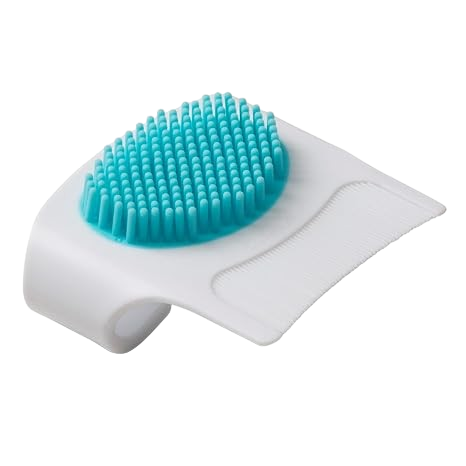
Safety 1st - Cradle Cap Brush and Comb
A simple, affordable 2-in-1 hand-mounted brush and comb with soft rubber bristles for gentle flake removal during bath time.
- Includessoft rubber bristle brush + fine-tooth comb
- Design2-in-1 hand-mounted (fits over fingers)
- Materialrubber bristles, plastic comb
- Approachmechanical (no chemicals)
- Works withany baby shampoo or oil
- you want an affordable, no-frills brush to use alongside your regular baby shampoo
- you prefer a simple tool rather than a multi-step system
- you want a more comprehensive kit with multiple tools like the DermaFrida
- your baby's cradle cap is stubborn and needs a medicated treatment
The Safety 1st brush and comb is a straightforward, budget-friendly tool for parents who want to add gentle physical exfoliation to their baby's bath routine. The 2-in-1 design combines soft rubber bristles on one side with a fine-tooth comb on the other, mounted on a handle that slips over your fingers for easy grip during bath time. Like the DermaFrida, it contains no chemicals and is designed to work alongside whatever shampoo or oil you already use.
On Target, it holds 4.4 out of 5 stars across 77 reviews. One buyer wrote "This comb took care of my little guy's cradle cap after one use" (Annie H, Target). Another noted "It has worked incredibly well to clean up her cradle cap" (Jes M, Target). The main trade-off is the design: some reviewers find the straight shape awkward to maneuver around a baby's head, and the 77-review base is much smaller than the DermaFrida's 1,264. For parents who want a simple, inexpensive brush to try before committing to a full kit, it fills that role well.
Where to buy
Prices change often, so we don't show them here: check the retailer for today's price.
When to call your pediatrician
Cradle cap is almost always a harmless cosmetic issue. However, a small number of cases need medical attention.
The rash spreads beyond the scalp to the face, neck, armpits or diaper area. The scalp looks red, swollen or painful rather than just flaky. You notice oozing, crusting with a yellow or green discharge, or a foul smell, which may indicate a secondary infection. Your baby seems unusually irritable or is scratching the scalp persistently. There is noticeable hair loss in the affected area. Home treatment has not improved the condition after several weeks of consistent care. The AAD recommends contacting a board-certified dermatologist if cradle cap does not improve with at-home treatment.
In persistent cases, a pediatrician may prescribe a low-potency topical corticosteroid or a ketoconazole-based antifungal cream. These are not available over the counter for infants and should only be used under medical supervision. Never use adult dandruff shampoo on a baby without consulting your pediatrician first, as adult formulations contain higher concentrations of active ingredients.
Common questions about cradle cap
Does cradle cap go away on its own
Yes. The American Academy of Pediatrics notes that cradle cap typically resolves on its own without treatment. It usually appears between two and six weeks of age and clears by six to twelve months, though it can occasionally persist into toddlerhood. Gentle shampooing and brushing can speed the process, but leaving it alone is also a medically acceptable approach if the scales do not bother you or your baby.
Can I use coconut oil for cradle cap
Coconut oil is widely recommended on parenting forums, and some parents report good results. However, the AAD recommends using a non-food-based oil such as baby oil or mineral oil instead. The concern with food-based oils is that they may encourage the growth of Malassezia yeast, which is believed to contribute to cradle cap. The NHS specifically advises against olive oil for cradle cap for this reason. If you want to use an oil to soften scales before shampooing, baby oil or mineral oil are the safer choices.
How often should I wash my baby's hair if they have cradle cap
The AAD recommends washing every other day with a gentle baby shampoo to manage cradle cap. If you are using a medicated shampoo with pyrithione zinc, follow the product's instructions, which typically call for use two to three times per week. On non-shampoo days, you can use a soft-bristle brush to gently loosen any visible flakes. Over-washing is not necessary and can dry out the scalp.
Is cradle cap contagious
No. Cradle cap is not contagious and cannot be spread from one baby to another through contact, shared hats or shared towels. It is caused by the baby's own oil glands and skin biology, not by an external infection. You do not need to isolate your baby or avoid childcare settings because of cradle cap.
Should I pick or scratch the cradle cap flakes off
No. Picking or scratching at the scales can break the skin and lead to infection. Instead, soften the scales first by applying baby oil or mineral oil to the scalp about an hour before bath time, then use a soft-bristle brush or fine-tooth comb to gently lift the loosened flakes during or after shampooing. If scales do not come away easily, leave them. They will soften further with the next treatment.
The bottom line
The right cradle cap treatment depends on severity and your preference. For persistent or thick scales, Happy Cappy Medicated Shampoo delivers a proven anti-fungal active (pyrithione zinc 0.95%) in a formula designed specifically for children. For mild cradle cap, Mustela Foam Shampoo offers a gentle daily wash that keeps the scalp clean without medicated ingredients. And for parents who prefer a hands-on approach, the FridaBaby DermaFrida FlakeFixer provides an effective chemical-free tool kit that works alongside any shampoo.
Whichever product you choose, the fundamentals matter as much as the product itself: shampoo regularly, brush gently, soften scales with oil before washing, and never pick or scratch at the flakes. If the condition spreads, looks inflamed or does not improve after several weeks, a pediatrician can rule out infection and recommend the next step.
Happy Cappy - Medicated Shampoo & Body Wash
- Pyrithione zinc 0.95%, the gold-standard anti-fungal active for cradle cap
- Pediatrician-developed, fragrance-free, vegan and cruelty-free
- 4.5/5 on Walmart (669 ratings) and 4.6/5 on Amazon

Independent guides to natural remedies and supplements, checked against NHS and EFSA references.