Home › Best Supplements › What is the best iron supplement for runners?
RankingsWhat is the best iron supplement for runners?
We may earn a commission when you buy through links on this page. No brand pays to be ranked. How we rank products
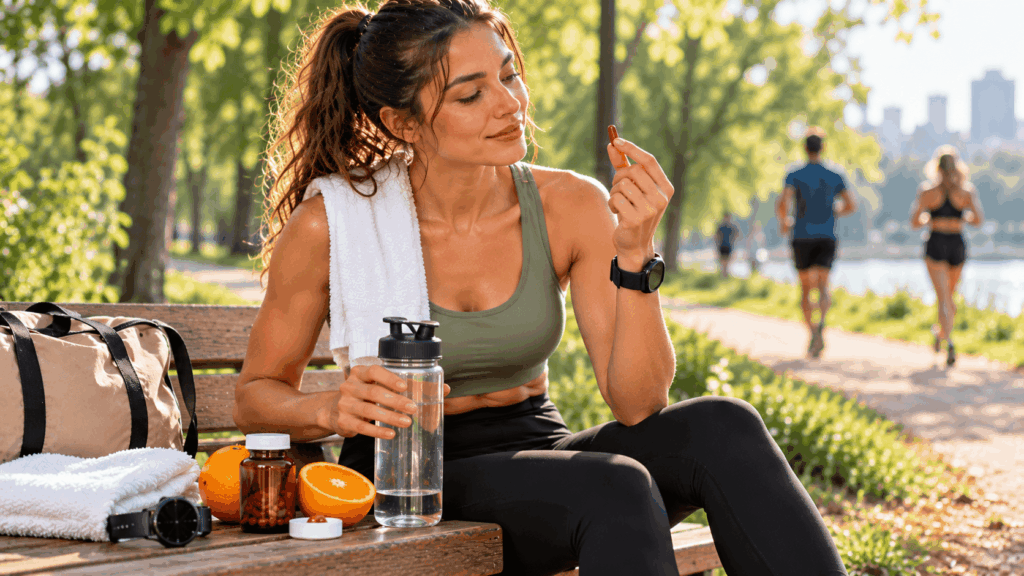
Runners lose iron in ways most people never think about: through sweat, through microscopic bleeding in the gut during long efforts, and through foot-strike hemolysis, the repeated impact that damages red blood cells with every stride. Add the post-run hepcidin surge that temporarily blocks iron absorption, and it is easy to see why iron deficiency is one of the most common nutritional problems in distance running.
Our editorial team compared six iron supplements that suit runners, scoring each on dose and absorption, tolerance, value and buyer feedback. Below, we explain why runners need more iron than the general population, when to take it around training, and which of these six formulas earned the top spot.
A chelated bisglycinate that is third-party tested for banned substances is the safest pick for competitive runners.
Our top pick is Thorne – Iron Bisglycinate, which delivers 25 mg of Ferrochel bisglycinate in a capsule that is NSF Certified for Sport. If you want additional cofactors such as folate and B12, MegaFood – Blood Builder is a strong multi-nutrient alternative.
Why runners are at higher risk of iron deficiency
The general RDA for iron is 18 mg a day for women and 8 mg for men. The NIH notes that regular intense exercise raises iron needs, and some sports nutrition guidelines suggest that athletes may need up to 70 % more than the standard recommendation (NIH Office of Dietary Supplements).
Several mechanisms explain why:
- Foot-strike hemolysis. Each time your foot hits the ground, the impact can rupture a small number of red blood cells. Over thousands of strides per run, the losses add up, particularly in high-mileage weeks.
- Sweat losses. Iron is excreted in sweat, and runners who train in hot conditions or for long durations lose more.
- GI micro-bleeding. Prolonged running can cause low-level bleeding in the gut lining, increasing iron loss.
- Hepcidin response. A hard run triggers a rise in the hormone hepcidin, which peaks roughly 3 to 6 hours after exercise and temporarily reduces iron absorption by up to 36 % (Fensham et al., Sports Medicine, 2023).
Female runners face the highest risk because menstrual losses compound the exercise-related losses. Vegetarian and vegan runners are also more vulnerable, since plant-based (non-heme) iron is less efficiently absorbed than heme iron from meat.
What ferritin level should a runner aim for?
Standard lab ranges often call a ferritin above 12 ng/mL “normal,” but that threshold was set for the general population, not for endurance athletes. The Australian Institute of Sport classifies iron depletion in athletes as ferritin below 35 micrograms per liter (AIS Iron Fact Sheet).
Many sports dietitians suggest that runners perform best with ferritin in the 50 to 100 ng/mL range. Below 30 ng/mL, fatigue and declining performance are common even when hemoglobin still looks normal on a routine blood test. That gap between “not anemic” and “performing well” is where many runners unknowingly sit.
Ask your doctor for a serum ferritin test alongside a full blood count. Hemoglobin drops only after iron stores are already depleted, so it can miss early-stage deficiency. Test at the start of a training block and again after 8 to 12 weeks of supplementation.
When to take iron around your training
1. Take iron in the morning, ideally after your run
A 2019 study of 16 endurance-trained runners found that iron absorption was highest at breakfast after a morning run, even though the run itself raised hepcidin levels (McCormick et al., Medicine & Science in Sports & Exercise, 2019). The short-term post-exercise window appears to outweigh the later hepcidin rise. If you run in the morning, take your iron with breakfast. If you run in the evening, take it in the morning well before your session.
2. Avoid calcium, tea and coffee for two hours either side
Calcium from dairy or supplements, tannins in tea and polyphenols in coffee can reduce iron absorption significantly. A glass of orange juice or a piece of fruit alongside your iron capsule provides vitamin C, which helps convert non-heme iron into the more absorbable ferrous form.
3. Consider alternate-day dosing
A 2017 trial found that women who took iron on alternate days absorbed a higher percentage of each dose than those who took it daily, because daily dosing triggers a sustained rise in hepcidin (Stoffel et al., The Lancet Haematology, 2017). For runners with mildly low stores, alternate-day dosing may offer better absorption with fewer side effects. Severely depleted athletes may still need daily dosing under medical supervision.
If you are planning altitude training or a mountain race, screen your iron status 8 to 12 weeks beforehand. Altitude increases red blood cell production, which draws heavily on iron stores. Arriving with low ferritin can undermine the entire training block.
How we scored these six supplements
We evaluated each product on four criteria, weighted to reflect what matters most when choosing an iron supplement as a runner: Dose and absorption (35 %) covers elemental iron per serving, iron form bioavailability and any absorption enhancers such as vitamin C. Tolerance (25 %) considers the likelihood of stomach upset based on the iron form and dose, critical for runners who need to train without GI distress. Value (20 %) looks at cost per serving and pack size. Buyer feedback (20 %) draws on verified reviews across major US retailers. Full methodology: how we rank products.
We prioritized chelated bisglycinate forms because they are the gentlest on the gut and best-absorbed, which matters especially for runners who already put their digestive system under stress during training. Third-party sport certification was a significant factor for the top pick.
Six iron supplements for runners, compared
| Rank | Product | Form & dose | Score | |
|---|---|---|---|---|
| #1Best for tested athletes | Thorne - Iron Bisglycinate | Bisglycinate (Ferrochel) capsule 25 mg iron | 8.9/10 | Check price |
| #2Best multi-nutrient | MegaFood - Blood Builder | Ferrous bisglycinate tablet 26 mg iron + vit C, folate, B12 | 8.7/10 | Check price |
| #3Best with vitamin C | NATURELO - Vegan Iron with Vitamin C | Iron bisglycinate capsule 25 mg iron + 50 mg vit C | 8.6/10 | Check price |
| #4Best value | Doctor's Best - High Absorption Iron | Bisglycinate (Ferrochel) tablet 27 mg iron | 8.5/10 | Check price |
| #5Best organic | Garden of Life - Vitamin Code Raw Iron | Brown rice chelate capsule 22 mg iron + 25 mg vit C | 7.9/10 | Check price |
| #6Best liquid | Floradix - Iron + Herbs | Ferrous gluconate liquid 10 mg iron per 10 mL | 7.5/10 | Check price |
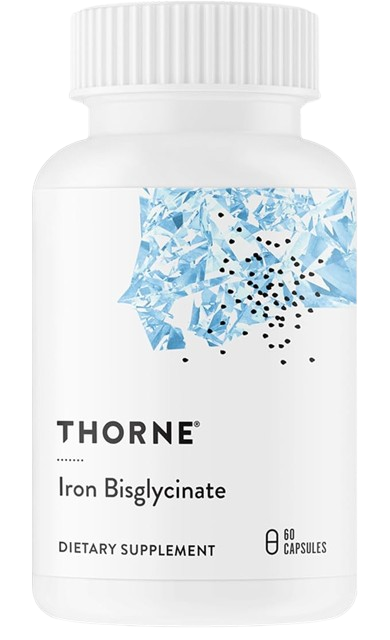
Thorne - Iron Bisglycinate
The only NSF Certified for Sport iron supplement on this list, delivering 25 mg of Ferrochel bisglycinate in a clean capsule.
- Iron25 mg per capsule (iron bisglycinate, Ferrochel)
- Capsulehypromellose (vegan)
- Other ingredientsL-leucine, microcrystalline cellulose, silicon dioxide
- CertificationsNSF Certified for Sport, gluten-free, dairy-free, soy-free
- Pack60 capsules (2-month supply)
- you compete in tested events and need a banned-substance-screened supplement
- you want a pure, single-ingredient iron with nothing extra
- you want vitamin C or B vitamins included in the same capsule
- you prefer a multi-nutrient formula
Thorne Iron Bisglycinate uses Ferrochel, a patented form of iron bisglycinate chelate from Albion Minerals that is one of the most studied chelated iron forms available. At 25 mg per capsule, the dose sits in the range most sports dietitians recommend for maintenance and mild deficiency correction. The capsule is small, easy to swallow and free from common allergens.
The major differentiator is the NSF Certified for Sport mark, which means the product is tested for nearly 300 substances banned by WADA and major sports organizations. For competitive runners who are subject to anti-doping controls, or anyone who wants an extra layer of quality assurance, this certification removes a real concern. Buyers frequently praise the gentle stomach profile and the absence of any metallic aftertaste.
Where to buy
Prices change often, so we don't show them here: check the retailer for today's price.
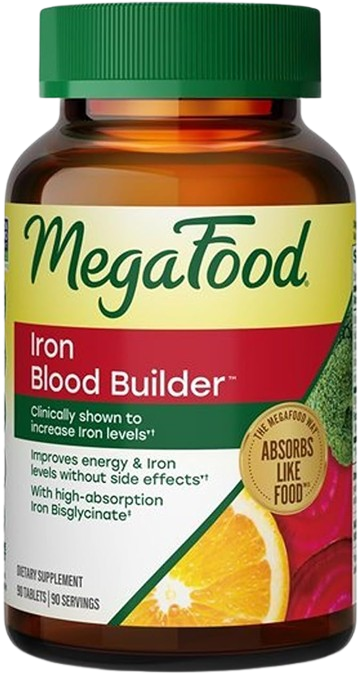
MegaFood - Blood Builder
Iron plus folate, B12, beet root and vitamin C in one tablet designed to support red blood cell production.
- Iron26 mg per tablet (ferrous bisglycinate, FoodState)
- Vitamin Cincluded (from organic orange)
- Folate680 mcg DFE
- Vitamin B1212.5 mcg
- Alsobeet root
- Pack60 tablets
- you want iron with B-vitamin cofactors and vitamin C in one tablet
- you are rebuilding depleted stores and want a multi-nutrient approach
- you need NSF Certified for Sport certification
- you prefer a smaller capsule you can open
Blood Builder bundles 26 mg of iron with vitamin C, folate, vitamin B12 and beet root in a single tablet. MegaFood uses a proprietary FoodState process that embeds the nutrients in a whole-food matrix for gentler digestion. A published clinical trial showed the formula increased iron levels without the common side effects associated with conventional iron tablets.
For runners, the combination of folate and B12 alongside iron is useful because these three nutrients work together in red blood cell production. The tablet is larger than a standard capsule, which some buyers mention as a drawback. Verified reviewers on Amazon frequently note improved energy and good stomach tolerance. "Easy on the stomach and my levels came up fast," writes R. on Amazon.
Where to buy
Prices change often, so we don't show them here: check the retailer for today's price.
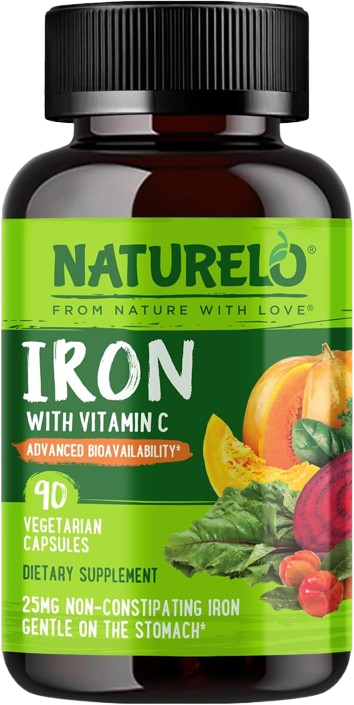
NATURELO - Vegan Iron with Vitamin C
A vegan bisglycinate with 50 mg of whole-food vitamin C and organic greens in a large 180-capsule bottle.
- Iron25 mg per capsule (ferrous bisglycinate chelate)
- Vitamin C50 mg (L-ascorbate + acerola cherry)
- Alsoorganic beet root, spinach, kale, chard, pumpkin
- Capsulehypromellose (vegan)
- Pack180 capsules (6-month supply)
- you want iron and vitamin C in one capsule so you do not have to think about pairing
- you are a vegan or vegetarian runner
- you need NSF Certified for Sport certification
- you want folate and B12 included
NATURELO pairs 25 mg of iron bisglycinate chelate with 50 mg of vitamin C from L-ascorbate and acerola cherry, plus a small dose of organic beet root, spinach, kale and chard. Having vitamin C built into the capsule is convenient for runners who take their iron on the go and do not want to worry about pairing it with food.
The 180-capsule bottle is the largest on this list, lasting six months at a daily dose or a full year on an alternate-day schedule. The capsule is small and vegan, free from soy, gluten and artificial additives. Buyers on major US retailers frequently praise the gentle stomach profile and note that it does not cause the constipation common with other iron supplements.
Where to buy
Prices change often, so we don't show them here: check the retailer for today's price.
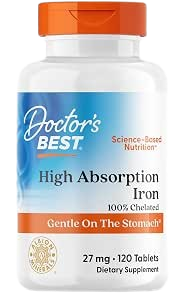
Doctor's Best - High Absorption Iron
A budget-friendly Ferrochel bisglycinate with 120 tablets per bottle, delivering 27 mg per serving.
- Iron27 mg per tablet (ferrous bisglycinate chelate, Ferrochel)
- Tabletcoated, vegan
- Certificationsnon-GMO, gluten-free, soy-free
- Pack120 tablets (4-month supply)
- you want the same Ferrochel chelate as Thorne at a lower cost per serving
- you want a large bottle that lasts several months
- you need NSF Certified for Sport
- you prefer a capsule you can open rather than a coated tablet
Doctor's Best uses the same Ferrochel iron bisglycinate chelate as Thorne, but in a 120-tablet bottle that offers significantly more servings per purchase. At 27 mg per tablet, the dose is marginally higher than Thorne's 25 mg, and the formula is equally clean: no vitamin C, no cofactors, just iron.
The trade-off is the lack of third-party sport certification. For recreational runners who are not subject to anti-doping testing, that may not matter. The product is non-GMO, vegan, gluten-free and soy-free. Buyer reviews on Amazon are consistently positive for tolerance, with many noting it is gentler than ferrous sulfate products they had tried previously.
Where to buy
Prices change often, so we don't show them here: check the retailer for today's price.
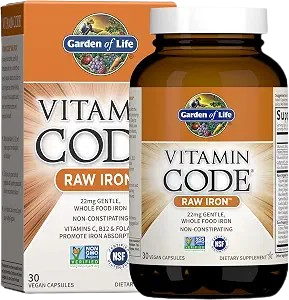
Garden of Life - Vitamin Code Raw Iron
USDA Organic iron with vitamin C, folate, B12 and a probiotic blend in a certified vegan capsule.
- Iron22 mg per capsule (brown rice chelate)
- Vitamin C25 mg
- Folate400 mcg
- Vitamin B12500 mcg
- Alsoprobiotic blend (500 million CFU)
- Pack30 capsules
- you prioritize organic and whole-food sourcing
- you want probiotics alongside your iron
- you need more than 30 days per bottle
- you prefer a well-studied chelate like Ferrochel
Vitamin Code Raw Iron uses 22 mg of iron from a brown rice chelate, paired with 25 mg of vitamin C, folate, B12 and a probiotic and enzyme blend. The formula carries USDA Organic, Certified Vegan and Non-GMO Project Verified badges. The capsule can be opened and mixed into a smoothie, which suits runners who have trouble swallowing tablets after a hard session.
The 25 mg of vitamin C is the lowest on this list, so pairing it with fruit at breakfast would help absorption. The 30-capsule bottle lasts only a month at a daily dose, which makes the cost per serving higher than larger-pack competitors. Buyers on Amazon generally report good tolerance, though a few note a grassy taste when the capsule is opened.
Where to buy
Prices change often, so we don't show them here: check the retailer for today's price.
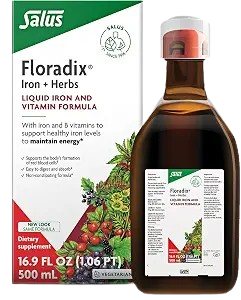
Floradix - Iron + Herbs
A liquid iron formula with herbal extracts and fruit juices, delivering 10 mg of ferrous gluconate per dose.
- Iron10 mg per 10 mL (ferrous gluconate)
- Alsovitamin C, B1, B2, B6, B12
- Herbal extractsnettle, fennel, carrot, spinach
- Formatliquid (500 mL bottle)
- Preservative-free, gluten-free, no artificial additives
- you cannot tolerate capsules or tablets
- you want a lower-dose daily maintenance iron
- you need a higher dose to correct a significant deficiency
- you want a product that travels easily
Floradix is one of the most widely recognized liquid iron formulas, using ferrous gluconate at a gentle 10 mg dose alongside B vitamins, vitamin C and herbal extracts including nettle, fennel and carrot. The liquid format means faster absorption than a tablet and no capsule to swallow, which appeals to runners who already take several pills daily.
The trade-off is the low dose: at 10 mg per serving, Floradix is best suited for maintenance rather than correcting a deficiency. Runners with ferritin below 30 ng/mL will likely need a higher-dose supplement. The bottle must be refrigerated after opening and used within four weeks, and the herbal taste is divisive: some buyers enjoy it, while others find it difficult to drink daily.
Where to buy
Prices change often, so we don't show them here: check the retailer for today's price.
Who should not supplement iron without medical advice
You have hemochromatosis or another iron-storage disorder. You take blood thinners, thyroid medication, antacids or certain antibiotics. You are pregnant or breastfeeding. You have a history of stomach ulcers or inflammatory bowel disease. Iron supplements can be dangerous for young children: keep them out of reach at all times. Never self-prescribe iron based on fatigue alone: get a blood test first.
Iron is not a nutrient you should supplement without knowing your levels. Taking iron when your stores are already adequate does not improve running performance and can lead to iron overload, which may damage the liver, heart and pancreas over time. The NIH sets the tolerable upper limit at 45 mg a day for adults from food and supplements combined (NIH Office of Dietary Supplements).
If you are already taking a multivitamin or a sports multi that contains iron, check the dose before adding a dedicated iron supplement. Stacking two iron sources without medical guidance is one of the most common ways athletes exceed the upper limit.
Frequently asked questions
How do I know if I am iron deficient as a runner?
The most reliable way is a blood test that includes serum ferritin. Symptoms such as persistent fatigue, declining pace despite consistent training, breathlessness at efforts that used to feel comfortable, and unusually high heart rates can all signal low iron, but they overlap with overtraining and other conditions. A blood test removes the guesswork.
Should I take iron every day or on alternate days?
Research suggests that alternate-day dosing may improve the percentage of iron absorbed per dose, because daily iron raises hepcidin and reduces absorption (Stoffel et al., 2017). For mild deficiency or maintenance, alternate days is a reasonable approach. For severe deficiency, your doctor may recommend daily dosing to rebuild stores faster.
Does running actually destroy red blood cells?
Yes, this is called foot-strike hemolysis. The repeated impact of your feet on the ground ruptures a small number of red blood cells per run. The effect is cumulative over high-mileage weeks, and it is one reason runners have higher iron turnover than sedentary people.
When should I take iron relative to my run?
A 2019 study found iron absorption was highest at breakfast after a morning run (McCormick et al., 2019). If you run in the evening, take your iron in the morning, well before your session, to avoid the post-exercise hepcidin peak that can reduce absorption.
Why does NSF Certified for Sport matter for an iron supplement?
The NSF Certified for Sport mark means the product has been tested for nearly 300 substances banned by WADA and major sports organizations. While contamination risk in a simple iron capsule is low, the certification gives competitive athletes confidence that the product will not cause a failed drug test.
The bottom line
Iron deficiency can quietly erode your running performance long before you become clinically anemic. The right supplement, taken at the right time and in a well-absorbed form, helps close the gap between what your body uses during training and what your diet provides. Chelated bisglycinate is the form best supported by evidence for both absorption and stomach tolerance, and it suits the demands of runners who need a supplement that will not cause GI distress on training days.
Of the six products we reviewed, Thorne Iron Bisglycinate earns the top spot for combining Ferrochel bisglycinate with NSF Certified for Sport assurance in a clean, single-ingredient capsule.
Thorne - Iron Bisglycinate
- 25 mg Ferrochel iron bisglycinate per capsule
- NSF Certified for Sport: tested for nearly 300 banned substances
- 60 capsules, vegan, gluten-free, dairy-free, soy-free

Independent guides to natural remedies and supplements, checked against NHS and EFSA references.