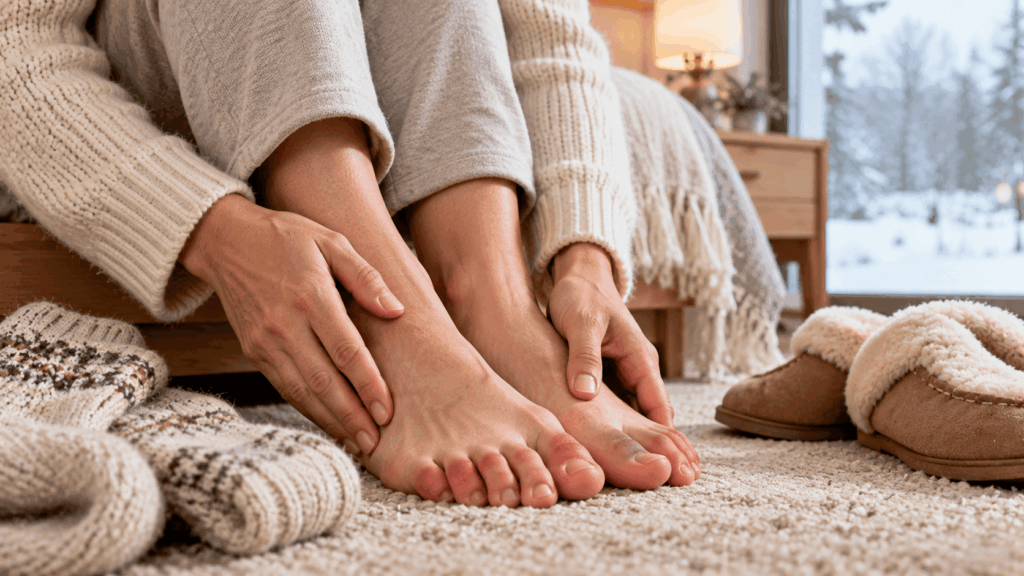
Chilblains are one of the most common cold-weather complaints in the UK, yet most people are not sure what actually helps. These itchy, red or purple patches on your toes, fingers or ears can be painful and slow to heal, especially if you warm the skin too quickly or keep exposing it to cold. The good news: chilblains almost always clear up on their own, and there is plenty you can do at home to speed things along and stop them coming back.
Key takeaways
- Most chilblains heal on their own within two to three weeks if you keep the area warm and dry.
- The biggest mistake is warming up too fast: avoid hot water, radiators and hot water bottles on affected skin.
- Your pharmacist can suggest soothing lotions for itching, but NICE says there is no good evidence that OTC creams speed up healing.
- See your GP if chilblains last longer than three weeks, keep coming back, show signs of infection, or you have diabetes.
Why chilblains happen, and why toes and fingers get them most
Chilblains (also called pernio) are small, inflamed patches that appear on your skin after exposure to cold, damp conditions. They develop because the tiny blood vessels near the surface of your skin react abnormally: they constrict in the cold and then expand too quickly when you warm up, allowing fluid to leak into the surrounding tissue. The NHS notes that this leakage is what causes the swelling, itching and burning sensation.
Your toes and fingers are the most common sites because they are extremities with smaller blood vessels, furthest from the heart. But chilblains can also develop on your ears, nose, heels and any area exposed to pressure, such as a bunion or a toe squeezed by tight shoes.
Some people are more prone than others. Poor circulation, smoking, low body weight, anaemia and hormonal factors can all increase the risk. According to the Mayo Clinic, chilblains are more common in young women and older adults with sluggish circulation, though anyone who spends time in cold, damp environments without adequate protection can get them.
What you can do at home to treat chilblains
Most chilblains clear up on their own within two to three weeks, especially once the weather warms up or you stop being exposed to the cold. In the meantime, there are several things you can do to ease the discomfort and help them heal.
Warm your skin slowly and gently. This is the single most important step. Avoid the temptation to put your feet on a radiator, run them under hot water or hold them near a fire. Rapid rewarming can actually make chilblains worse by triggering more fluid leakage. Instead, let your hands or feet warm up gradually under a blanket or by putting on warm, dry socks and gloves.
Resist hot water bottles and radiators. Wrap your feet in a warm blanket or pull on thick socks and let them come back to temperature slowly. The same applies to fingers: warm gloves, not hot taps.
Keep the affected area dry and clean. If a chilblain has blistered or broken, clean it gently with warm salty water and cover it with a clean, dry dressing to reduce the risk of infection. Do not scratch or pick at the skin, even if the itching is intense, as this can break the surface and let bacteria in.
Take paracetamol or ibuprofen if the pain is bothersome. Ibuprofen also helps reduce inflammation. If you smoke, this is another reason to try to stop: smoking narrows blood vessels and slows wound healing, both of which make chilblains worse and more likely to recur.
The NHS also advises avoiding caffeine and decongestants (medicines for a blocked nose), as these can affect blood flow to your fingers and toes.
What your pharmacist can suggest
Your pharmacist can recommend a soothing lotion to relieve itching, such as calamine lotion or witch hazel. These do not treat the chilblain itself, but they can take the edge off the irritation while you wait for it to heal.
It is worth knowing that NICE guidance notes there is no good evidence that over-the-counter topical preparations actually speed up the healing of chilblains. That does not mean lotions are useless: calamine or witch hazel can still ease symptoms and stop you from scratching, which is important for preventing broken skin and infection. But they are comfort measures, not cures.
If a chilblain has broken open, your pharmacist may suggest an antiseptic dressing to keep the area clean. Some pharmacies also stock warming creams containing ingredients like camphor or capsicum, which aim to stimulate local blood flow, though evidence for these is limited.
Do traditional or natural remedies help with chilblains?
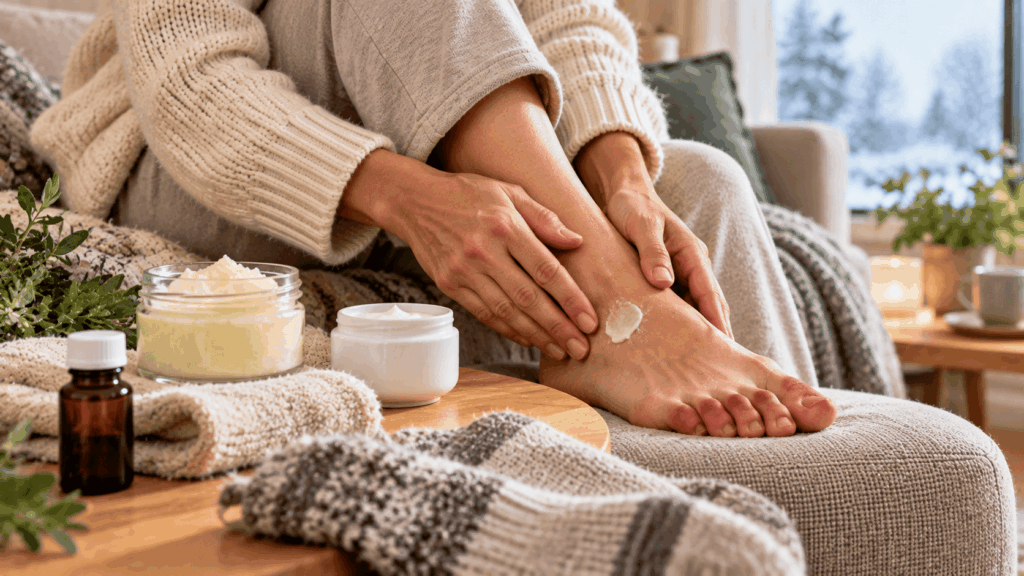
A number of traditional remedies have been used for chilblains over the years. Lanolin ointment rubbed into the feet at night is one old approach, thought to help retain warmth. Some NHS podiatry departments mention Friar’s Balsam (compound benzoin tincture) painted onto unbroken chilblains as a traditional option your pharmacist can prepare.
There is very little clinical research behind most of these remedies. No high-quality trials have shown that any single natural product reliably speeds up the healing of chilblains. The most effective approach remains keeping warm and avoiding rapid temperature changes. If you want to try a soothing cream or ointment, choose one that is gentle on the skin and avoid anything that generates intense heat, as this can make things worse.
What your GP can prescribe for stubborn chilblains
Most chilblains do not need a GP visit. But if yours are severe, keep coming back every winter, or do not clear up within a few weeks, your GP may prescribe medication.
The main prescription option is nifedipine, a calcium channel blocker normally used for high blood pressure. It works by relaxing and widening blood vessels, which improves blood flow to the fingers and toes. A review published in Mayo Clinic Proceedings found that nifedipine helped existing chilblains resolve faster and reduced the development of new lesions.
In some cases, a GP may also prescribe a topical corticosteroid cream (such as triamcinolone) if the chilblains have become very swollen or developed sores. If your chilblains keep recurring, your GP may want to run blood tests to rule out underlying conditions such as Raynaud’s disease or lupus, which can cause similar symptoms.
How to stop chilblains coming back
Prevention is far more effective than treatment. If you get chilblains regularly, these habits can make a real difference:
- Keep your whole body warm, not just your extremities. Layers of loose clothing, a hat and warm socks make more difference than focusing on gloves alone.
- Wear thick, insulated socks and well-fitting, waterproof shoes. Avoid anything that squeezes your toes and restricts circulation.
- Keep your feet dry. Damp socks and shoes reduce insulation and increase heat loss.
- Warm up gradually after being out in the cold. Avoid going from freezing outdoors straight to a hot bath or sitting right next to a fire.
- Stay active. Regular exercise improves your overall circulation, which helps protect your fingers and toes.
- Stop smoking. Smoking constricts blood vessels and is a well-known risk factor for chilblains.
Your chilblains have not improved after two to three weeks, there is pus coming from your skin or you feel feverish, you keep getting chilblains every winter, you have diabetes (foot problems can be more serious), or your symptoms are getting worse rather than better. Source: NHS.
Frequently asked questions
Can you treat chilblains on toes differently from chilblains on fingers?
The treatment is the same wherever chilblains appear: keep the area warm, dry and clean, avoid rapid temperature changes, and do not scratch. The main practical difference is that toes are often harder to keep warm because shoes can be tight and feet get damp more easily. Wearing thick, well-fitting socks and waterproof shoes helps. For fingers, insulated gloves with a mitten layer work better than thin gloves.
How long do chilblains take to go away?
Most chilblains clear up on their own within two to three weeks, especially if you keep the affected area warm and avoid further cold exposure. If they last longer than that, see your GP.
Are chilblains the same as frostbite?
No. Frostbite happens when skin actually freezes, usually in below-zero temperatures, and it can cause permanent tissue damage. Chilblains develop in cold but above-freezing conditions and rarely cause lasting harm. If you are unsure which you have, ask your GP or call NHS 111.
Can chilblains be a sign of something else?
In most people, chilblains are simply a reaction to cold. But if they are severe, keep coming back, or appear in warm weather, your GP may check for underlying conditions such as Raynaud’s disease or lupus, which can affect blood vessels in a similar way.
Should I put cream on chilblains?
You can use calamine lotion or witch hazel to soothe itching, and a gentle moisturiser to stop the skin cracking. However, NICE notes there is no good evidence that over-the-counter creams speed up healing. If your chilblain has broken open, keep it clean and covered with an antiseptic dressing rather than applying cream to it.

Independent guides to natural remedies and supplements, checked against NHS and EFSA references.