Home › Skin & Hair › What is dermatitis, and how do you calm it?
Skin & HairWhat is dermatitis, and how do you calm it?
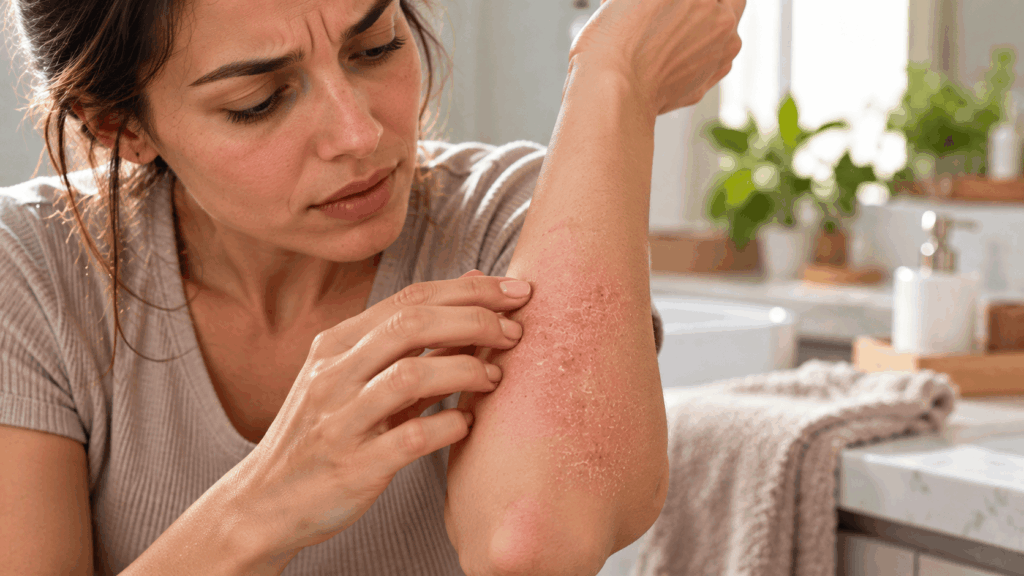
What to know
- Dermatitis is a general term for inflamed, irritated skin. The most common types are atopic eczema, contact dermatitis and seborrhoeic dermatitis.
- The main treatment is regular use of emollients (medical moisturisers). The NHS recommends applying them at least twice a day, even when the skin looks clear.
- Common triggers include soaps, detergents, fragrances, certain fabrics and stress. Identifying and avoiding your triggers is a key part of managing flare-ups.
- See your GP if your skin is blistered, weeping, crusted, or showing signs of infection such as pus, swelling, warmth or fever.
Dermatitis is one of the most common skin complaints. It can affect anyone at any age, and for many people it comes and goes over months or years. The word itself simply means inflammation of the skin. Most types are not serious, but they can be uncomfortable and frustrating to live with. The good news is that most flare-ups can be managed at home with the right skincare routine and a few practical changes.
What is dermatitis?
Dermatitis is a broad term used to describe skin that is inflamed, red, dry, itchy or irritated. It is not a single condition but a group of related skin problems. The three types you are most likely to come across are:
- Atopic eczema (atopic dermatitis). The most common form, particularly in children. According to the NHS, it often develops before a child’s first birthday, but it can start at any age. There is no cure, but it can usually be managed well. It tends to run in families and is linked to other atopic conditions such as asthma and hay fever.
- Contact dermatitis. This happens when the skin reacts to something it has touched. The NHS describes two types: irritant contact dermatitis (the most common, caused by direct damage from substances such as soaps, detergents or prolonged contact with water) and allergic contact dermatitis (an immune reaction to a specific substance such as nickel, fragrances or certain cosmetics).
- Seborrhoeic dermatitis. This affects areas of skin that produce more oil, such as the scalp, face and chest. In babies it is commonly known as cradle cap. In adults it causes flaky, scaly patches that can be red or yellowish.
Other, less common types include dyshidrotic dermatitis (small blisters on the hands and feet), nummular dermatitis (coin-shaped patches) and stasis dermatitis (linked to poor circulation in the lower legs). The Cleveland Clinic lists nine recognised types in total.
How to recognise dermatitis
The symptoms of dermatitis vary depending on the type and severity, but most forms share a set of common signs:
- Itching, which is often the first symptom and can range from mild to intense.
- Red or discoloured patches of skin (on darker skin tones, affected areas may appear brown, purple or grey rather than red).
- Dry, rough or scaly skin.
- Swelling, particularly in the area that has been irritated.
- Cracked skin, which may weep or bleed if scratched.
- Small blisters in some types, especially contact dermatitis and dyshidrotic dermatitis.
With contact dermatitis, symptoms usually appear where the skin has been in direct contact with the trigger. With atopic eczema, common areas include the creases of the elbows and knees, the wrists, the neck and around the eyes.
How to calm dermatitis at home
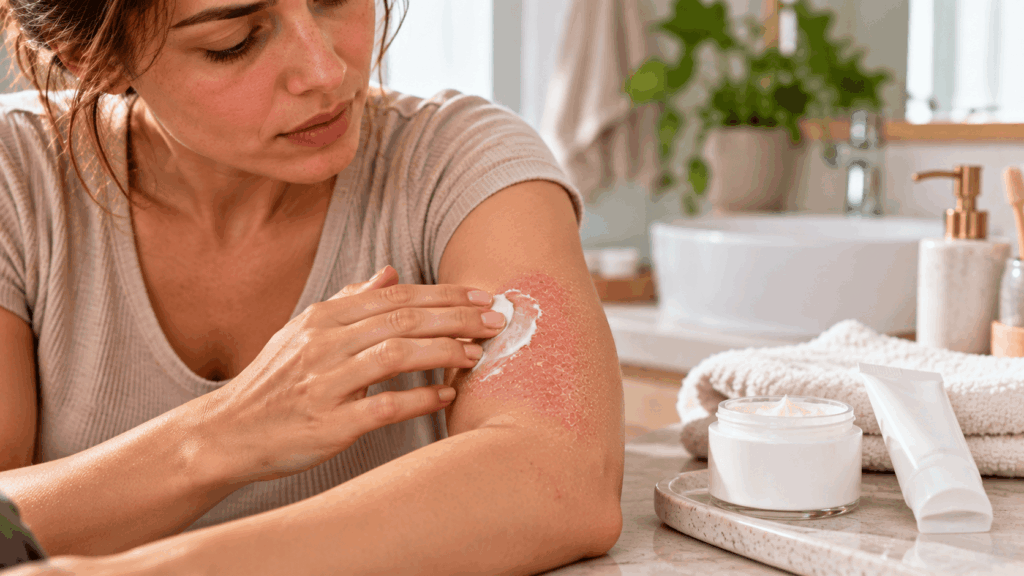
The single most important step in managing dermatitis is regular use of emollients (medical moisturisers). The NHS recommends applying emollients at least twice a day, even when the skin is not actively flaring. Emollients work by replacing the moisture the skin loses and forming a protective barrier over its surface.
Emollients come in different forms, including creams, ointments, lotions and bath or shower products. Ointments tend to be greasier and more effective for very dry skin, while creams and lotions are lighter and may feel more comfortable during the day. Your pharmacist or GP can help you find the right one.
Alongside emollients, the NHS recommends:
- Wash with lukewarm water, not hot. Hot baths and showers strip the skin of its natural oils and can make itching worse.
- Use an emollient or soap substitute instead of ordinary soap, shower gel or bubble bath. Fragranced products can irritate the skin.
- Pat skin dry gently with a towel rather than rubbing.
- Wear soft, breathable fabrics such as cotton. Avoid wool and synthetic fabrics that can scratch or overheat the skin.
- Keep nails short to reduce damage from scratching, especially in children.
- Try to identify and avoid triggers. Common ones include certain soaps, detergents, fragrances, pet hair, dust mites, certain foods (in some people) and stress.
The NHS advises that emollients, particularly paraffin-based products, can build up on fabric and become a fire risk if they come into contact with a naked flame. Do not smoke or use a naked flame near clothing, bedding or bandages that may have been in contact with emollient. Wash fabrics regularly to reduce build-up.
What your pharmacist can recommend
A pharmacist can help with mild dermatitis without you needing to see a GP. They can recommend:
- Emollients suited to your skin type and the area affected.
- Mild hydrocortisone cream (1%), which is available over the counter for short-term use. It helps reduce redness, swelling and itching during a flare-up. It should not be used on the face or on broken skin unless a doctor has advised it.
- Antihistamine tablets (such as cetirizine or chlorphenamine) if itching is disrupting your sleep or daily life. These do not address the underlying skin problem but can help manage the itch.
If your symptoms are not improving with over-the-counter products, or if the rash is spreading or worsening, your pharmacist may suggest seeing your GP for a stronger prescription treatment such as a more potent topical corticosteroid or a calcineurin inhibitor.
Natural and traditional remedies
Several natural approaches are commonly suggested for soothing irritated skin, though the evidence for most of them is limited.
- Colloidal oatmeal baths. Oatmeal has been used traditionally to soothe itchy skin, and there is some evidence that colloidal oatmeal (finely ground oatmeal suspended in water) can help relieve itching and improve the skin barrier. The NYU Langone Health centre includes it among at-home therapies for eczema. It is generally considered safe, but check that any product you use does not contain added fragrances.
- Aloe vera gel. Aloe vera has soothing and moisturising properties and is widely available. Some small studies suggest it may help with mild skin irritation, but the evidence is not strong enough to consider it a substitute for emollients.
- Coconut oil. Some research suggests virgin coconut oil may have moisturising and mild antimicrobial properties. However, it is not suitable for everyone and can occasionally cause irritation. It should not replace a proper emollient routine.
None of these is recommended by the NHS as a treatment for dermatitis. The foundation of management remains emollients and trigger avoidance. If you want to try a natural product, use it alongside your usual skincare routine, not instead of it, and stop if your skin reacts badly.
When to see your GP or get urgent help
Most mild dermatitis can be managed at home or with the help of a pharmacist. See your GP if:
- Your symptoms are not improving despite regular use of emollients and over-the-counter treatments.
- The rash is spreading, very painful or affecting your daily life.
- You have recurrent flare-ups and need help identifying triggers.
- You think you may have contact dermatitis and need patch testing to identify the allergen.
See your GP urgently, call NHS 111, or go to A&E if you notice any of the following. They may be signs of a skin infection or eczema herpeticum (a rare but serious complication).
The skin is blistered, weeping, crusted or producing pus.
The affected area is very painful, swollen or warm to the touch.
You have a high temperature or feel hot and shivery.
You develop small, painful blisters that look different from your usual eczema, particularly around the face or eyes.
Children with these signs should be seen promptly. Eczema herpeticum can spread quickly and needs antiviral treatment.
Your GP may prescribe stronger topical corticosteroids, calcineurin inhibitors (such as tacrolimus or pimecrolimus), or in severe cases refer you to a dermatologist. For widespread or hard-to-manage atopic eczema, newer treatments including biologic medicines may be considered in specialist care.
Common questions
What is the difference between dermatitis and eczema?
The terms are often used interchangeably. Eczema is a type of dermatitis. In the UK, when people say eczema they usually mean atopic eczema (atopic dermatitis), which is the most common form. Dermatitis is the broader medical term covering all types of skin inflammation, including contact dermatitis and seborrhoeic dermatitis.
Is dermatitis contagious?
No. Dermatitis is not caused by an infection and cannot be passed from person to person through touch. However, if the skin becomes infected (for example, through scratching), the secondary infection itself may need treatment.
Can stress cause dermatitis?
Stress does not cause dermatitis directly, but it is a well-recognised trigger for flare-ups, particularly in atopic eczema. Managing stress through regular exercise, good sleep and relaxation techniques may help reduce the frequency of flare-ups alongside your usual skincare routine.
Should I use steroid cream every day?
No. Topical corticosteroids are designed for short-term use during flare-ups, not as a daily routine. Follow the instructions from your GP or pharmacist. Emollients, on the other hand, should be used every day, even when your skin looks clear, to maintain the skin barrier and help prevent flare-ups.
Can diet affect dermatitis?
In some people, particularly children with atopic eczema, certain foods may trigger flare-ups. Common suspects include cow’s milk, eggs, soya, wheat and nuts. However, the NHS advises against cutting foods out of your or your child’s diet without medical advice, as this can lead to nutritional gaps. If you suspect a food trigger, speak to your GP, who may refer you to a dietitian or allergist for testing.

Independent guides to natural remedies and supplements, checked against NHS and EFSA references.