Home › Natural Remedies › What is tea tree cream used for?
Natural RemediesWhat is tea tree cream used for?
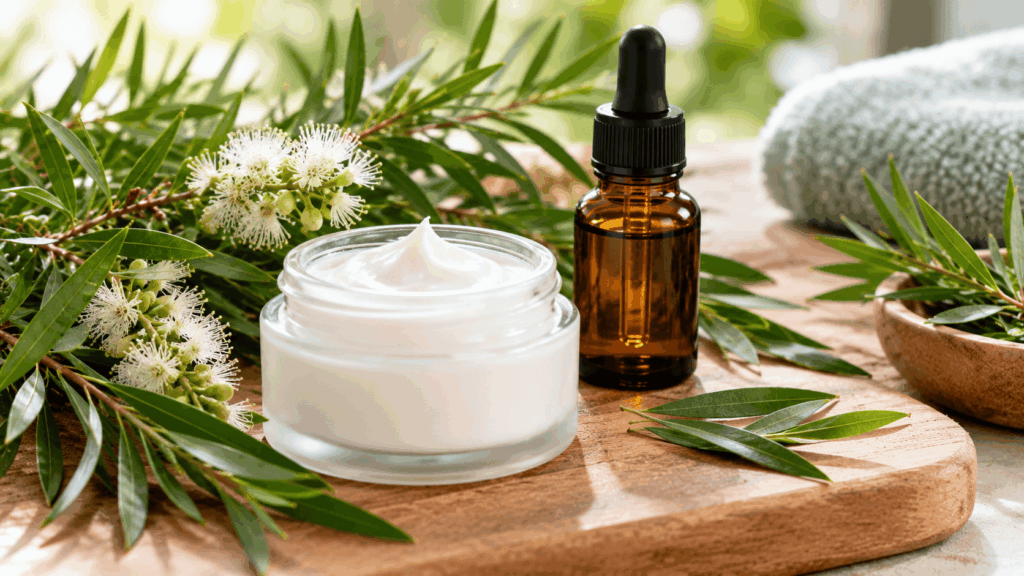
Tea tree cream at a glance
- What it is: a topical cream or ointment containing tea tree oil (from Melaleuca alternifolia), applied to the skin for minor skin complaints.
- Traditional use: minor wounds, insect bites, spots and blemishes, boils, and mild fungal skin conditions such as athlete’s foot.
- What the evidence says: tea tree oil has antimicrobial properties in laboratory studies. Clinical evidence in humans is limited and mostly of poor to modest quality. More research is needed.
- Main precaution: tea tree oil can cause allergic skin reactions in some people. It must never be swallowed. Not recommended for children under 12 without medical advice.
Tea tree cream is one of the most widely sold natural antiseptic products in UK pharmacies and health food shops. You will find it in various strengths, usually marketed for spots, minor cuts, insect bites and general skin irritation. It has a distinctive, medicinal smell and a loyal following among people who prefer plant-based skincare.
But what exactly does tea tree cream do, and is there solid evidence behind the claims? Here is what you need to know.
What is tea tree cream?
Tea tree cream is a topical product containing tea tree oil, an essential oil extracted by steam distillation from the leaves of Melaleuca alternifolia, a tree native to New South Wales and Queensland in Australia. The oil contains a complex mix of compounds, the most important of which is terpinen-4-ol, responsible for much of its antimicrobial activity.
Tea tree oil has been used for generations. Aboriginal Australians traditionally used the crushed leaves to treat wounds, burns and insect bites. Today, the oil is produced commercially (mainly in Australia, but also in China and parts of Africa) and added to creams, gels, ointments, soaps and shampoos.
In the UK, some tea tree oil products are registered as traditional herbal medicines under the MHRA’s Traditional Herbal Registration (THR) scheme. This means they have met manufacturing and safety standards, but it does not mean they have been proven to work in clinical trials. The registration allows limited claims based on traditional use only.
What is tea tree cream traditionally used for?
Tea tree cream is marketed and traditionally used for a range of minor skin complaints. The most common uses include:
- Spots and blemishes. Tea tree cream is widely used as a natural alternative to conventional spot treatments. Many people apply it directly to individual blemishes.
- Minor cuts and grazes. The antiseptic properties of tea tree oil are the basis for its traditional use on small wounds and broken skin.
- Insect bites and stings. Applied to soothe itching and reduce the risk of infection after a bite.
- Boils. Traditionally used on boils and minor skin infections.
- Athlete’s foot. Tea tree cream or foot soaks are commonly used for mild fungal infections of the feet.
- General skin irritation. Some people use tea tree cream for dry, itchy or irritated skin, though it can itself cause irritation in sensitive individuals.
These are traditional uses. Whether the clinical evidence supports them is a separate question.
Does it work? What the evidence says
Tea tree oil has genuine antimicrobial properties. Laboratory studies have shown that it is active against a range of bacteria, fungi and viruses in a test tube. The question is whether this translates into reliable clinical benefits when applied to human skin in real-world conditions.
Acne and spots
This is the area with the most research. A small number of clinical trials have tested topical tea tree oil for acne. A systematic review published in Frontiers in Pharmacology (Lauche et al., 2023) examined the available randomised controlled trials and concluded that more evidence is needed to confirm the benefits of tea tree oil for reducing acne lesions and severity. The existing studies are small, and the review rated the overall quality of the research as poor to modest.
In practical terms, some people do find that tea tree products help with mild spots. But the evidence is not strong enough to say it works reliably, and it is not a substitute for proven acne treatments (such as benzoyl peroxide or retinoids) prescribed or recommended by a GP or dermatologist.
Athlete’s foot
The US National Center for Complementary and Integrative Health (NCCIH) notes that there is some evidence tea tree oil may help with athlete’s foot, but that it may be less effective than conventional antifungal treatments. If you have persistent athlete’s foot, a pharmacist can recommend proven antifungal creams (such as clotrimazole or terbinafine) without a prescription.
Other uses
For fungal nail infections, wounds, head lice and other conditions for which tea tree oil is marketed, the NCCIH states that the research is insufficient to draw firm conclusions. The 2023 systematic review echoed this, calling for higher-quality trials with larger samples across all areas of use.
Tea tree oil has real antimicrobial activity in the laboratory, and there is a long tradition of use. But the clinical evidence in humans is limited and mostly of low quality. The 2023 systematic review of 46 randomised controlled trials concluded that the research base is not strong enough to confirm the therapeutic claims. If you have a skin condition that is not improving, speak to your pharmacist or GP about proven treatments.
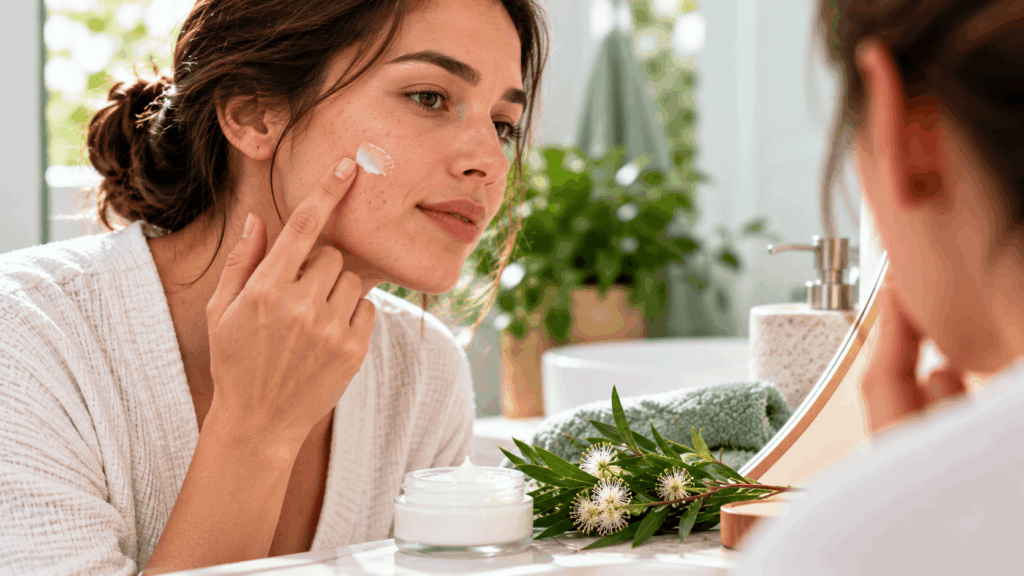
How to use tea tree cream safely
If you choose to use tea tree cream, these guidelines will help you avoid problems:
- Use it on the skin only. Tea tree oil must never be swallowed. The NCCIH warns that ingesting tea tree oil can cause serious symptoms including confusion, unsteadiness and inability to walk. Keep all tea tree products out of reach of children.
- Do a patch test first. Apply a small amount to the inside of your forearm and wait 24 hours. If the skin becomes red, itchy or irritated, do not use the product.
- Follow the product instructions. Tea tree creams vary in strength. Use the product as directed on the label. If you are using pure tea tree oil rather than a cream, always dilute it in a carrier oil before applying to the skin.
- Avoid the eyes, ears and mouth. Tea tree oil can cause significant irritation to mucous membranes.
- Store it properly. Tea tree oil degrades when exposed to light, heat and air. Degraded oil is more likely to cause skin reactions. Keep the product sealed, in a cool place, and check the expiry date.
Who should not use tea tree cream
You have had an allergic reaction to tea tree oil or any product containing it in the past. You are treating a child under 12 without advice from a pharmacist or doctor. The skin is severely broken, deeply wounded or infected (these need medical attention, not a home remedy). You have a skin condition that has not been diagnosed. If a rash, wound or skin infection is not improving or is getting worse, see your GP or pharmacist. Do not rely on tea tree cream for any condition that needs medical treatment.
Tea tree oil can cause allergic contact dermatitis in some people, with symptoms including redness, itching, burning and swelling. The 2023 systematic review noted that side effects were reported in 60% of included studies, although most were minor when the oil was used at standard concentrations. Reactions were more common at concentrations of 25% or higher.
If you are pregnant or breastfeeding, the NCCIH notes that topical use of tea tree oil appears to be safe, but it is always sensible to check with your midwife or GP before using any new product during pregnancy.
Common questions about tea tree cream
What is tea tree antiseptic cream used for?
Tea tree antiseptic cream is used for minor skin complaints such as spots, small cuts and grazes, insect bites, boils and mild fungal conditions like athlete’s foot. These are traditional uses. The clinical evidence behind them is limited, and tea tree cream should not be used instead of proven medical treatments for any condition that is not improving.
Is tea tree cream an antibiotic?
No. Tea tree cream is not an antibiotic. It contains tea tree oil, which has antimicrobial properties in laboratory studies, but it is not a medicine in the conventional sense. It does not replace prescribed antibiotics for bacterial infections. If you think you have an infected wound or skin condition, see your GP.
Can I use tea tree cream on my face?
Many people use tea tree cream on facial spots and blemishes. However, tea tree oil can irritate sensitive skin, especially around the eyes and lips. Always do a patch test first, use a product designed for facial skin, and stop using it if you notice redness, burning or peeling. If you have persistent acne, speak to your GP or pharmacist about proven treatments.
Is tea tree cream safe for children?
Tea tree cream is generally not recommended for children under 12 without advice from a pharmacist or doctor. Tea tree oil must never be swallowed, and all products should be kept out of reach of young children. If your child has a skin condition that needs treatment, speak to your pharmacist, health visitor or GP.
Can I use tea tree oil neat on my skin?
Pure, undiluted tea tree oil is much more likely to cause skin irritation and allergic reactions than a diluted cream. If you use the pure oil, dilute it in a carrier oil (such as coconut or almond oil) before applying to the skin. Tea tree creams and gels are already formulated at a lower concentration and are generally better tolerated.

Independent guides to natural remedies and supplements, checked against NHS and EFSA references.