Home › Natural Remedies › What is arnica cream used for?
Natural RemediesWhat is arnica cream used for?
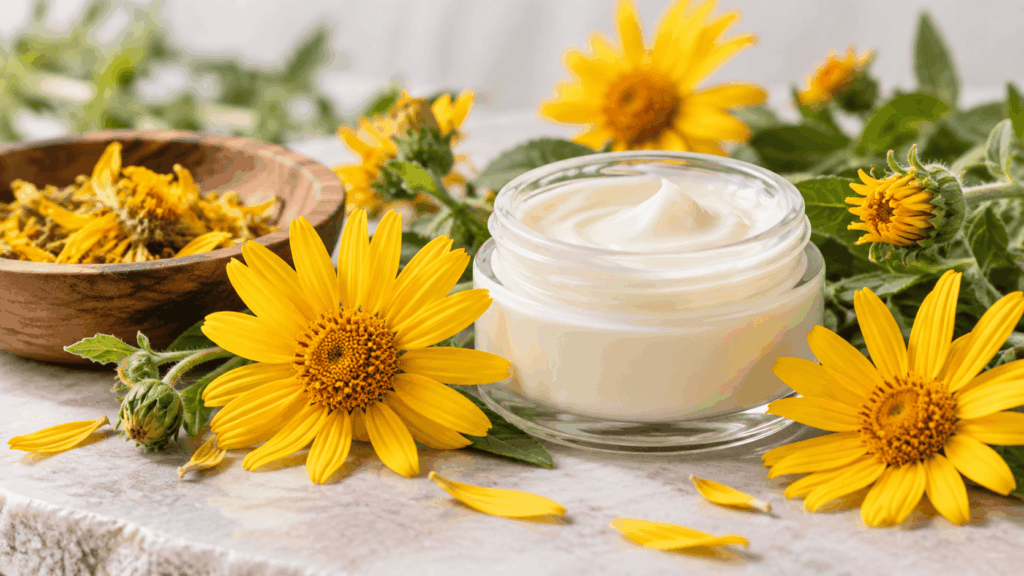
Arnica cream at a glance
- What it is: a topical gel or cream made from the flowers of Arnica montana, a plant in the daisy family native to mountainous parts of Europe.
- Traditional use: applied to bruises, sprains, muscle aches and swelling on unbroken skin.
- What the evidence says: results are mixed. Some post-surgical studies show modest benefits for bruising. Systematic reviews conclude the evidence is limited and inconsistent.
- Main precaution: never apply to broken skin or open wounds. The plant is toxic if swallowed in herbal form. People allergic to the Asteraceae (daisy) family may react.
Arnica cream is one of the most widely used herbal remedies in the UK. You will find it in pharmacies, health food shops and supermarkets, often marketed for bruises, muscle pain and swelling. It has been a staple of traditional European medicine for centuries, and many people reach for it instinctively after a bump, a knock or a tough workout.
But does it actually do what people believe it does? The answer depends on which form you are talking about and what you expect it to do.
What is arnica cream?
Arnica cream is a topical preparation made from the flowers of Arnica montana, a yellow, daisy-like plant that grows in upland meadows across Europe. The flowers contain compounds including sesquiterpene lactones (mainly helenalin), flavonoids and essential oils that have demonstrated anti-inflammatory activity in laboratory studies.
The extract is blended into gels, creams or ointments for external use only. Arnica products vary widely in concentration: some contain a standardised percentage of arnica extract, while others use a more diluted infusion. The amount of active plant material in a product matters, because the evidence (or lack of it) depends partly on the dose used.
It is important to note that arnica is toxic if swallowed in herbal form. The plant should never be taken by mouth as a tincture or tea. This does not apply to homeopathic arnica preparations, which are highly diluted and contain no measurable plant material (see the section below).
What is arnica cream traditionally used for?
In traditional European herbal medicine, arnica has been applied externally for:
- Bruises (the most common use)
- Sprains, strains and minor sports injuries
- Muscle aches and stiffness
- Swelling after a bump or knock
- Joint pain associated with osteoarthritis (in some formulations)
It is also sometimes used after cosmetic or surgical procedures (facelifts, rhinoplasty, injectable treatments) in an attempt to reduce bruising and speed recovery. This is the setting where most of the recent clinical research has been conducted.
Does arnica cream work? What the evidence says
Arnica gel or cream (herbal, topical)
A 2014 systematic review by Brito and colleagues looked at all available clinical trials on topical (non-homeopathic) arnica for pain, swelling and bruises. Their conclusion was straightforward: the efficacy of arnica in doses of 10% and below is not supported by the available evidence, and more research is needed to establish whether higher concentrations would be effective.
A more recent 2024 systematic review in Plants examined both herbal and homeopathic arnica formulations. The findings were mixed:
- Some studies in plastic surgery patients (rhinoplasty, facelifts) found arnica reduced visible bruising compared to placebo.
- A study on muscle pain after exercise found arnica cream actually increased leg pain at 24 hours rather than reducing it.
- A trial on post-surgical recovery after hand surgery found no significant difference in pain, bruising or swelling between arnica and placebo.
- One study on osteoarthritis of the hand found arnica gel reduced pain and stiffness similarly to ibuprofen gel, though the study was small.
The overall picture: arnica cream may offer modest benefits for bruising in some settings (particularly after facial surgery), but the evidence is limited, inconsistent and not strong enough to draw firm conclusions.
Homeopathic arnica (oral tablets, pellets)
Homeopathic arnica (typically labelled 6C, 12C or 30C) is a different product entirely. These preparations are diluted to the point where they contain no measurable amount of the original plant. They are taken by mouth, usually as small sugar pellets or tablets.
Placebo-controlled trials on homeopathic arnica have consistently found no significant effects on pain, bruising or swelling compared to placebo. The NHS does not recommend homeopathy for any health condition.
The evidence for topical arnica is limited and inconsistent. There are some positive findings in post-surgical settings, but they come from small studies with varying formulations and doses. Systematic reviews have not been able to confirm that arnica cream is reliably effective for bruises or muscle pain. It is widely used and generally safe on intact skin, but it would be misleading to describe it as a proven treatment.
Can arnica cream be used on the face?
Yes, arnica cream is commonly applied to the face, particularly after cosmetic procedures such as fillers, rhinoplasty or facelifts. Some of the more positive clinical studies on arnica are in this context.
If you are using arnica cream on your face for everyday bruising or puffiness, keep these points in mind:
- Use a product specifically designed for skin application (not an industrial-strength herbal tincture).
- Avoid the eye area unless the product label says it is safe for use around the eyes.
- Do not apply to broken skin, cuts or grazes.
- If you have sensitive or reactive skin, test on a small area first (inside of the wrist).
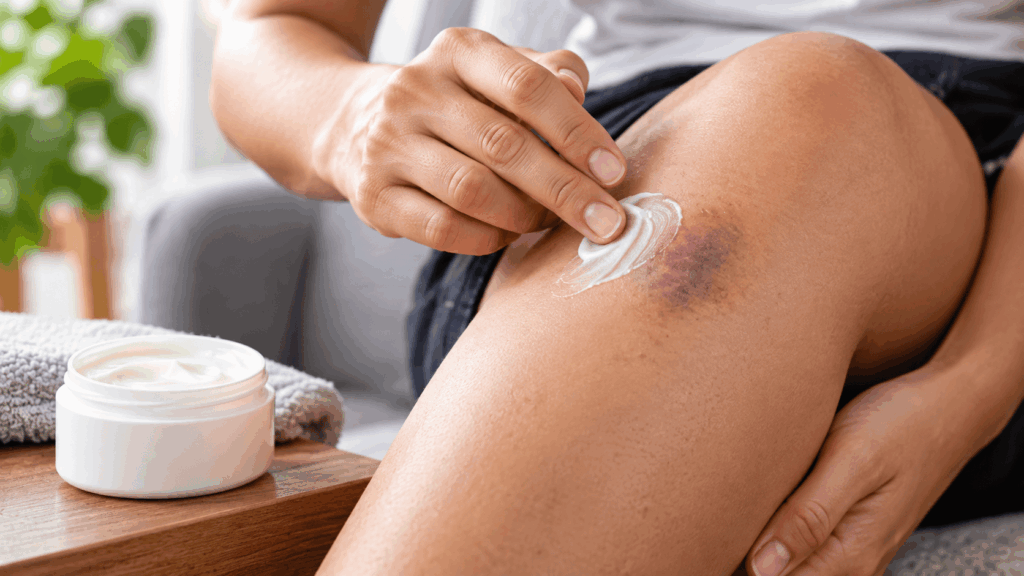
How to use arnica cream
- Apply a thin layer to the affected area and rub in gently.
- Use two to three times a day, or as directed on the product.
- For external use only. Never apply to open wounds, broken skin, mucous membranes or near the eyes (unless the product states otherwise).
- Wash your hands after applying.
- Do not cover the area with an airtight dressing unless advised by a healthcare professional.
Who should not use arnica cream
You are allergic to arnica or any plant in the Asteraceae (daisy) family, including ragweed, calendula, chrysanthemums, chamomile and echinacea. The skin is broken, cut, grazed or has open sores. You are using it on a child, check the product label for age guidance and speak to your pharmacist or health visitor if unsure. You are pregnant or breastfeeding (the safety of topical arnica during pregnancy has not been established, so check with your GP or midwife first). Never swallow herbal arnica. The plant is toxic if taken by mouth in non-homeopathic form. Keep arnica products out of the reach of children.
The risk of an allergic skin reaction is low but real, especially if you are sensitive to other Asteraceae plants. If you develop redness, itching or a rash after applying arnica cream, stop using it and speak to your pharmacist.
Common questions about arnica cream
Does arnica cream actually reduce bruising?
The evidence is mixed. Some studies in post-surgical settings (particularly facial procedures) suggest it may modestly reduce visible bruising. However, systematic reviews have not found consistent evidence that it works for everyday bruises. Many people find it helpful, but this may be partly due to the placebo effect or the act of gently massaging the area.
Is arnica cream the same as homeopathic arnica?
No. Arnica cream (herbal) contains measurable plant extract applied to the skin. Homeopathic arnica (usually labelled 6C, 12C or 30C) is taken by mouth as highly diluted pellets or tablets and contains no detectable plant material. They are different products with different evidence profiles. The NHS does not recommend homeopathy for any health condition.
Can I use arnica cream on my child?
Some arnica products are formulated for use on children, but always check the label for age guidance. Do not apply to broken skin. If you are unsure, ask your pharmacist or health visitor. Keep arnica products out of the reach of small children, as the plant is toxic if swallowed.
How quickly does arnica cream work?
There is no reliable evidence for a specific timeline. People who use it typically apply it two to three times a day for several days after a bruise or strain. If you are not seeing any improvement after a week, or if the pain, swelling or bruising is getting worse, see your GP or pharmacist.
Is arnica cream safe to use with other medicines?
Topical arnica is not known to interact with other medicines when applied to intact skin. However, if you are taking blood-thinning medication (such as warfarin or aspirin), mention it to your pharmacist before using arnica, as the combination could theoretically increase the risk of bruising.

Independent guides to natural remedies and supplements, checked against NHS and EFSA references.