Home › Natural Remedies › What is calendula cream used for?
Natural RemediesWhat is calendula cream used for?
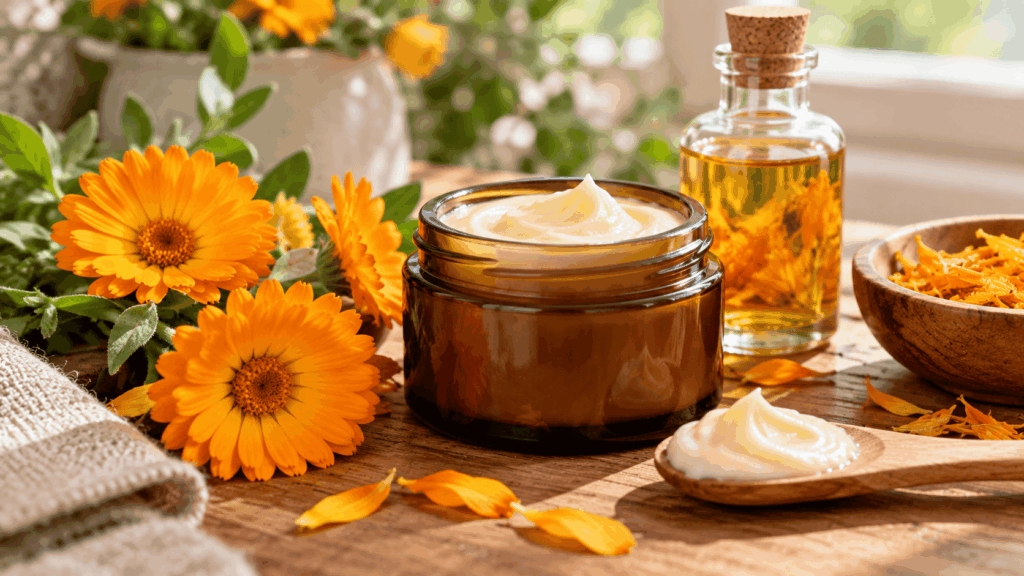
Calendula cream at a glance
- What it is: a topical cream or ointment made from the flowers of Calendula officinalis (pot marigold), a plant in the daisy family.
- Traditional use: applied to dry, irritated or damaged skin, including minor cuts, grazes, nappy rash and chapped hands.
- What the evidence says: some promising results in small studies on wound healing and radiation dermatitis, but the overall evidence is limited and more research is needed.
- Main precaution: people allergic to plants in the Asteraceae (daisy) family (ragweed, chrysanthemums, chamomile) may react to calendula.
Calendula cream is one of those products you will find in health food shops, pharmacies and herbal skincare ranges across the UK. It has been used for centuries as a traditional herbal remedy for sore, dry or irritated skin, and it remains popular with people looking for a gentle, plant-based option for everyday skin complaints.
But what does the evidence actually say? And is there anything you need to watch out for? Here is an honest look.
What is calendula cream?
Calendula cream is a topical preparation made from the flowers of Calendula officinalis, commonly known as pot marigold. Despite the name, it is not the same plant as the ornamental marigolds (genus Tagetes) found in garden centres.
The flowers contain compounds including flavonoids, triterpenoids and carotenoids, which laboratory studies have shown to have anti-inflammatory, antimicrobial and antioxidant properties. These compounds are extracted into oils, tinctures or waxes and blended into creams, ointments and balms.
Calendula creams vary widely. Some are simple herbal preparations (calendula oil in a beeswax or plant-oil base). Others are conventional cosmetic moisturisers with calendula extract as one ingredient among many. It is worth reading the label to see how much calendula a product actually contains.
What is calendula cream traditionally used for?
Calendula has been used in European herbal medicine for hundreds of years, primarily as a skin remedy. The European Medicines Agency (EMA) recognises it as a traditional herbal medicine for:
- Minor wounds, cuts and grazes (superficial, once cleaned)
- Minor inflammation of the skin
- Minor inflammation of the mouth and throat (as a rinse or gargle)
In everyday UK use, people also apply calendula cream to:
- Dry, chapped or cracked skin (hands, lips, heels)
- Nappy rash
- Mild eczema flare-ups (between flare-ups, on unbroken skin, as an emollient)
- Sore or irritated skin after shaving, gardening or frequent hand washing
- Skin undergoing radiotherapy (in some clinical settings)
The EMA classification as a traditional herbal medicine means it has a long history of use for these purposes, but it does not mean its effectiveness has been proven to the standard required for a licensed medicine.
Does calendula cream work? What the evidence says
Calendula cream (herbal, topical)
A 2019 systematic review by Givol and colleagues examined all available clinical trials on calendula extract for wound healing. The findings were mixed:
- Animal studies showed promising anti-inflammatory effects and faster production of new tissue.
- One clinical trial on venous leg ulcers found that a calendula ointment reduced ulcer surface area more than a placebo (42% vs 15% over three weeks).
- A trial on radiation-induced dermatitis in breast cancer patients found calendula cream reduced severe skin reactions compared to a standard treatment (trolamine).
- However, another trial on burns found no benefit compared to a control cream.
The review concluded that there is some evidence for beneficial effects, consistent with its traditional use, but stressed the need for larger, better-designed trials. A separate 2008 systematic review by Leach reached a similar conclusion: only weak evidence supports the use of calendula in wound care.
For dry or irritated skin, calendula cream functions primarily as an emollient. Its moisturising effect comes partly from the oils and waxes in the base, not only from the calendula extract itself.
Homeopathic calendula
Calendula also exists as a homeopathic preparation (for example, Calendula 30C). This is a different product from herbal calendula cream. Homeopathic preparations are highly diluted and contain no measurable amount of the original plant.
The NHS does not recommend homeopathy for any health condition. There is no clinical evidence that homeopathic calendula has effects beyond placebo. If a product is labelled “homeopathic calendula,” it is not the same as a herbal cream containing calendula extract.
The evidence for calendula cream is encouraging but limited. Most of the positive findings come from small studies, and results have not always been consistent across trials. What the research does suggest is that calendula extract has genuine anti-inflammatory properties in the laboratory, and that it is well tolerated when applied to the skin. It is a reasonable option for minor skin irritation, but it is not a proven treatment for any specific skin condition.
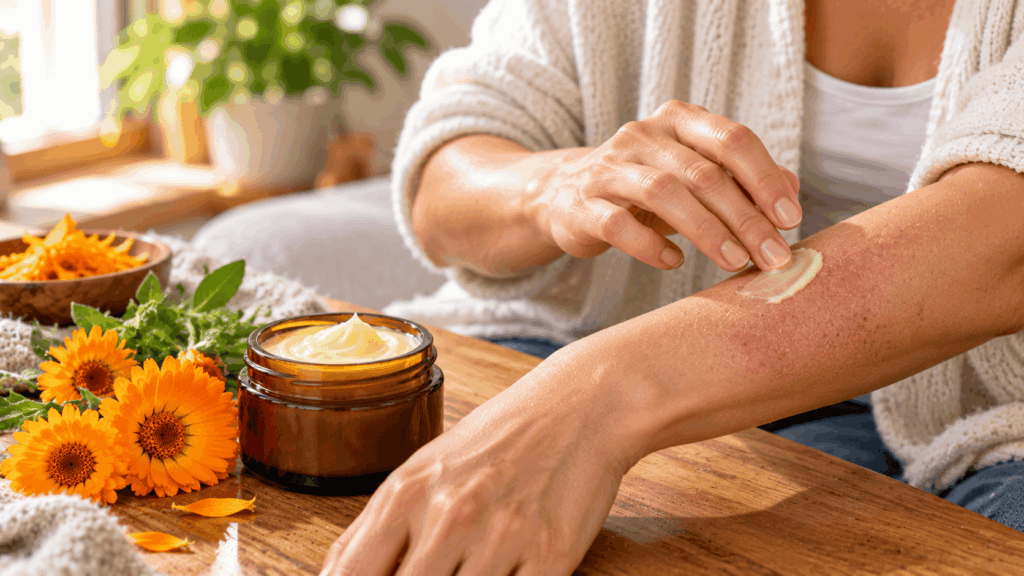
How to use calendula cream
There is no single standardised dose for calendula cream because products vary. As a general guide, based on the EMA monograph and product labels:
- Clean the area gently with water before applying.
- Apply a thin layer to the affected skin and rub in gently.
- Use two to three times a day, or as directed on the product.
- Do not apply to deep wounds, heavily infected skin or broken skin that needs medical attention.
- For nappy rash, apply at each nappy change to clean, dry skin.
Calendula cream is for external use only. If you are using it alongside prescribed treatments (for example, a steroid cream for eczema), ask your pharmacist or GP about the best way to layer them.
Who should not use calendula cream
You are allergic to calendula or any plant in the Asteraceae (daisy) family, including ragweed, chrysanthemums, chamomile, arnica and echinacea. Even topical use can trigger a reaction in sensitive individuals. Stop using it and see your pharmacist or GP if you develop redness, itching, swelling or a rash after applying it. You are pregnant or breastfeeding, unless advised by your GP or midwife (the safety of calendula during pregnancy has not been established). The wound is deep, heavily infected or needs stitches (seek medical attention instead). You are using it on a young child, check the product label for age guidance and speak to your pharmacist or health visitor if unsure.
The risk of an allergic reaction to calendula is low (studies suggest a contact allergy rate below 0.2%), but it is worth being aware of, especially if you already react to other plants in the daisy family.
Common questions about calendula cream
Is calendula cream the same as marigold cream?
Usually, yes. “Marigold cream” in the UK almost always refers to a cream made from Calendula officinalis (pot marigold). It is not made from the ornamental garden marigolds in the Tagetes genus, which are a different plant entirely.
Can I use calendula cream on my face?
Many people do. Calendula cream is generally well tolerated on facial skin, especially if it is a simple formulation without fragrances or essential oils. If you have sensitive or reactive skin, try a small patch test on the inside of your wrist before using it on your face.
Is calendula cream safe for babies?
Calendula cream is widely used for nappy rash and dry skin in babies, and many UK baby skincare ranges include it. Check the label to make sure the product is designed for use on infants and does not contain essential oils, alcohol or fragrances that could irritate. If you are unsure, ask your pharmacist or health visitor.
Does calendula cream help eczema?
Calendula cream can act as a gentle emollient that soothes dry, tight skin between eczema flare-ups. However, it is not a proven treatment for eczema. If your eczema is persistent or worsening, see your GP for proper assessment and treatment.
Can I use calendula cream on open wounds?
Calendula cream is intended for minor, superficial skin irritation, not for deep cuts, puncture wounds or infected skin. Clean any wound first with water, and if it is deep, bleeding heavily or showing signs of infection (redness, warmth, pus), seek medical attention rather than applying a cream.

Independent guides to natural remedies and supplements, checked against NHS and EFSA references.